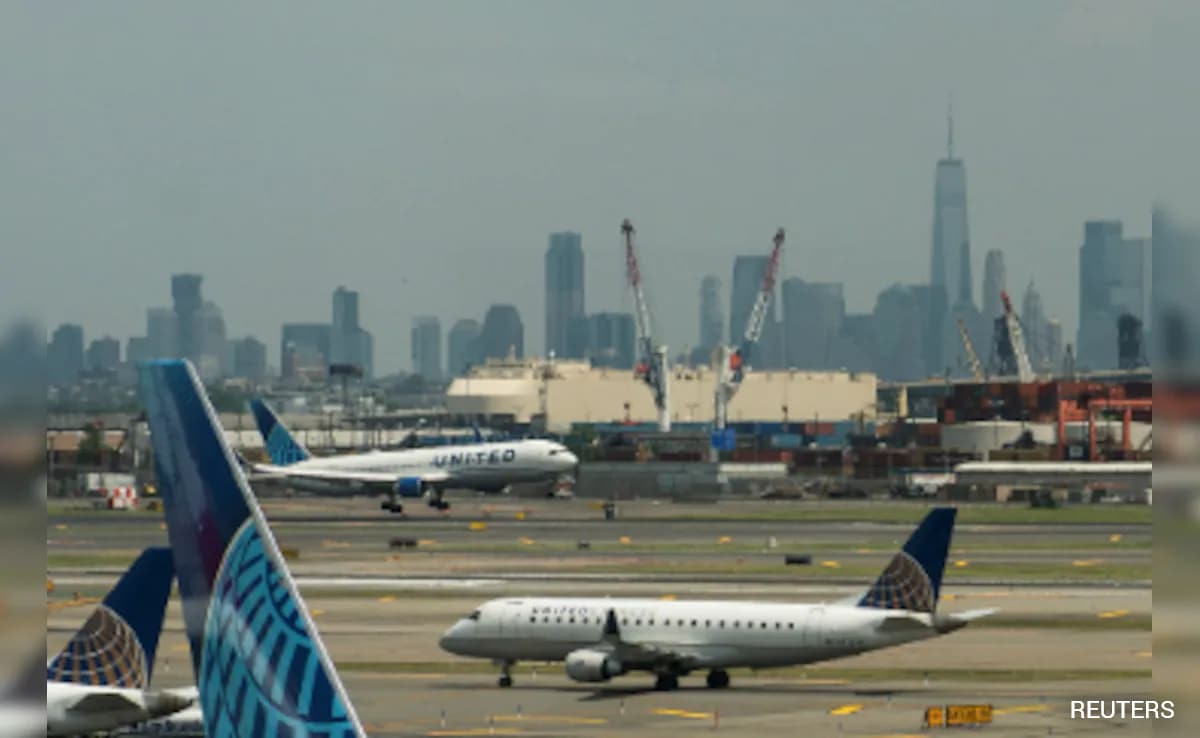
The cabin of United Flight 2098 smelled of stale coffee and the faint, ozone scent of recycled air. It was that specific, suspended moment of a flight—the descent into Newark—where the collective anxiety of a hundred strangers begins to unspool. People were clicking their seatbelts tighter. A businessman in 4C was checking his watch, mentally mapping the sprint from Terminal C to his Uber. A mother three rows back was hushening a toddler. We were almost home, or at least, almost at the gate.
Then came the jolt.
It wasn’t the stomach-dropping thud of a hard landing on the tarmac. This was different. It was a lateral shudder, a grinding of metal against something unyielding that didn't belong at several thousand feet, let alone on a secure runway. Outside the window, the grey, industrial expanse of New Jersey didn't just rush past; it seemed to flinch.
The Geography of a Blunder
Newark Liberty International Airport is a machine. It is a sprawling, high-stakes choreography of heavy machinery, jet fuel, and timing. When a Boeing 737-800 touches down, it is a miracle of physics transitioning into a logistical marathon. The pilot’s job is to stick the landing; the ground crew’s job is to stay out of the way.
On this particular morning, the machine broke.
A box truck, branded with the logos of a Baltimore-based delivery service, had no business being where it was. Imagine a chess board where a piece from an entirely different game suddenly slides onto the squares. The truck was a stray variable. As the United flight taxied, its wing—a masterpiece of aerodynamic engineering—sliced through the air and met the blunt, utilitarian roof of the delivery vehicle.
The sound was a sickening scrape. To the passengers, it felt like the world had snagged on a nail.
The Invisible Stakes of the Tarmac
We often view travel as a series of checkpoints: security, boarding, takeoff, landing. We forget the "in-between" spaces. The tarmac is a no-man's-land where the sky meets the street, and on this day, the street won a pyrrhic victory.
The immediate aftermath was a haunting silence, followed by the frantic crackle of cockpit radios. For the 150 souls on board, the "dry facts" of a news report would later describe this as a "minor ground incident." But there is nothing minor about the sensation of a multi-ton aircraft swaying because it hit a truck.
Consider the driver of that Baltimore truck. We don't know his name yet, but we can envision the sheer, paralyzing terror of looking into a rearview mirror and seeing the nose of a United jet looming like a predator. In that moment, the bureaucracy of FAA regulations and airport safety protocols vanishes. There is only the visceral reality of steel meeting steel.
Why This Matters More Than a Delay
This wasn't just a fender bender. This was a systemic scream. Newark, like JFK and LaGuardia, operates on margins so thin they are practically transparent. When a plane hits a truck, the ripple effect doesn't just stop at the dented fuselage.
- The Logistical Nightmare: Every flight scheduled for that aircraft is now a ghost. Hundreds of passengers in other cities are suddenly stranded because a truck in New Jersey took a wrong turn.
- The Safety Illusion: We trust that the "sterile" areas of an airport are truly sterile. This collision punctures that trust. It reminds us that human error is the one thing no amount of technology can fully phase out.
- The Financial Friction: The cost of repairing a winglet on a Boeing 737 makes the total loss of a delivery truck look like pocket change.
Safety investigators will spend months dissecting the "why." They will look at transponders, ground radar, and radio transcripts. They will ask if the driver was tired, if the tower was distracted, or if the markings on the pavement were faded by the harsh Northeast winter. But the passengers don't care about the report. They care about the fact that for ten seconds, they weren't sure if they were going to walk off that plane.
The Human Weight of "Minor" Damage
There is a tendency in modern reporting to sanitize these events. We call them "incidents" or "contacts." We talk about "mechanical integrity."
Let's talk about the passenger who finally made it to the terminal three hours late, missing the funeral of a parent. Let's talk about the flight attendant who had to keep a steady voice while her own hands were shaking under the galley counter. Let's talk about the terrifying realization that even when you are on the ground, even when the wheels are down and the brakes are glowing, you aren't safe until the cabin door opens.
The Baltimore truck was a piece of the mundane world that intruded upon the sacred, controlled space of aviation. It was a reminder that we are all moving parts in a giant, chaotic engine. Sometimes, those parts grind.
As the sun climbed higher over the New Jersey marshes, the plane sat crippled on the taxiway, a silver giant humbled by a box on wheels. The passengers eventually filed out, blinking into the harsh light of the terminal, clutching their carry-ons a little tighter. They were safe, but they were changed. They had seen the invisible border between a routine commute and a catastrophe, and they knew just how thin that line really was.
The businessman from 4C missed his meeting. He sat at a gate, watching the planes rise and fall through the glass, realizing that his schedule was an illusion. The mother held her toddler and didn't let go.
Outside, on the asphalt, the investigators began to pull out their tape measures, tracing the scars in the metal, trying to quantify the exact moment the morning went wrong. But you can't measure the adrenaline. You can't chart the way a heart hammers against ribs when a wing clips a dream of a safe arrival. You just wait for the next flight, hoping the tarmac stays empty, hoping the machine holds.
The wing of United 2098 remains a jagged testament to a simple truth: in the world of high-speed travel, there is no such thing as a small mistake. There is only the lucky escape and the quiet, nagging fear of what happens the next time the street meets the sky.