The water in the Strait of Hormuz does not look like a battlefield. At dawn, it is a flat, bruised purple, shifting into a blinding mercury as the sun climbs. It is quiet, save for the low, rhythmic thrum of diesel engines that vibrates through the soles of your boots. But that silence is a lie. It is the kind of silence you find in a room where two people are holding their breath, waiting for the other to blink.
Earlier today, that breath was finally released.
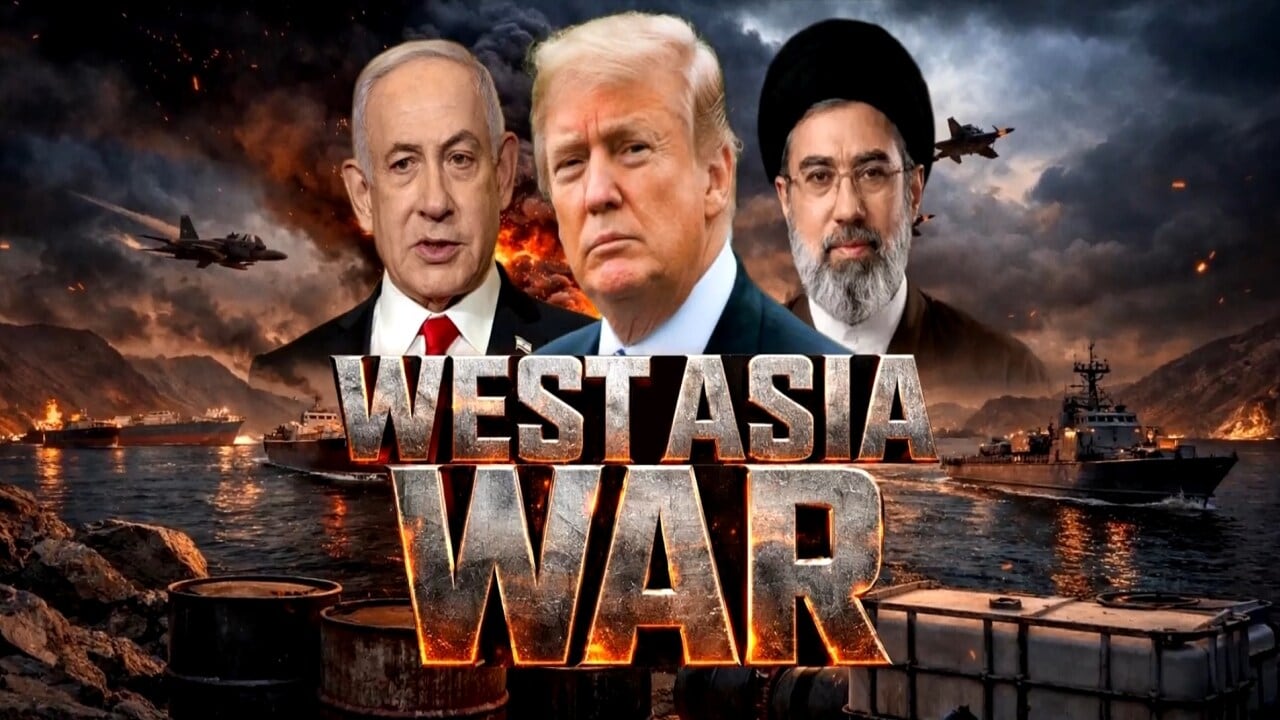
Reports from the dark blue expanse confirm that the United States and Iran have transitioned from the biting rhetoric of press briefings to the kinetic reality of exchanged fire. The spark was the seizure of a tanker, a massive slab of steel carrying the lifeblood of global industry, now sitting under the shadow of American boarding parties. In the offices of Washington and the halls of Tehran, this is a chess move. In the middle of the ocean, it is the smell of salt, the scream of incoming rounds, and the terrifying realization that the world’s most dangerous bottleneck has just become a shooting gallery.
The Choke Point
To understand why a single ship matters, you have to look at the map—not as a collection of borders, but as a circulatory system. Imagine a giant funnel. This funnel is only twenty-one miles wide at its narrowest point. Through this tiny gap, nearly a fifth of the world’s oil consumption flows every single day.
If you stop the flow here, the world doesn’t just get more expensive. It slows down. It stutters.
The seizure of the vessel wasn't a random act of piracy. It was a calculated exertion of sovereignty. For the U.S. Navy, it was an enforcement of international law and a response to what they describe as "continued Iranian interference" with commercial shipping. For Tehran, the presence of American steel in their backyard is an existential provocation. When the first shots were exchanged, the price of a barrel of crude didn't just tick upward on a screen in Manhattan; it signaled a shift in the temperature of a decades-old cold war that is rapidly turning white-hot.
The View from the Steel Deck
Consider a hypothetical sailor—let’s call him Elias—stationed on a destroyer near the seized tanker.
Elias is twenty-three. He grew up in a landlocked town in Nebraska where the loudest noise was a passing freight train. Now, he is standing behind a mounted machine gun, squinting through the haze at a fast-attack craft zipping across the wake like a water strider. He isn't thinking about the Joint Comprehensive Plan of Action or the nuances of the Islamic Revolutionary Guard Corps’ hierarchy.
He is thinking about the physics of the moment.
He is thinking about how a fiberglass boat, if it carries enough explosives, can punch a hole in a billion-dollar ship. He is thinking about the radio chatter, a frantic mix of English and Farsi that sounds less like diplomacy and more like a playground fight about to turn bloody. When the order to fire came, it wasn't a grand cinematic moment. It was a series of mechanical clicks, a sudden, jarring heat, and the realization that the distance between "peace" and "war" is exactly the length of a trigger pull.
The "exchange of fire" reported in the headlines sounds sterile. It sounds like an even trade. In reality, it is chaos. It is the sound of heavy metal tearing through the air and the spray of water kicked up by misses that feel far too close to hits.
A History Written in Salt and Oil
We have been here before, though the memory feels thin. In the late 1980s, the "Tanker War" saw these same waters turned into a graveyard for merchant vessels. Back then, mines drifted like lethal buoys in the dark, and the superpowers of the era found themselves dragged into a conflict they thought they could manage from afar.
The ghost of that era haunts every decision made today.
The U.S. justifies its presence as the "policeman of the seas," ensuring that the global economy doesn't collapse because of a regional feud. Iran views this as an imperial hangover, arguing that the security of the Persian Gulf belongs to the nations that share its coastline. Both sides are convinced they are the hero of the story. Both sides are convinced the other is the aggressor.
But the ocean doesn't care about narratives.
When the US seizes a ship, it isn't just taking custody of cargo. It is taking a hostage in a high-stakes game of credibility. If the US backs down, the "freedom of navigation" they preach becomes a hollow slogan. If Iran doesn't respond, their domestic image of "unyielding resistance" crumbles. This is the trap of the Strait: the cost of de-escalation is often higher than the cost of a fight.
The Invisible Stakes
Why does this matter to someone sitting three thousand miles away, drinking coffee and scrolling through the news?
Because the world is smaller than we like to admit.
Every plastic toy, every gallon of gas, every chemical fertilizer used to grow the grain in your pantry is tethered by an invisible string to the stability of the Strait of Hormuz. When the guns go off there, the vibrations travel. They travel through the insurance markets of London. They travel through the energy grids of East Asia. They travel through the grocery bills of families who have never heard of a "seized tanker."
We live in a world of "just-in-time" logistics. We don't keep reserves for years; we keep them for days. A sustained conflict in these waters doesn't just mean a "live update" on a news site. It means a fundamental breakdown in the way we move things from point A to point B. It is the friction that stops the machine.
The Weight of the Next Hour
The updates coming in now are fragmented. We hear about "distress signals" and "warning shots." We see blurry satellite footage of ships shadowed by smaller, faster shadows.
The uncertainty is the worst part.
In the digital age, we expect to see the war in real-time, 4K resolution, with a play-by-play commentary. But out there, under the heavy sun, there is a fog of war that no fiber-optic cable can pierce. What happened in the last twenty minutes? Did another boat approach? Was there a second volley?
The sailors on both sides are tired. The commanders are staring at screens, waiting for a signal from their respective capitals that might never come—or might come too late. This is the fragility of our modern existence. We have built a global civilization on the assumption that the seas will remain open, that the rules will be followed, and that the men with the guns will always have the presence of mind to miss.
Today, they stopped missing.
There is a specific kind of dread that comes with realizing that the "unthinkable" is actually quite simple. It doesn't require a grand conspiracy or a Bond-villain plot. It only requires a misunderstanding, a nervous finger on a button, and a stretch of water that is too small for the egos of the nations that surround it.
As the sun sets over the Persian Gulf, the purple water returns. The ships are still there, dark silhouettes against a bleeding sky. The fire has been exchanged, the metal has been seized, and the world is holding its breath again. But this time, the lungs are burning, and the silence is starting to feel like a countdown.
The ocean has a way of swallowing secrets, but it cannot hide the smoke rising from the horizon. It is a signal fire, warning us that the distance between a live update and a global catastrophe is much, much shorter than we ever dared to imagine.