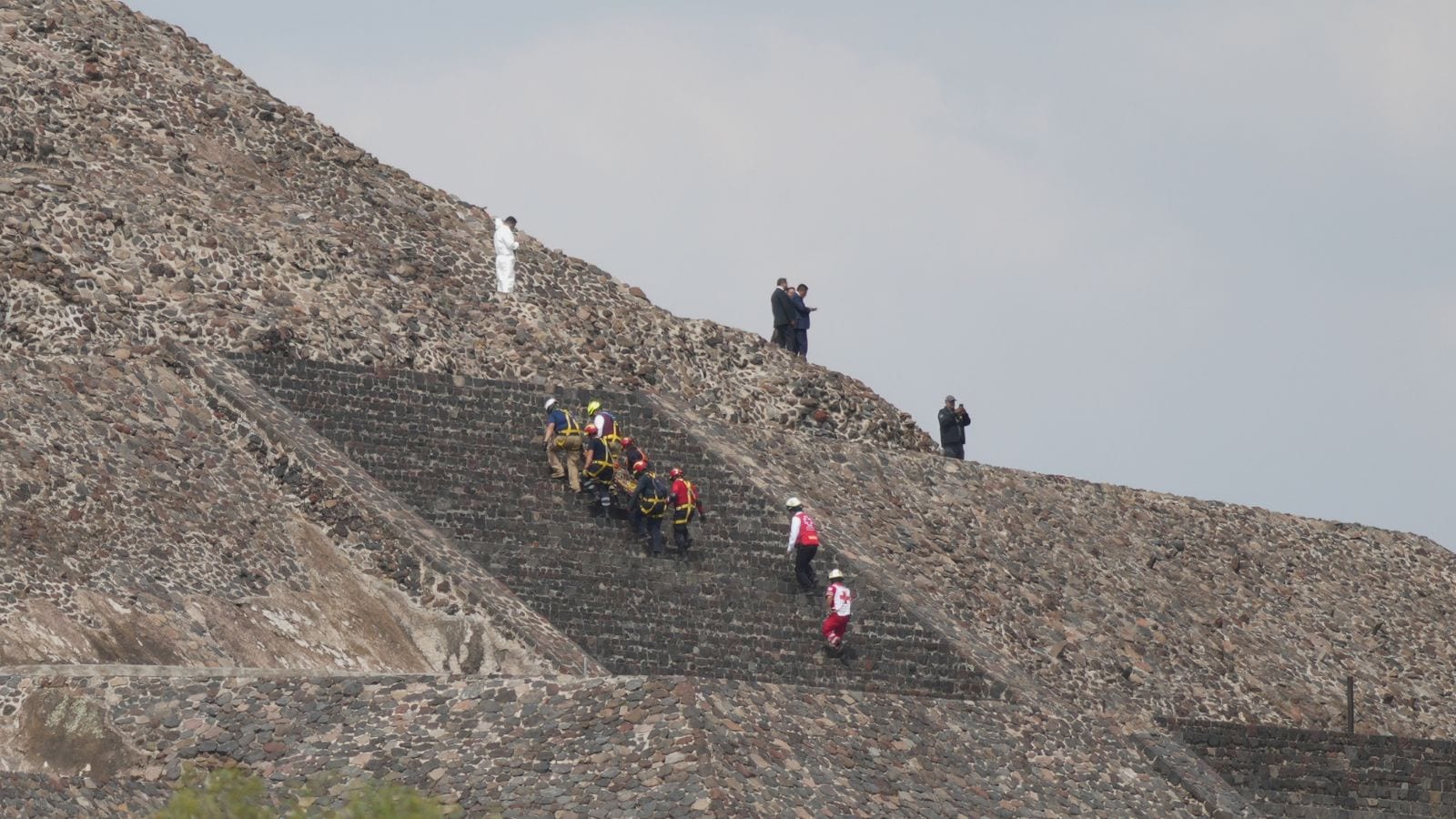
The headlines are predictable. A Canadian tourist is killed at the Teotihuacán pyramids, six more are wounded, and the internet erupts into a choreographed dance of travel warnings and xenophobic panic. The media feeds you a narrative of "random violence" in "dangerous zones."
They are lying to you.
Not because the tragedy didn't happen, but because the context they provide is intellectually bankrupt. The standard reaction—clutching pearls and canceling flight vouchers—is based on a fundamental misunderstanding of risk, geography, and the mechanics of global instability. If you want to stay safe, stop reading the State Department's color-coded maps and start looking at the math.
The Myth of the Sacred Site Safety Net
Mainstream reporting treats archaeological sites like Teotihuacán as if they should be encased in a psychic shield of historical reverence. When a gunman opens fire near the Sun and Moon pyramids, the shock stems from a broken assumption: that "tourist zones" are distinct from the socio-political reality of the country hosting them.
Here is the cold reality: Teotihuacán is not a theme park. It is a massive, porous geographic area situated in the State of Mexico (Edomex), a region that has grappled with systemic security issues for decades. To be "shocked" that violence spilled into a historical site is to admit you haven't been paying attention to the borderlines of urban sprawl and cartel logistics.
The media focuses on the "tourist" because that sells clicks in Toronto and New York. They ignore the fact that these incidents are rarely targeted at foreigners for being foreigners. They are usually the collateral damage of local turf disputes that have nothing to do with you. You aren't the target; you’re just in the way of a business transaction you don't understand.
Stop Obsessing Over Body Counts and Start Calculating Proximity
"Is Mexico safe?" is the wrong question. It’s a lazy question. It’s like asking if "the ocean" is wet—it depends on whether you’re on a boat or drowning.
Safety is not a binary state. It is a gradient. When you see a headline about a shooting at a pyramid, your brain registers "Mexico = Danger." This is a cognitive failure known as the availability heuristic. You judge the probability of an event based on how easily you can recall an example of it.
The Math of the Unlucky
- Annual Visitors to Teotihuacán: Approximately 4 million.
- Incidents of Mass Targeted Violence Against Foreigners: Statistically negligible.
- Your Risk of Dying in a Car Crash on the Way to the Airport: Significantly higher than being caught in a crossfire at a UNESCO World Heritage site.
I have spent years navigating high-risk environments, from the backstreets of Tepito to the disputed territories of Michoacán. The most dangerous thing I see tourists do isn't visiting "dangerous" countries; it’s practicing "situational blindness." They assume that because they paid an entrance fee, the laws of cause and effect have been suspended.
The Fallacy of the Travel Advisory
The State Department and Global Affairs Canada love their level-based warnings. They are designed to protect bureaucracies, not travelers. If a government warns you not to go and you go anyway, they are legally shielded from the fallout.
These advisories are blunt instruments. They categorize entire states—some larger than European countries—under a single "Do Not Travel" banner. This is the equivalent of telling someone not to visit Chicago because there was a shooting in a specific corner of the South Side, or blacklisting the entire state of Florida because of a crime in Miami.
Why the Advisories Fail You:
- They are Reactive: They update after an incident occurs. They are a rearview mirror, not a crystal ball.
- They Ignore Hyper-Locality: Violence in Mexico is surgical. It happens on specific streets, between specific hours, involving specific players. A blanket warning tells you nothing about whether the street two blocks over is perfectly fine.
- They Breed False Security: By telling you where is "dangerous," they imply that everywhere else is "safe." This leads to the exact kind of complacency that gets people into trouble in "safe" zones like Playa del Carmen or Tulum.
The Luxury Bubble is a Death Trap
The competitor's article likely suggests staying in "well-traveled areas" or "sticking to guided tours." This is the most dangerous advice you can follow.
Why? Because criminals aren't stupid. They go where the money is.
The "safe" corridors are high-value target environments. When you stay in a gated resort or only visit the most famous landmarks, you are announcing your status as a high-yield, low-resistance target. The "off the beaten path" locations that people fear are often safer because there is no profit motive for organized crime to disrupt the local equilibrium there.
Logic Over Emotion: A Guide to Not Being a Victim
If you want to actually survive global travel in the 2020s, you need to stop acting like a consumer and start acting like an analyst.
1. Respect the Invisible Boundaries
In Mexico, territory is everything. Violence at a pyramid isn't "random." It is usually a flare-up of a local dispute over extortion (cobro de piso) or transit routes. Before you visit a site, check the local Spanish-language news (nota roja) for the last 48 hours. If there has been a spike in local homicides, wait a week. The heat usually dissipates as quickly as it rises.
2. Stop Dressing Like a Target
The Canadian killed at Teotihuacán was a tragedy, but many travelers invite scrutiny by projecting extreme wealth in areas where the average monthly wage is less than the cost of their iPhone. If you look like a walking ATM, don't be surprised when someone tries to make a withdrawal.
3. The "Guided Tour" Delusion
People think a tour guide is a bodyguard. They aren't. They are a person with a microphone and a permit. In many cases, large tour groups are more vulnerable because they are predictable, slow-moving, and cannot react quickly to a changing environment.
The Ethical Cowardice of "Avoidance"
The loudest voices after a shooting like this are the ones shouting "Just don't go to Mexico!"
This is not just bad travel advice; it’s a form of economic warfare. When tourism dries up because of a single, isolated incident, the local economy collapses. When the local economy collapses, the only employer left is the cartels. By staying away, you are directly contributing to the cycle of poverty and desperation that fuels the very violence you are afraid of.
The "sensible" person says, "Why take the risk?"
The "insider" says, "Understand the risk, mitigate it, and stop being a coward."
Stop Looking for "Safe" and Start Looking for "Smart"
There is no such thing as a safe destination. There are only varying degrees of risk and varying levels of personal competence.
The shooting at Teotihuacán was a statistical anomaly exploited for emotional resonance. It is a tragedy for the victims, but it is not a data point that should change your travel plans. If you are waiting for a world where gunmen never enter public spaces, you will never leave your house—and even then, you aren't safe.
The reality is that Mexico remains one of the most culturally rich, accessible, and rewarding places on earth. The violence is a localized cancer, not a systemic rot that targets every person with a foreign passport.
If you want to stay safe at the pyramids, don't look for more police. Look for an exit strategy. Don't look for a "safe" hotel. Look for a hotel with two exits and a staff that doesn't wear uniforms.
Stop asking if a country is safe. Ask if you are prepared. If you aren't, stay home. The pyramids don't need more tourists who are scared of shadows; they need travelers who understand that history is always written in blood, and the present is no different.
The world is dangerous. Deal with it or get out of the way.