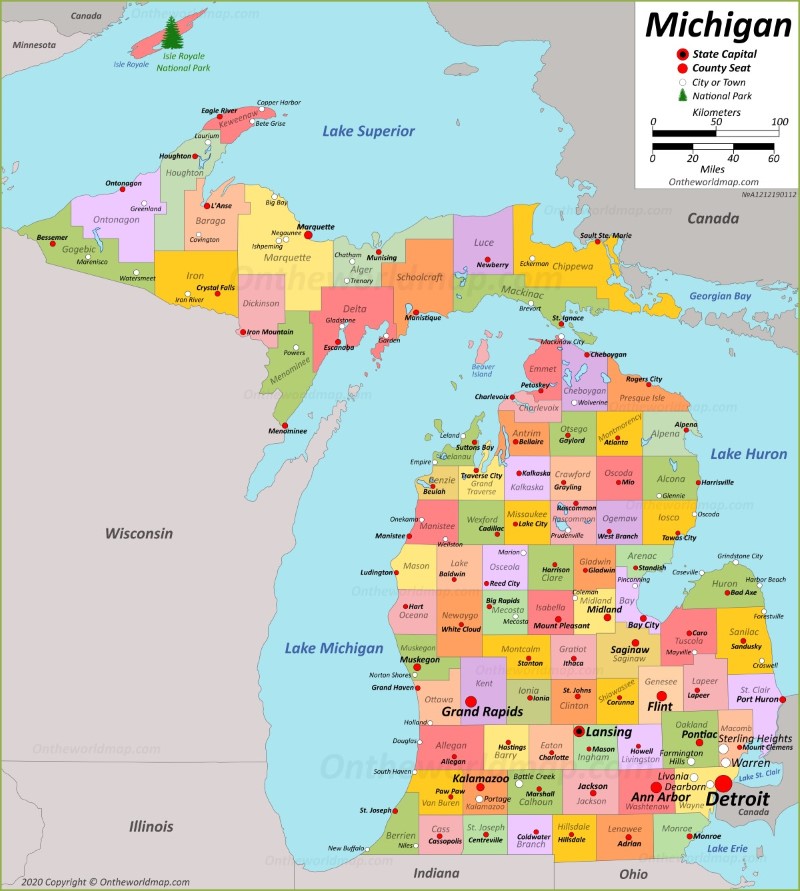
In November 2024, thousands of Arab American and Muslim voters in Michigan made a calculated bet. Frustrated by the Biden administration's handling of the war in Gaza, they broke away from the Democratic Party and helped hand Donald Trump a decisive victory in one of the country's most critical swing states. Today, many of those same voters are watching their communities, mosques, and religious practices come under renewed political and legislative fire from the very movement they helped return to power.
It's a harsh political reality. For an alternative view, see: this related article.
If you want to understand how we got here, you have to look past the surface-level punditry that treats Muslim voters as a monolith. People in Dearborn, Hamtramck, and across Wayne County didn't wake up one morning and suddenly fall in love with MAGA politics. They made a transactional choice based on immediate pain, broken promises, and a desperate desire to punish an incumbent administration they felt was funding the destruction of their families overseas.
Why Michigan Muslims Broke With the Democratic Party in 2024
For two decades following 9/11, American Muslims voted reliably Democratic. That loyalty wasn't built on blind devotion—it was built on self-preservation against post-9/11 surveillance, profiling, and open hostility from the Republican right. Related insight on this matter has been shared by TIME.
Then came October 2023. As Israeli military operations in Gaza escalated and the civilian death toll climbed into the tens of thousands, Arab Americans in Southeast Michigan watched Washington continue to send billions of dollars in weapons without meaningful conditions.
The "Uncommitted" movement during the February 2024 Michigan Democratic primary wasn't a stunt. Over 100,000 voters cast uncommitted ballots, sending an unmistakable warning shot to the White House. Yet the administration's policy barely budged. By the time Kamala Harris took over the top of the ticket, the damage in places like Dearborn—the first Arab-majority city in the United States—was irreversible.
Trump saw an opening and walked right through it. He visited Dearborn, met with local leaders, and promised peace in the Middle East. He stood onstage with prominent community figures in Novi and pitched himself as the anti-war candidate who would end the bloodshed immediately. For voters exhausted by polite diplomatic condolences paired with continuous arms shipments, Trump's blunt transactional pitch felt like the only alternative left.
In Dearborn, Trump won roughly 42% of the vote, while Kamala Harris dropped to 36%, with Green Party candidate Jill Stein capturing around 18%. In Hamtramck—a small city near Detroit with an all-Muslim city council whose mayor, Amer Ghalib, formally endorsed Trump—the shift was even more dramatic. Trump won Michigan by roughly 80,000 votes. Without that massive collapse in Democratic turnout and the surge in protest votes across Wayne County, the electoral map would have looked very different.
The Shift From Campaign Promises to Policy Reality
Politics has a short memory, especially once the ballots are counted. Almost immediately after the 2024 election, the gap between campaign-trail outreach and governing reality began to widen.
Trump's cabinet picks sent an immediate chill through Arab American and Muslim civic organizations. Nominations of staunchly pro-settlement figures like Mike Huckabee as ambassador to Israel, Elise Stefanik at the United Nations, and Marco Rubio as Secretary of State signaled that the incoming administration wasn't planning to rein in Israeli military actions—it was planning to remove whatever guardrails remained.
But the backlash hasn't stayed confined to foreign policy. Across the country, and increasingly inside Michigan's own political orbit, anti-Muslim rhetoric and policy proposals have resurfaced with an intensity that feels eerily familiar to anyone who lived through the 2015–2017 era.
The Return of Travel Restrictions and Visa Scrutiny
During his first term, Trump's Executive Order 13769—widely known as the Muslim ban—separated families, stranded students, and blocked travelers from several Muslim-majority nations. While President Biden revoked those restrictions on his first day in office in 2021, Trump campaigned openly on bringing back ideological screening and expanded travel bans.
Since returning to the White House, aggressive vetting protocols, visa revocations for foreign students who participated in campus Gaza protests, and heightened scrutiny at ports of entry have put Muslim travelers and immigrant families back on edge. When federal authorities start targeting legal residents and student visa holders over political speech related to Palestine, the message to American Muslim communities is crystal clear.
Local Backlash and Attacks on Islamic Institutions
What makes the current moment sting even more for Michigan Muslims is how close to home the hostility has landed.
In cities like Dearborn and Hamtramck, conservative commentators and national media figures have repeatedly targeted local governance, school board debates, and public displays of Islamic faith. Routine civic life—whether it's calls to prayer, halal dietary accommodations, or Muslim representation on municipal boards—regularly gets framed on national right-wing platforms as an existential threat to American culture.
Even conservative politicians who happily accepted Muslim endorsements during the election cycle have largely stayed quiet when influencers attack Dearborn as "America's jihad capital" or push state-level legislation aimed at restricting foreign-influenced curricula and religious practices. You don't get to pocket a community's votes in November and then look the other way when your own political ecosystem paints their faith as un-American six months later.
Was the 2024 Protest Vote a Strategic Mistake
Ask ten people in a Dearborn coffee shop today whether they regret their 2024 vote, and you'll get ten complicated answers.
I've followed swing-state coalition politics for years, and the biggest mistake outside observers make is assuming voters regret punishing the party that harmed them first. Most Muslim voters who refused to back Harris aren't suddenly wishing they had voted for her. From their perspective, rewarding an administration that ignored their pleas over Gaza would have destroyed whatever leverage they had left. If Democrats knew they could take Arab and Muslim votes for granted regardless of foreign policy, nothing would ever change.
At the same time, pretending that helping elect Trump came without severe consequences ignores reality.
Here is what the transactional gamble actually produced:
- Zero leverage over Middle East policy. Once Trump secured the White House, the promised "immediate peace" turned into greenlights for wider military escalation, proposals to permanently displace Palestinians from Gaza, and attacks on international bodies like the International Criminal Court.
- Weakened civil rights protections. Federal agencies tasked with investigating anti-Muslim discrimination and hate crimes have shifted priorities, leaving mosques and Islamic schools with fewer federal safeguards.
- Political isolation. By breaking away from the Democratic coalition without building independent institutional power inside the GOP, Michigan Muslims found themselves caught between a Democratic Party that resented them for costing it the election and a Republican movement whose base remains deeply suspicious of Islam.
That's the trap of single-issue protest voting in a two-party system. You can successfully burn down the house you're unhappy with, only to realize nobody built you a new one.
The Deeper Divide Inside Michigan's Muslim Community
Another thing national coverage routinely misses is that Michigan's Muslim population isn't one uniform bloc. Treating it like one leads to sloppy analysis.
In places like Hamtramck, many Yemeni and Bangladeshi Muslim voters are socially conservative. Their alignment with Republicans wasn't just about Gaza—it was also driven by opposition to LGBTQ+ curriculum in public schools and traditional views on family structure. In 2023, Hamtramck's city council banned Pride flags on city property, a move that drew praise from national conservative figures like Michael Flynn long before the 2024 presidential race heated up.
Meanwhile, many younger Arab American activists in Dearborn and Detroit approach politics from a progressive, anti-imperialist framework. They didn't vote for Trump out of social conservatism; they voted third-party or left the top of the ticket blank because they refused to endorse what they viewed as complicity in war crimes.
When anti-Muslim rhetoric flares up on the national stage, however, those internal distinctions disappear. Right-wing pundits attacking Islam don't stop to ask whether a mosque in Wayne County voted for Trump, Stein, or Harris. To them, the faith itself is the target.
How American Muslims Can Rebuild Real Political Leverage
If there is a lesson from the 2024 cycle and its aftermath, it's that voting every four years out of anger isn't a strategy. Anger gets headlines, and it can flip a swing state, but it doesn't protect your community once the inauguration is over.
Real political power comes from sustained, year-round infrastructure that forces both parties to pay a price when they cross red lines—and rewards them only when they deliver concrete results.
Focus on Local and State-Level Power First
Presidential politics sucks all the oxygen out of the room, yet state legislatures, county commissions, school boards, and local prosecutors have far more direct impact on daily religious freedom and civil rights. Organizations like the Council on American-Islamic Relations (CAIR) and Emgage have repeatedly pointed out that communities with deep municipal representation weather national political storms much better than those relying solely on presidential outreach.
Demand Written Commitments Before Endorsements
Handshakes at campaign rallies and vague promises to "bring peace" mean nothing in Washington. Community leaders and political action committees need to tie endorsements and campaign contributions to specific, measurable policy commitments—whether that involves civil rights enforcement, anti-discrimination statutes, or human rights conditions on foreign aid.
Build Cross-Coalition Alliances
No minority group in America—whether it makes up 2% of Michigan's electorate or 10%—can protect its civil rights alone. When religious liberties, free speech on college campuses, or immigrant due process rights come under attack, the strongest defense comes from broad coalitions uniting civil rights groups, labor unions, faith communities, and legal defense funds like the ACLU.
Michigan Muslims proved in 2024 that they hold enough electoral weight in a battleground state to decide who sits in the Oval Office. Turning that raw electoral power into lasting protection for their faith and civil rights requires refusing to be used as a temporary prop by either party—and holding every politician accountable long after election night ends.