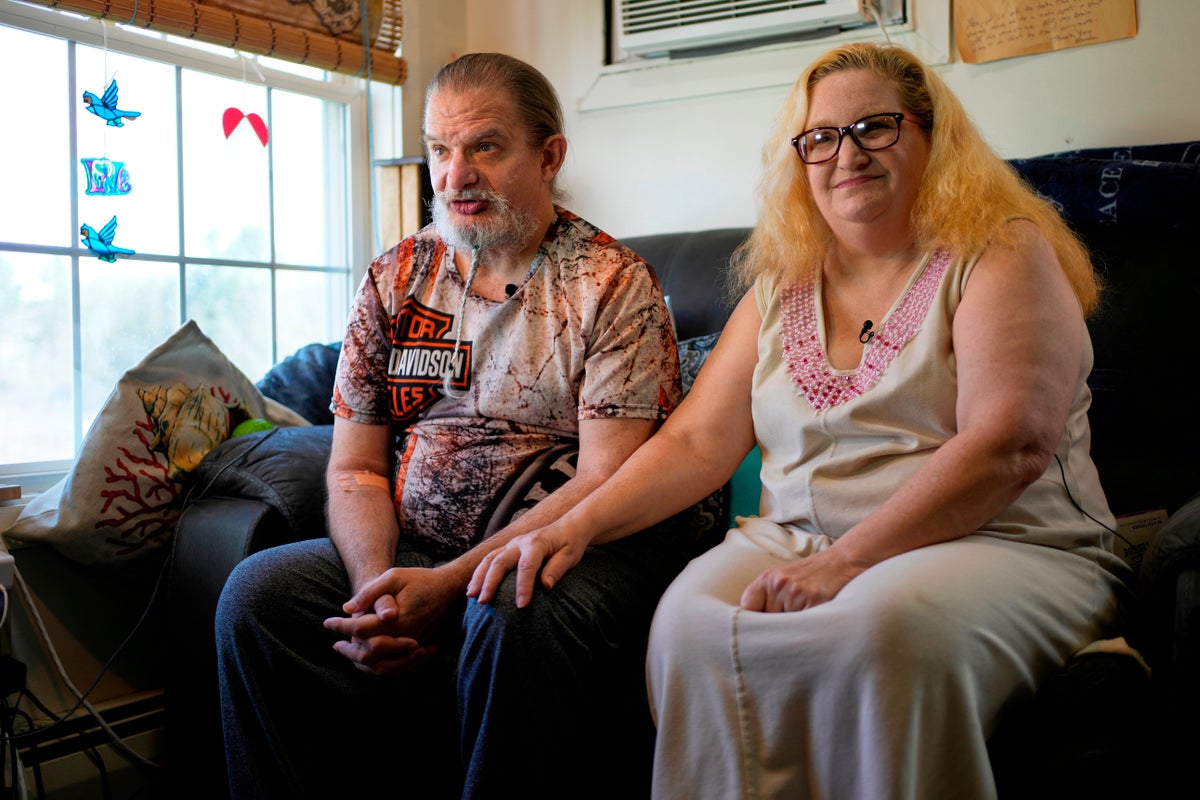
The demographic intersection of an aging population and a critical shortage of professional home care aides has created a structural bottleneck in healthcare. By the time the final cohorts of the baby boomer generation cross the age threshold of 80, the baseline labor supply of human care providers will fail to match the aggregate demand for daily cognitive and physical assistance. When professional human care is financially or geographically unavailable, the burden of care shifts entirely onto familial proxies, usually spouses or adult children.
The introduction of home-bound assistive robotics, such as the Hello Robot Stretch 4 platform tested by the National Institute on Aging and the University of New Hampshire, presents a quantifiable shift in the microeconomics of the household. Rather than acting as an autonomous, full-substitute human replacement, an assistive robot functions as a high-efficiency task-mitigation system. Analyzing this technology through engineering constraints and economic cost functions reveals how automated task delegation alters both caregiver depletion rates and household operating capital.
The Cognitive Friction and Depletion Model of Caregiving
To understand how assistive robotics alter home care, the baseline workload of a human caregiver must be structured into explicit component costs. Familial caregiving is governed by a strict resource constraint: a finite daily allocation of physical and psychological energy. Every intervention required by a patient with neurodegenerative or traumatic brain injury subtracts from this fixed reserve.
In standard human-to-human care modeling, caregiving tasks are split into two categories:
- Activities of Daily Living (ADLs): High-touch physical assistance, including bathing, dressing, toileting, and transfer mechanics.
- Instrumental Activities of Daily Living (IADLs): Operational and cognitive tasks, including hydration monitoring, meal scheduling, medication compliance, and physical therapy regulation.
While ADLs require fine motor skills and physical strength that current mobile manipulators cannot safely execute in unconstrained home environments, IADLs are highly repetitive, schedule-driven, and rule-based.
When a human caregiver is solely responsible for executing both ADLs and IADLs, the constant interruption cycle prevents sustained periods of physiological recovery. This phenomenon, known as the caregiver depletion cycle, generates compounding psychological stress and economic inefficiencies. For example, if a spouse must intervene every 90 minutes to enforce hydration or prompt cognitive exercises, the continuous monitoring state eliminates the possibility of leaving the domestic environment for vital supply procurement or personal rest. The human caregiver is functionally tethered to a fixed spatial radius, creating secondary economic costs such as relying on high-premium delivery services for basic grocery needs.
The Assistive Robot as a Task-Mitigation System
Deploying a mobile manipulation platform like the Stretch 4 alters the household care equation by decoupling specific IADLs from human labor. The mechanical architecture of the robot—a slender, single-arm, wheeled chassis optimized for narrow indoor navigation—is purpose-built to operate as a physical and visual signaling node.
The operational mechanics of this automation follow a precise three-stage execution loop:
1. Chronological Trigger and Navigation
The robot exits its localized charging station based on pre-programmed temporal markers synchronized to the patient’s medical protocol. It navigates to the patient's coordinates using onboard LiDAR and spatial mapping arrays, eliminating the need for a human to initiate the interaction.
2. Multimodal Prompting and Verification
Upon arrival, the device utilizes a digital display interface alongside text-to-speech audio prompts to deliver specific instructions (e.g., prompting hydration, initiating scheduled physical therapy movements). The interaction requires active validation from the patient via vocal or tactile input, creating a closed-loop confirmation of task compliance.
3. Dynamic Demonstration
When executing physical therapy or cognitive stimulation protocols, the interface shifts from a static prompt to an active instructional guide. The visual display renders standard movement patterns, guiding the patient through physical adjustments without requiring human supervision.
The immediate result of this execution loop is the liberation of human labor time. If the device successfully manages four 15-minute IADL interventions per day, it extracts a full hour of high-friction cognitive work from the human caregiver’s daily ledger. This single hour of structural relief breaks the spatial confinement bottleneck, permitting the primary caregiver to execute external logistics or enter a state of complete physiological rest.
Quantifying the Caregiver Cost Function
The macroeconomic value of introducing assistive robotics into domestic environments can be evaluated by analyzing the household expenditure function for care. A family unit managing long-term cognitive decline faces a stark optimization problem: they must minimize total care costs while keeping patient health metrics above a critical safety threshold.
The traditional cost function of a care-dependent household is defined by three distinct variables:
$$C_{\text{total}} = C_{\text{professional}} + C_{\text{direct_out_of_pocket}} + C_{\text{opportunity}}$$
Where:
- $C_{\text{professional}}$ represents the hourly market rate of outsourced home health aides.
- $C_{\text{direct_out_of_pocket}}$ represents the premium costs associated with localized immobility, such as courier fees for medication and grocery delivery.
- $C_{\text{opportunity}}$ represents the lost wages or productivity of the family caregiver who must sacrifice professional labor hours to provide unpaid monitoring.
When the supply of professional care aides contracts, the market rate $C_{\text{professional}}$ climbs past an affordable threshold for median-income households. This forced reliance on internal family labor drives $C_{\text{opportunity}}$ or $C_{\text{direct_out_of_pocket}}$ to unsustainable levels.
By integrating a hardware-as-a-service or research-subsidized robotic platform, the cost equation shifts. The robot acts as a direct substitute for the repetitive, low-risk operational hours otherwise billed by an external service provider or absorbed by a spouse. By automating the monitoring of hydration, feeding schedules, and physical therapy compliance, the device reduces the frequency of necessary human intervention. The primary caregiver can then optimize household logistics, reducing reliance on premium delivery services and lowering the $C_{\text{direct_out_of_pocket}}$ variable.
Technical Limitations and Edge-Case Vulnerabilities
A rigorous strategic assessment of robotics in eldercare requires mapping the structural limits of current hardware and software architectures. Automated systems are not a flawless panacea; they operate within clear boundary constraints that, if breached, can lead to system failures or increased caregiver friction.
The first limitation is the problem of variable environment navigation. Domestically deployed robots must negotiate unpredictable, highly dynamic spaces filled with shifting obstacles, loose carpets, thresholds, and varied lighting conditions. While a research team can map a home during initialization, subsequent changes in furniture placement or discarded objects can cause path-planning failures. If a robot becomes immobilized by a stray item, the caregiver must intervene to physically rescue the machine, reversing the direction of task utility.
The second limitation involves the cognitive compliance bottleneck. For an autonomous machine to successfully execute an IADL prompt, the patient must possess the cognitive capacity to comprehend and accept the machine’s authority. In advanced stages of neurodegenerative decline, patients frequently experience agitation, paranoia, or profound confusion when interacting with non-human entities. A googly-eyed digital interface designed to soften the mechanical aesthetic may achieve compliance in mild-to-moderate cases, but it risks triggering rejection or aggressive responses during acute cognitive fluctuations. If the patient refuses to cooperate with the automated prompt, a human caregiver must step in to manage the interaction, neutralizing the automated time savings.
The third bottleneck is the stark division between cognitive guidance and physical execution. The current generation of lightweight home care robots cannot perform high-mass lifting or complex tactile feedback tasks. They cannot catch a falling patient, assist a person out of a low chair, or clean up physical waste.
The scope of automation is strictly bound by the table below:
| Automated Capabilities (Current State) | Human-Dependent Requirements (Non-Automated) |
|---|---|
| Chronological tracking and time-based alerts | High-mass transfer mechanics (e.g., bed-to-chair lifting) |
| Closed-loop hydration and nutrition auditing | Fine motor ADL execution (e.g., buttoning clothing, bathing) |
| Non-contact physical therapy and exercise guidance | Real-time triage of unmodeled physical trauma or falls |
| Multi-modal vocal and visual cognitive stimulation | Complex behavioral management during acute psychological distress |
Strategic Implementation Framework for Automated Care Integration
Deploying robotics into a domestic care ecosystem requires a structured, multi-phase operational strategy to ensure the technology delivers measurable utility rather than technical overhead.
Phase 1: Environmental Standardization and Hardening
Before hardware deployment, the domestic space must be optimized for robotic locomotion. This involves removing structural barriers, securing loose floor coverings, and establishing dedicated, unobstructed paths between the primary charging hub and the patient's primary resting areas. Clear sightlines must be maintained to maximize the efficacy of the robot's onboard spatial sensors.
Phase 2: Task Segregation and Scripting
The care team must catalog all daily interventions and isolate predictable, schedule-driven IADLs from dynamic, high-risk ADLs. The predictable tasks are then translated into clear behavioral trees within the robot's software. Prompts must be scripted with precise, simple syntax to minimize cognitive resistance from the patient.
Phase 3: Supervised Hand-Off and Calibration
Initial deployments require a human-in-the-loop validation period. The primary caregiver monitors the robot's execution cycles, correcting navigational errors and observing the patient's psychological response to automated prompts. Software parameters—such as audio volume, screen brightness, and prompt frequency—are calibrated based on this observational data.
Phase 4: Full Decoupled Autonomy
Once the patient demonstrates consistent task compliance and the machine completes its navigation loops without structural failure, the caregiver can transition to decoupled scheduling. During these blocks, the caregiver can safely disengage from the home environment or focus on high-leverage personal recovery, trusting the system to maintain the baseline cadence of IADL compliance.
The long-term scaling of home care automation relies heavily on refining these deployment protocols. As the global supply of human labor continues to diverge from the care requirements of an aging population, the optimization of assistive robotics will shift from an experimental research initiative to a core operational necessity for home-based healthcare systems. The primary metric of success for these platforms remains their ability to lower the caregiver's daily cost function, ensuring the home remains a viable, sustainable environment for long-term care management.