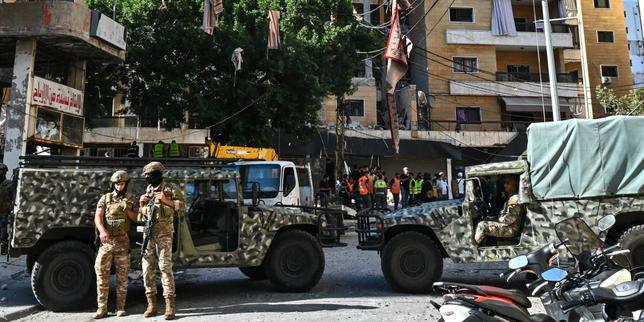
The fragile diplomatic architecture designed to prevent a total Middle Eastern meltdown is collapsing. Tehran’s recent declaration that American and Israeli military bases across the region are now legitimate targets follows a sudden, devastating Israeli airstrike on southern Beirut. This rapid escalation exposes a fundamental truth: the indirect peace talks mediated by Pakistan cannot survive while military operations on the ground directly contradict diplomatic promises. Tehran views the continuing naval blockade of its ports and the renewed bombardment of its Lebanese ally, Hezbollah, as proof that Washington and Tel Aviv are acting in bad faith. A wider regional conflict is no longer a distant threat; it is unfolding in real time.
For decades, the standard playbook for managing Middle Eastern conflicts relied on containing violence within predictable borders. That strategy is obsolete. By linking the survival of Hezbollah in Lebanon directly to its own security talks with the United States, Iran has changed the rules of regional diplomacy. The latest strikes on the Dahiyeh district of Beirut did more than destroy buildings. They shattered the assumption that a regional ceasefire could be negotiated while leaving localized battlefronts active.
The Fiction of the Separated Front
The core failure of current Western diplomacy is the belief that Washington can negotiate a grand bargain with Tehran while giving Israel a free hand in Lebanon. It does not work that way. Iranian Foreign Minister Abbas Araghchi made this reality clear by stating that a ceasefire with the United States is a ceasefire on all fronts, and a violation in Lebanon is a violation everywhere.
This is not empty rhetoric. It represents a calculated strategy driven by the Islamic Revolutionary Guard Corps. Consider the mechanics of the current confrontation:
- The Air and Sea Pincer: While US Central Command carries out self-defense strikes against Iranian radar facilities and drone command centers on Gulf islands like Qeshm, the US Navy maintains a strict counter-blockade of the Strait of Hormuz.
- The Lebanese Leverage: Iran relies on Hezbollah to project power and deter a direct attack on its own soil. With its domestic nuclear industrial base heavily damaged by previous airstrikes, Tehran sees the preservation of Hezbollah's infrastructure in Beirut as its primary remaining defense asset.
- The Broken Pipeline: When Israeli jets hit Beirut, Tehran does not just see an attack on a proxy. It sees the systematic destruction of its leverage at the negotiating table in Islamabad.
The current escalation reveals a deep disconnect between Washington's public diplomatic goals and the actions of its closest regional ally. Israeli Prime Minister Benjamin Netanyahu and Defence Minister Israel Katz ordered the Beirut strikes after claiming Hezbollah violated previous border agreements. Yet, this unilateral action occurred immediately after a US-mediated ceasefire framework took effect in Washington. This move surprised American officials and forced them into a difficult position.
The White House finds itself trapped by its own policy. It cannot openly condemn Israel's actions without appearing weak on regional security, yet it cannot convince Iran to return to the negotiating table while American weapons are used to strike Beirut. This dynamic allows regional actors to dictate the terms of engagement, leaving American diplomats to manage the fallout.
+------------------------------------------------------------------------+
|                     THE ESCALATION LOOP                                |
+------------------------------------------------------------------------+
|                                                                        |
|  [US Naval Blockade] ------> [Stalls Iranian Port Access]              |
|          ^                                     |                       |
|          |                                     v                       |
|  [US Retaliation]            [Iran Rejects Nuclear Concessions]        |
|          ^                                     |                       |
|          |                                     v                       |
|  [Hezbollah Rocket Fire] <--- [Israel Strikes Beirut Strongholds]      |
|                                                                        |
+------------------------------------------------------------------------+
The Redefined Definition of Sovereignty
The conflict has moved far beyond traditional proxy warfare. Iran's parliamentary speaker, Mohammad Bagher Qalibaf, explicitly warned that US logistics hubs, naval assets, and regional bases are now direct targets for the Iranian military. This shifts the conflict from a shadow war to a direct confrontation between states.
This transformation is driven by shifting internal politics within Iran. The regime faces significant domestic pressure from a severely weakened economy and infrastructure failures, which sparked major internal protests. Hardline factions within the leadership have consolidated power, arguing that diplomatic flexibility with the West brings economic isolation without guaranteeing security. To these hardliners, showing weakness in Lebanon would invite further domestic instability.
Concurrently, regional dynamics have grown more volatile. Iran’s previous counter-strikes against Arab Gulf states that host American forces have alienated its neighbors. This leaves Tehran diplomatically isolated but militarily desperate. When a state with severely limited diplomatic options feels cornered, its military decisions become less predictable and far more dangerous.
The Limits of Pakistan's Mediation
The current mediation effort faces structural flaws that make success unlikely. Pakistan has attempted to broker an agreement by focusing on maritime access and nuclear monitoring, but these technical solutions fail to address the core political issues.
The primary obstacle is a fundamental disagreement over timing and sequence. The United States insists that Hezbollah must stop firing rockets into northern Israel before Washington will ease its naval blockade or pressure Tel Aviv to halt its air campaign. Iran completely rejects this approach. Tehran demands an immediate end to both the maritime blockade and the strikes on Lebanon before it will discuss any limits on its remaining nuclear infrastructure.
This stalemate cannot be resolved through standard diplomatic statements. Every time a drone is intercepted over the Strait of Hormuz or an airstrike hits a residential area in Dahiyeh, the political cost of compromise increases for both sides. The International Atomic Energy Agency’s upcoming resolution demanding that Iran reveal the status of its heavily damaged nuclear enrichment sites will likely deepen the deadlock.
The belief that this conflict can be managed through temporary pauses and backchannel messages is a dangerous illusion. The current strategy of applying maximum economic pressure while attempting to contain the resulting military fallout has reached its structural limits. Without a fundamental shift in how Washington balances its alliance with Israel against its diplomatic goals with Iran, the region will remain caught in an unpredictable cycle of retaliation. The transition from controlled escalation to a broader, direct regional war is already underway, and the diplomatic tools currently in use are inadequate to stop it.