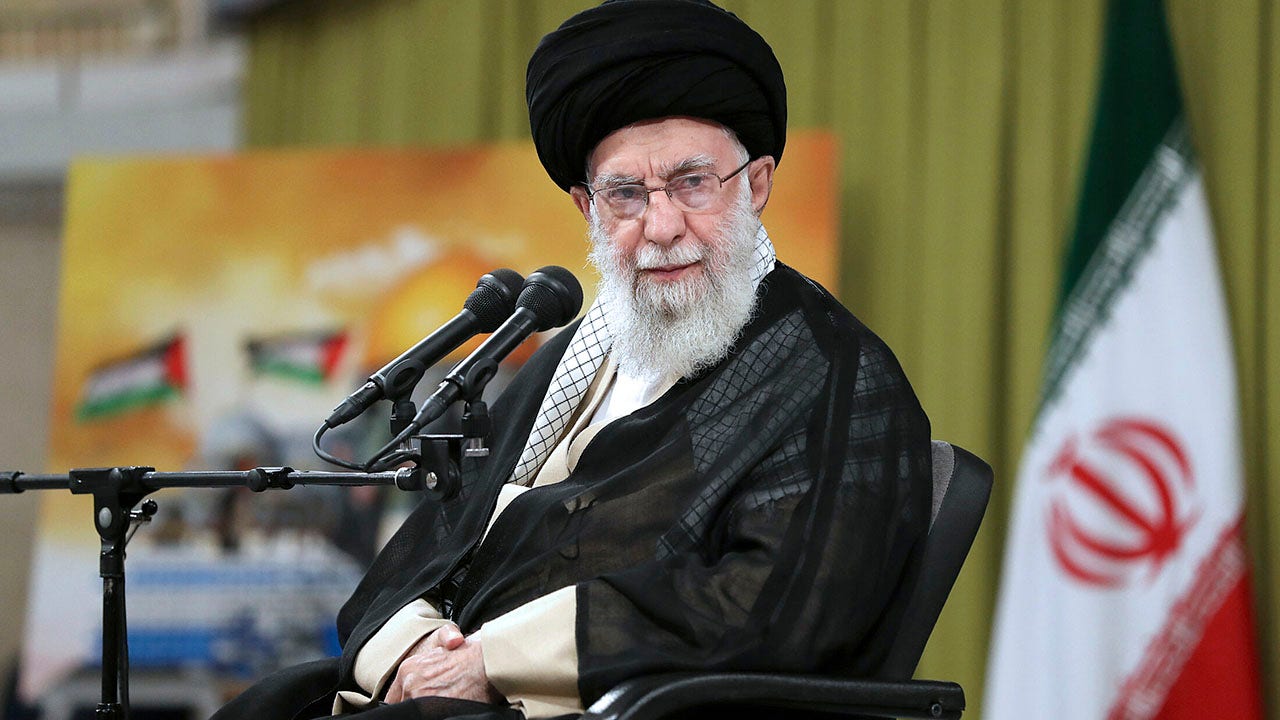
The headlines are screaming about a regional "spillover" as if the Middle East is a bathtub that just started leaking. They want you to believe we are witnessing a chaotic, accidental slide into a "US-Israel war on Iran." They are wrong. This isn't a spillover. It is a calculated, brutal architectural renovation of the regional power structure.
Mainstream media tracks every IDF strike on Hezbollah and every Houthi drone launch as a series of reactive, escalatory steps. They frame it as a cycle of violence that "nobody wants." That premise is a lie. Everyone involved—Tehran, Jerusalem, and Washington—wants this conflict, provided it stays within the parameters of their specific strategic gambles. What we are seeing is not the failure of diplomacy, but the violent pursuit of a new equilibrium. For a different perspective, consider: this related article.
The Myth of the "Accidental War"
Stop waiting for the "big one." The big one is already happening, and it looks exactly like this. The lazy consensus suggests that Israel is "stumbling" into a second front in Lebanon. I’ve spent years analyzing defense procurement and kinetic theater movements; nations do not "stumble" into multi-front wars against peer-level non-state actors like Hezbollah.
Hezbollah isn’t a ragtag militia; they are a standing army with a domestic political wing and a missile inventory that rivals most NATO members. When the IDF strikes deep into the Beqaa Valley, it isn't a "response" to a single rocket. It is the systematic dismantling of a thirty-year Iranian investment. Related coverage on this trend has been shared by TIME.
Israel has realized that the "mowing the grass" strategy—periodic, limited strikes to maintain a status quo—is dead. The new doctrine is total erasure of the proximity threat. They are betting that they can sustain a high-intensity conflict on two or three fronts because the alternative is permanent siege.
Iran’s Paper Tiger Problem
The narrative often paints Iran as a puppet master, skillfully pulling strings from the shadows. The reality? Iran is terrified.
Their entire "Axis of Resistance" was built as a deterrent to prevent an attack on Iranian soil. By forcing Hezbollah to engage, Tehran is burning its most valuable insurance policy just to stay relevant. If Hezbollah is significantly degraded, Iran loses its primary leverage against a strike on its nuclear facilities.
I’ve seen analysts argue that Iran is "luring" the US into a quagmire. Look at the data. Iran’s economy is a shambles, and its domestic legitimacy is paper-thin. They cannot afford a direct kinetic confrontation with a carrier strike group. They are playing a losing hand with a poker face that is starting to crack. They are not expanding the war; they are trying to prevent their regional influence from evaporating.
Why "De-escalation" Is a Fantasy
Washington’s obsession with "de-escalation" is the most dangerous trope in modern foreign policy. You cannot de-escalate a situation where the primary actors have irreconcilable existential goals.
- Israel cannot coexist with a radicalized, armed-to-the-teeth proxy on its northern border after the failures of October 7th.
- Hezbollah cannot retreat without losing its raison d'être as the "protector" of Lebanon.
- Iran cannot abandon its proxies without admitting the Islamic Revolution has failed its export mission.
When the State Department calls for "restraint," they are essentially asking for a return to a status quo that has already proven fatal. True stability in the Middle East only comes after one side’s capacity to wage war is physically destroyed. It’s ugly. It’s violent. But it’s the only historical reality that sticks.
The Economic Ghost in the Machine
The "conflict spreads" narrative ignores the most cold-blooded metric of all: the markets. If we were truly on the precipice of a global catastrophe, oil wouldn't be sitting in its current range. The "risk premium" is remarkably low. Why? Because the global energy market has already priced in a localized, contained burning of the Levant.
The Red Sea shipping disruptions by the Houthis are framed as a global supply chain crisis. In reality, they are a nuisance that has been largely mitigated by rerouting and increased insurance premiums. The world has signaled to the combatants: Kill each other if you must, but do not touch the Strait of Hormuz. As long as that line isn't crossed, the "war" remains a regional restructuring project rather than a global inferno.
The Lebanon Fallacy
Every pundit is currently mourning the "sovereignty of Lebanon." This is a fundamental misunderstanding of what Lebanon is in 2026. Lebanon is not a sovereign state; it is a geography where Hezbollah happens to keep its missiles.
The Lebanese Armed Forces (LAF) are a ceremonial guard compared to Hezbollah’s Radwan Force. When the IDF strikes Lebanon, they aren't attacking a country; they are attacking a forward Iranian base. To treat Lebanon as a neutral third party being "pulled into" a war is to ignore a decade of political reality where the state and the militia became indistinguishable.
The Real Winners You Aren't Watching
While the world watches the smoke over Beirut, keep your eyes on Riyadh and Abu Dhabi. The Gulf monarchies are the silent beneficiaries of this chaos.
- They want Hezbollah neutered.
- They want Iran’s regional reach shortened.
- They want the US forced back into a security guarantee role.
They will issue the standard condemnations of "Israeli aggression" for the sake of the "Arab street," but behind closed doors, they are checking their watches and wondering how long it will take the IDF to finish the job. The Abraham Accords aren't dead; they are being stress-tested. If Israel emerges with a neutralized Hezbollah, the path to a Saudi-Israeli alliance becomes a highway.
The Brutal Reality of "Humanitarian Concerns"
It is professionally unfashionable to say, but the focus on "proportionality" is a strategic distraction. In high-stakes regional realignment, proportionality is a recipe for perpetual war. The only way to end these cycles is through disproportionality—a force so overwhelming that the cost of continued resistance becomes unthinkable for the survivor.
The West's insistence on a "measured response" is what led to the twenty-year stalemate in Afghanistan and the current mess in Iraq. Israel has clearly decided to ignore this advice. They are fighting a 20th-century war of annihilation in a 21st-century world of optics, and they don't care about the likes on the post.
The Failure of Intelligence or the Success of Intent?
People ask: "How did we get here?" as if it’s a failure of policy. It’s not. This is the logical conclusion of the "Lead from Behind" and "Maximum Pressure" eras colliding. We are seeing the physical manifestation of a vacuum being filled.
If you are waiting for a ceasefire to "fix" the Middle East, you are asking for a band-aid on a gunshot wound. A ceasefire right now would simply allow Hezbollah to re-arm and Iran to recalibrate. The "conflict spreading" is actually the conflict resolving itself through the only medium the region respects: hard power.
Stop looking at the maps for "escalation." Look at the maps for consolidation. Israel is consolidating its security perimeter. Iran is consolidating its remaining influence. The US is consolidating its naval presence to ensure the fire doesn't jump the fence.
The "US-Israel war on Iran" isn't a future threat. It is a current, low-grade reality that is being managed, not avoided. The status quo died a year ago. What you are seeing now are the birth pangs of whatever comes next.
The most "dangerous" thing isn't the war spreading to Lebanon. The most dangerous thing would be stopping it before it finishes its work. History shows that an indecisive war is just a long-term down payment on a much larger massacre.
The carnage is the point. The realignment is the goal. Everything else is just noise for the evening news.
Accept the reality: the old Middle East is being razed to the ground. You can't stop the fire, so stop pretending a garden hose will save the house. Watch the foundations. That’s where the new world is being built.