The phone on a prime minister’s desk does not ring at 3:00 AM to deliver good news. When the light flashes in the quiet corridors of Canberra, it usually means the world is fracturing somewhere else, and Australia is being asked to help sweep up the glass.
For decades, the geopolitical standoff between Washington and Tehran has felt like a permanent fixture of modern anxiety. It is a conflict defined by heavy metal: warships in the Strait of Hormuz, centrifuges spinning in underground bunkers, and the invisible, crushing weight of economic sanctions that dictate whether a mother in Shiraz can buy imported medicine for her child. To the average person watching the evening news, it feels abstract. It belongs to the realm of grand strategists and talking heads on cable television.
But when a breakthrough happens, the shockwaves are intensely human.
The recent announcement of a comprehensive US-Iran peace framework caught much of the diplomatic world off guard. It is a fragile, sprawling blueprint aimed at de-escalating decades of bitter hostility, drawing back the threat of nuclear proliferation, and unwinding a sanctions regime that has choked the Iranian economy while isolating its people.
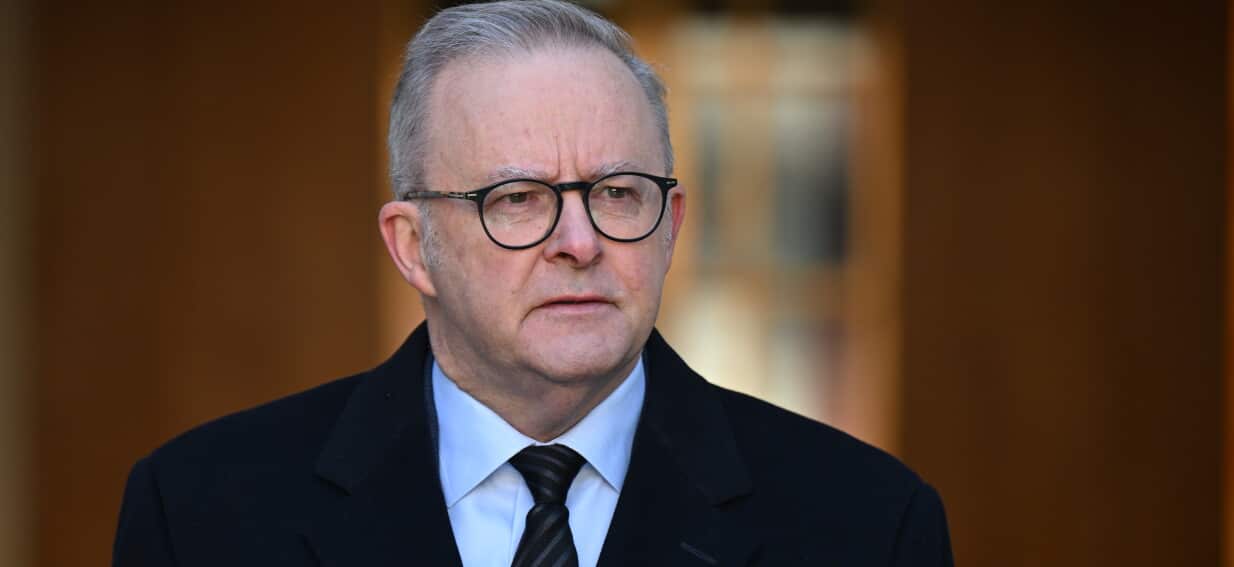
In the immediate aftermath, Australian Prime Minister Anthony Albanese did not issue a dry, heavily vetted bureaucratic press release. Instead, his reaction was sharp, immediate, and laced with an urgency that betrayed just how high the stakes truly are.
"Use this opportunity," Albanese urged.
It was a directive aimed not just at the signatories in Washington and Tehran, but at the global community. His words carry the weight of a middle power that understands a simple, brutal truth about the modern world: when giants stumble, everyone else gets crushed. When they find a way to stop fighting, the rest of the world breathes.
The Invisible Threads to Australia
To understand why a leader half a world away cares so deeply about a handshake in Geneva or a signed document in Washington, you have to look past the map.
Consider a hypothetical merchant sailor named David. He is from Fremantle, Western Australia. For six months of the year, David works aboard a massive liquefied natural gas carrier. His job is monotonous but dangerous, navigating the choked, sun-bleached waters of the Persian Gulf. Every time tensions spike between the United States and Iran, David’s wife watches the news with a knot in her stomach. A stray drone, a miscalculated naval maneuver, or a sudden seizure of a tanker could turn David’s workplace into a war zone.
David is not real, but his risk is. Thousands of Australians, from maritime workers to defense personnel stationed in the Middle East, live in the direct line of fire of this cold war.
Then there is the economic reality. When the Strait of Hormuz closes, or even threatens to close, global oil markets spasm. A conflict in the Middle East does not stay there. It travels down the supply chain, morphing into a spike at the diesel pump in regional Queensland, which drives up the cost of trucking groceries to a supermarket in Dubbo, which ultimately means a family has to choose between fresh vegetables or paying their electricity bill.
Albanese’s reaction reflects this reality. Australia is an island nation dependent on open sea lanes and predictable markets. A US-Iran peace deal is not just a diplomatic victory; it is an inflation-cutter, a maritime security guarantee, and a shield for domestic interests.
Anatomy of the Breakthrough
The details emerging from the accord suggest a complex, multi-phased trade-off. It is a high-stakes game of geopolitical poker where both sides have ran out of chips to bluff with.
Under the core tenets of the framework, Iran has agreed to strict, verifiable caps on its uranium enrichment levels, rolling back its capabilities under the watchful eyes of international inspectors. In return, the United States will systematically dismantle the web of economic sanctions that have crippled Iran’s banking and energy sectors.
- The Nuclear Caps: Strict limits monitored by the IAEA, ensuring enrichment remains strictly tied to civilian energy and medical research.
- Sanctions Relief: Gradual reinstatement of Iran’s access to global financial markets, allowing the return of international trade.
- The Security Corridor: A commitment to mutual non-aggression in maritime corridors, specifically safeguarding global trade routes.
For the ordinary citizen in Iran, this is not about geopolitics. It is about survival. It is about a currency that stopped losing value by the hour. It is about the ability to imagine a future where the grocery store shelves are full and the threat of sudden military strikes does not hang over every sunset.
Yet, the skepticism is palpable. Cynicism is the easiest currency to trade in when dealing with the Middle East. Critics in Washington argue that Tehran cannot be trusted, that the deal gives away too much leverage for a promise written on paper. Hardliners in Tehran view the agreement as a capitulation to Western imperialism.
But Albanese’s intervention cuts through this noise. He is pointing out the obvious alternative: what happens if we don’t use this opportunity? The trajectory without a deal is a slow, predictable march toward an catastrophic regional war that would inevitably drag in Western allies, including Australia.
The Burden of the Middle Power
There is a specific vulnerability in being a country like Australia. It possesses an advanced economy and a capable military, but lacks the raw demographic or nuclear muscle to dictate global events. Australia relies on the "rules-based order"—a phrase that sounds clinical but actually means a world where disagreements are settled by treaties rather than artillery.
When the international order breaks down, middle powers suffer most. They lack the self-sufficiency of a superpower and the anonymity of a micro-nation.
By stepping forward to validate the peace deal so aggressively, Albanese is signaling that Australia is willing to help anchor this agreement. Whether that means providing monitoring personnel, participating in revamped international enforcement bodies, or opening up new trade channels with a post-sanctions Iran, the message is clear: Australia is invested in the success of this peace.
It is a risky stance. If the deal collapses in six months amidst accusations of cheating or political regime changes, those who cheered its arrival will look naive.
But true leadership requires a willingness to risk looking naive in the pursuit of something better than endless, grinding hostility.
The ink on the agreement is fresh, and the implementation will take years. There will be setbacks. There will be provocations from factions who profit from chaos and find peace to be a threat to their business models.
But for a single moment, the trajectory shifted.
Somewhere in the Persian Gulf, a commercial vessel glides through calm water. The captain monitors the radar, looking for threats that, for the first time in a generation, might just be starting to recede. The world remains an incredibly dangerous place, full of flashpoints and fragile egos. But the message from Canberra reminds us that when a window for peace opens, no matter how small, the only logical choice is to throw it wide open and breathe the air.