The teacup on Maryam’s kitchen table in Tehran vibrates with a low, rhythmic hum. It is not an earthquake. It is the sound of heavy cargo trucks moving through the darkness outside her window, a sound that has become the soundtrack to a city holding its breath. For months, the rumors circulated in whispers over encrypted messaging apps and around dinner tables. Now, the whispers have solidified into a countdown.
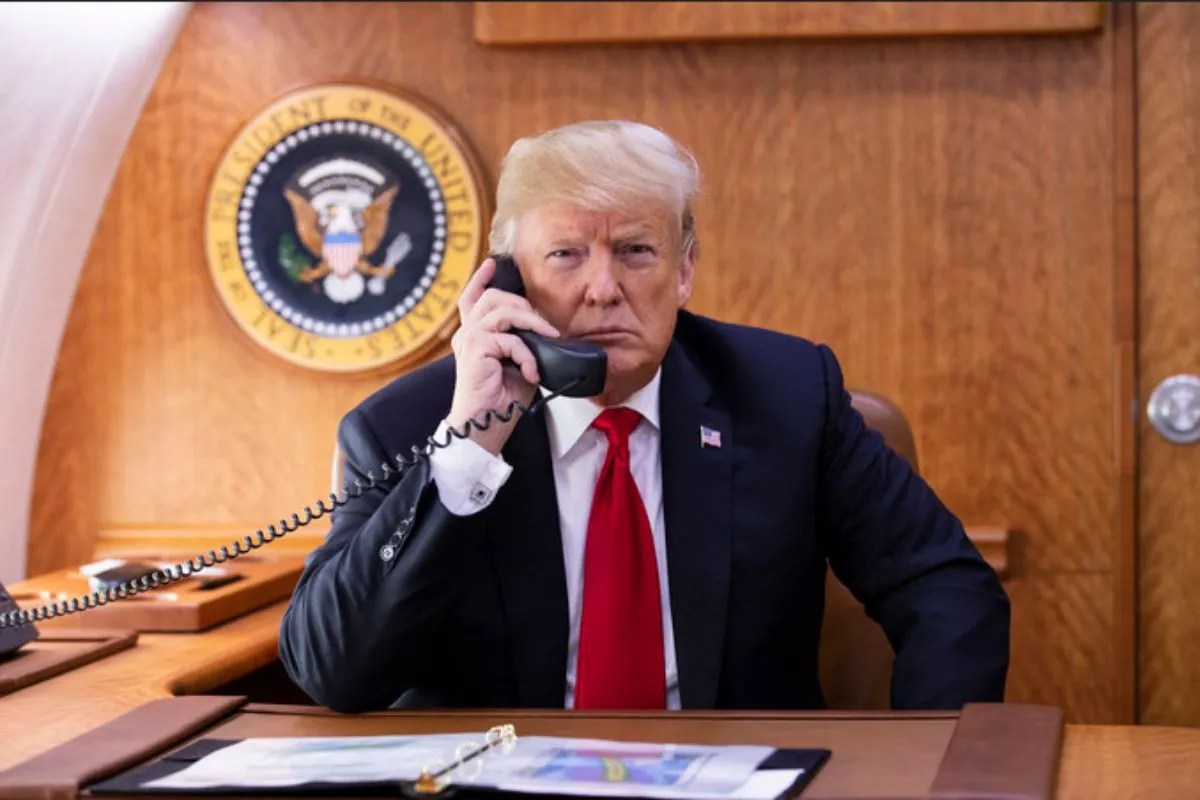
Donald Trump has set a deadline.
To the policymakers in Washington, this is a strategic chess move, a bold declaration aimed at forcing a stubborn regime to its knees. To financial analysts, it is a variable that dictates the fluctuating price of crude oil. But on the ground, thousands of miles away, geopolitical ultimatums translate into a very specific kind of human dread.
The news broke with the suddenness of a lightning strike. The American administration announced a definitive timeline for potential military action against Iran, a declaration that effectively draws a line in the sand with permanent ink. The message was clear: comply with demands regarding nuclear enrichment and regional influence, or face the full weight of American military might.
But what does a deadline look like when you are the one living inside the target zone?
The Anatomy of an Ultimatum
Consider Reza, a thirty-two-year-old pharmacist in Isfahan. He does not own a centrifuge. He does not sit in the high councils of the Islamic Revolutionary Guard Corps. Yet, within hours of the announcement, Reza’s world shifted.
The Iranian rial, already battered by years of economic isolation, took a sudden, sickening dive against the dollar. By mid-afternoon, Reza was rewriting the price tags on imported blood pressure medications. By evening, elderly patients were standing at his counter, their hands shaking as they counted out crumpled banknotes, wondering if they could afford next month’s supply before the prices doubled again.
This is the invisible front line of modern warfare. Before the first missile ever leaves its silo, the economic shockwaves of a deadline flatten the purchasing power of ordinary citizens. The abstract concept of "maximum pressure" becomes a tangible, suffocating reality at the grocery store counter.
The logic behind the American strategy relies on a historical pattern. The theory goes that by squeezing a nation’s economy and threatening its infrastructure, you create an untenable situation that forces the leadership to capitulate. It worked to bring Iran to the negotiating table in the lead-up to the 2015 nuclear deal.
But history is a fickle teacher. The current landscape is vastly different from a decade ago.
A Different Kind of Isolation
When the previous administration pulled out of the nuclear pact, Iran was largely isolated. Today, the geopolitical map has been redrawn. Tehran has spent the last several years building deep, transactional relationships with Moscow and Beijing. It is an alliance born of mutual grievance against Western hegemony.
Imagine a defensive wall built not of concrete, but of oil pipelines and drone technology transfers. Iran provides Russia with the hardware needed for its campaigns in Europe; Russia, in turn, offers veto power at the UN Security Council and advanced air defense systems. China remains the voracious buyer of Iranian crude, ignoring Western sanctions to keep the regime's economic lifeblood flowing, even if only at a trickle.
Therefore, a deadline issued from Washington does not carry the same absolute weight it once did. The authorities in Tehran are gambling that their new allies will provide a sufficient safety net to weather the storm. They view the ultimatum not as a reason to back down, but as a signal to harden their defenses.
But defenses cost money. And that money is extracted from the daily lives of the population.
The Calculus of Conflict
In the corridors of power, advisors weigh the variables. They calculate the range of ballistic missiles, the effectiveness of cyber warfare, and the vulnerability of maritime trade routes in the Strait of Hormuz. A single spark in the Persian Gulf could ignite a conflagration that destabilizes global energy markets, sending shockwaves through economies from London to Tokyo.
Let us look at the mathematics of a potential strike. The targets are well-known: Natanz, Fordow, Isfahan. These are facilities buried deep beneath layers of rock and reinforced concrete, designed to withstand conventional bombardment. To destroy them requires specialized, earth-penetrating ordnance that only the United States possesses.
The military planners know that a limited strike is a myth. History shows that operations of this scale inevitably trigger a cycle of retaliation. If American or allied forces strike Iranian nuclear sites, Tehran’s response will likely not be a conventional symmetric counterattack.
Instead, the response will be asymmetric.
- Asymmetric Warfare: The mobilization of proxy networks across Lebanon, Iraq, and Yemen to strike Western assets and allies simultaneously.
- Cyber Attacks: The deployment of malware designed to disrupt critical infrastructure, financial institutions, and power grids in the West.
- Economic Disruption: The mining or blockade of shipping lanes where one-fifth of the world's petroleum passes daily.
The danger of setting a hard deadline is that it leaves no room for diplomatic maneuvering. Once the clock runs out, both sides are locked into a narrative where backing down looks like weakness, and weakness is a luxury neither can afford.
The Sound of Waiting
Back in Tehran, Maryam watches the city adapt to the new timeline. It is an exercise in collective psychological resilience. People do not panic in the ways Western observers might expect. There are no mass riots or chaotic stampedes at supermarkets. Instead, there is a quiet, orderly rush to convert cash into gold or storable goods.
The human mind has an extraordinary capacity to normalize the terrifying. People still go to work. Young couples still sit in cafes in north Tehran, drinking espresso and arguing about art. But beneath the surface of normalcy lies a profound, exhausting uncertainty.
It is the uncertainty of not knowing if the building you work in will exist next month. It is the anxiety of a mother wondering if she should enroll her child for the next school semester, or if they will be fleeing the city by then.
The true cost of these geopolitical announcements is rarely measured in the immediate aftermath. It is measured in the brain drain of a nation's brightest minds fleeing abroad, the stalled futures of a generation that feels trapped in a perpetual waiting room, and the slow erosion of hope.
The deadline draws nearer every hour. The statements from Washington grow more resolute, the rhetoric from Tehran more defiant. The satellites spin in their orbits, capturing images of troop movements and missile deployments, feeding data into the computers of men who decide the fate of millions from air-conditioned rooms.
On the kitchen table, the teacup rests. The hum of the trucks has faded into the early morning mist, leaving behind a silence so heavy it feels like a physical weight. The city waits for the dawn, knowing that each sunrise brings them closer to the moment when the rhetoric stops, and the consequences begin.