The smell of burning synthetic rubber and cheap coffee does not belong in the cleanroom of an aerospace facility. It belongs in a cramped, unventilated garage at two o’clock on a freezing Tuesday morning, where twenty-year-olds are screaming at each other over the whine of an angle grinder.
Yet, if you pull back the glossy veneer of the modern commercial space race, you will find that the multi-billion-dollar rockets currently puncturing our atmosphere were not conceived purely in the sterile quiet of theoretical physics labs. They were forged in the chaotic, high-stakes crucible of collegiate Formula SAE racing. Meanwhile, you can read other stories here: Why India AI for All Plan Is Rewriting the Global Tech Playbook.
Before they were managing the launch schedules of Falcon 9s or engineering the heat shields for Starship, a striking number of SpaceX’s foundational executives and engineers were hunched over open-wheeled race cars in college parking lots. They were sleep-deprived, broke, and desperately trying to shave three ounces off an aluminum suspension knuckle.
This is not a coincidence. It is a blueprint. To explore the complete picture, we recommend the excellent article by The Verge.
The Garage as a Proving Ground
To understand how a rocket learns to fly, you have to understand what it feels like to watch a vehicle you built with your own hands catch fire in front of a panel of cynical judges.
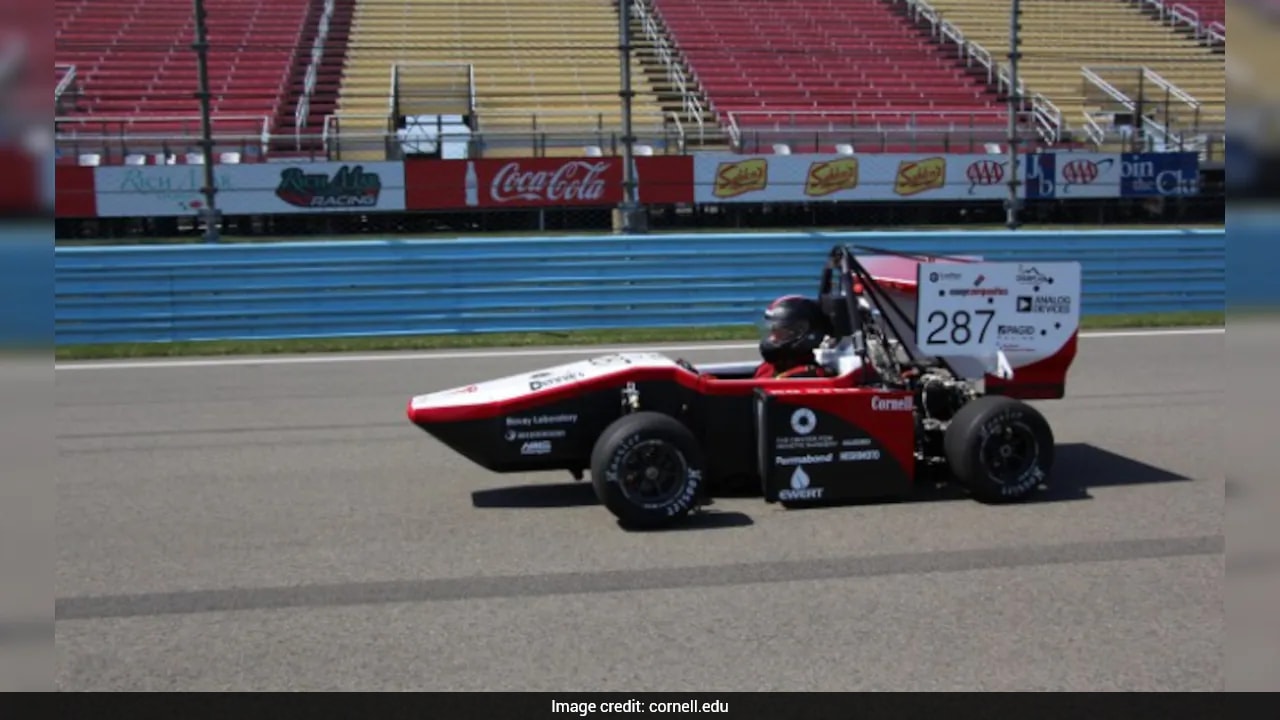
Formula SAE is a student design competition. The prompt sounds simple on paper: a fictional manufacturing firm wants you to design, build, and race a small, formula-style race car. In reality, it is a psychological meat grinder. Universities from Tokyo to Stuttgart to Detroit spend a year pouring blood and scarce budget into these vehicles, only to subject them to rigorous technical inspection and brutal dynamic events.
Consider a hypothetical student named Sarah. She represents hundreds of young engineers who have transitioned from the racetrack to the launchpad. Sarah has not slept in forty-eight hours. She is sitting on a cold concrete floor, trying to re-wire a temperamental data acquisition system while her teammate bleeds onto the chassis from a slipped wrench. The competition is in twelve hours. If the car does not pass the brake test—where all four wheels must lock up simultaneously under aggressive braking—they do not race. A year of work evaporates.
In that garage, Sarah learns something that a textbook can never teach. She learns that physics does not care about your good intentions. She learns that a beautiful CAD model is completely worthless if a human being cannot physically reach the bolt to tighten it.
When Elon Musk began recruiting for SpaceX in the early 2000s, he did not just look for the highest GPAs from Ivy League institutions. He looked for the survivors of this specific garage culture. He sought out the people who knew the exact weight of a titanium washer and who had experienced the gut-wrenching terror of a component failure at sixty miles per hour.
The Tyranny of the Mass Budget
In the aerospace sector, weight is the ultimate villain. Every gram of structure you add to a rocket is a gram of payload you cannot deliver to orbit. It is a zero-sum game played against the stubborn reality of the rocket equation.
Race car designers live under the exact same tyranny.
If a collegiate racing team builds a car that weighs 500 pounds, they will get trounced by the team from Munich whose car weighs 340 pounds. Speed, cornering grip, and fuel efficiency are all downstream of mass.
This shared obsession creates a highly specific mental mutation. Engineers trained in this environment view every single part of a machine with deep suspicion. They ask: Why does this bracket exist? Can we combine three parts into one? What happens if we make this wall half a millimeter thinner?
When these engineers arrived at SpaceX, they found a company trying to do the impossible: build a reliable orbital rocket for a fraction of the historical cost. Traditional aerospace defense contractors relied on massive supply chains, endless documentation, and layers of bureaucratic padding. A single valve might take three years and five million dollars to develop.
The car builders looked at this paradigm and rebelled. They brought the scrappy, iterative philosophy of the racetrack to the space industry. If you need a component, you don't write a thirty-page request for proposal and wait six months for a vendor to return a quote. You walk out to the machine shop, grab a piece of billet aluminum, and spin up the CNC mill yourself.
Failure as Data, Not Disaster
The traditional aerospace mindset treats failure as the absolute worst-case scenario. A mistake means a congressional hearing. It means a multi-year delay.
But on the racetrack, failure is just a Tuesday.
If a suspension arm buckles during testing, the team does not hold a three-month committee meeting to assign blame. They drag the car back to the pits, look at the fracture point, weld a gusset onto the break, and send the driver back out on the track thirty minutes later. They move fast because the calendar demands it.
SpaceX famously adopted this exact rhythm during the development of their early rockets, and most visibly during the recent Starship testing campaign in South Texas. The sky over Boca Chica was repeatedly filled with the fireballs of exploding prototypes. To the outside observer, it looked like chaos. To the old Formula SAE hands, it looked like a standard weekend of tuning.
They build, they test, they break, they fix.
The secret is ensuring that the failure happens in a way that yields data. When a Starship prototype explodes on the pad, thousands of sensors record the exact pressure spikes, thermal loads, and structural deflections that led to the demise. The engineers do not mourn the steel. They harvest the telemetry, adjust the design, and roll the next prototype out to the pad before the smoke from the last one has completely cleared.
The Executive Pipeline
This cultural alignment explains why individuals who cut their teeth on collegiate race cars ascended so rapidly through the ranks of the space company.
Take a look at the resume of Tom Mueller, SpaceX’s former VP of Propulsion and the mastermind behind the Merlin engine. While his background was in traditional aerospace, his philosophy matched the raw, hands-on execution of the racing world. The people he hired to build his engines were often the ones who spent their weekends tuning dragsters or fabricating custom motorcycle frames.
Or look at the sheer density of former Formula SAE team captains who populate the mid-level and executive management tiers at the Starbase facility today. These are people who, at age twenty-one, were already managing twenty-person engineering teams, balancing five-figure budgets, negotiating with corporate sponsors, and manufacturing high-performance hardware under impossible deadlines.
They had already done the job. The vehicle was just smaller.
The Human Element in the Machine
It is easy to look at a rocket launch and see only the triumph of automation. We see the automated countdowns, the cold precision of the guidance computers, and the perfect geometric curves of the exhaust plumes against the dark sky.
But every line of code was written by someone whose eyes were watering from exhaustion. Every weld was laid down by a technician who knew that a single pocket of gas in the bead could mean the destruction of a mission.
The magic of the race car background is that it bridges the gap between the digital abstract and the physical dirt. A purely academic engineer trusts the simulation. A racing engineer knows that the simulation is a liar until proven otherwise by the stopwatch.
This practical skepticism is what allowed a young company to bypass decades of established industry dogma. When someone said, "You can't reuse an orbital rocket booster, the thermal stress is too high," the car builders remembered changing brake rotors that were glowing red-hot, cooling them down, and sending the car back out for another session. They knew that materials are tougher than the pessimists think, provided you understand exactly where the limits lie.
The Long Road to the Stars
The transition from asphalt to orbit is not without friction. A race car only needs to survive a twenty-mile endurance event. A rocket needs to survive the violent acoustic vibration of liftoff, the freezing vacuum of space, and the searing plasma of re-entry. The stakes are undeniably higher. A failure on the track means a DNF on a scoreboard; a failure on the launchpad can mean catastrophic loss of life and property.
Yet, the core human traits required to conquer both challenges remain identical. It requires an appetite for calculated risk, a pathological intolerance for inefficiency, and the ability to function when your nervous system is screaming for sleep.
The next time you watch a rocket booster drop out of the clouds, light its engines at the last possible second, and settle gently onto a drone ship in the middle of a pitching ocean, look closely at the scorch marks on the metal.
They look remarkably like the track grime on the side of a car that has just crossed the finish line at dawn.