The lint trap is full. It always is.
If you live in a third-floor walk-up with a shared basement laundry room that smells faintly of damp concrete and abandoned fabric softener sheets, you know the sound. It is a dull, rhythmic thud. It is the sound of quarters dropping into a metal slot. It is the sound of two hours of your Tuesday evening vanishing into a lukewarm dryer that smells of someone else's bleach. For a more detailed analysis into this area, we suggest: this related article.
For decades, we accepted this ritual as a tax on urban living. Rent was high, square footage was scarce, and clean clothes required a pilgrimage. You hauled a blue plastic basket down twelve flights of stairs, past the flickering fluorescent bulb that hummed like an angry hornet, praying that one of the four machines was actually spinning water out of cotton instead of just churning it around in a lukewarm soup.
Then came the shift. For further details on this development, detailed coverage is available on Glamour.
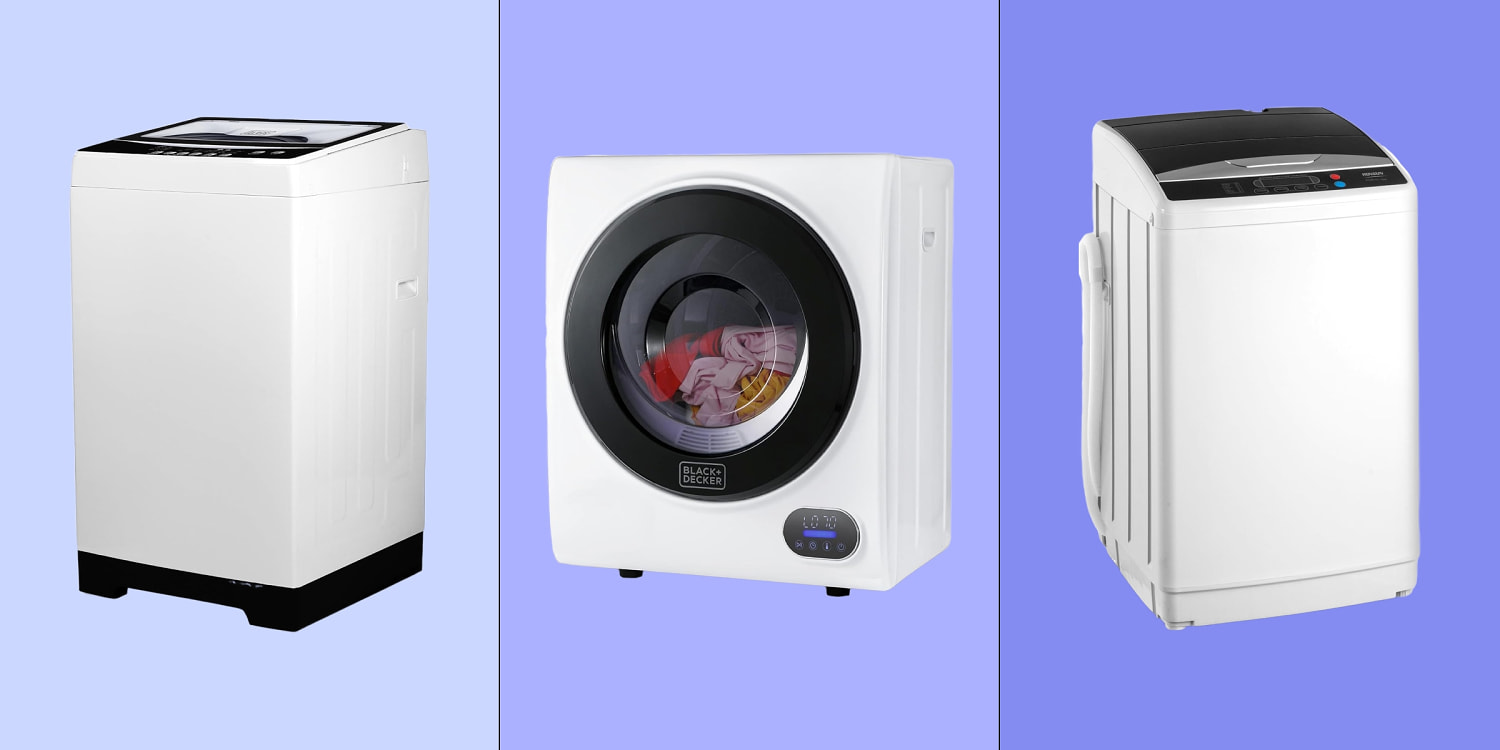
It did not arrive with a press release or a flashy Silicon Valley keynote. It arrived quietly, in cardboard boxes left in cramped apartment hallways. Portable washers and compact ventless dryers. Appliances small enough to slide into a hall closet or hide beneath a kitchen counter next to the dishwasher.
Are they worth the money?
That is the question everyone asks while standing over a pile of damp socks, wondering if spending several hundred dollars on a miniaturized laundry setup is an act of genius or an expensive impulse buy.
To answer it, we have to stop looking at price tags and start looking at time.
The Anatomy of a Tuesday Night
Consider Marcus. Marcus lives in a sixty-year-old brick building in Chicago. His kitchen is narrow enough that he can touch both walls if he extends his elbows. For three years, Marcus was a ghost in the basement.
Every Thursday at 7:00 PM, he would gather his shirts, check his pockets for stray coins, and march down to the communal laundry room. Two of the three washers were out of order. A handwritten sign, taped on loose-leaf paper with yellowed Scotch tape, muttered Out of Order in sharpie. The third machine was locked, mid-cycle, holding someone else's mysterious gray sweaters hostage.
Marcus sat on a folding chair with a cracked plastic seat. He scrolled through his phone until his battery hit twelve percent. He moved his clothes to a dryer that required two full cycles to evaporate the moisture from a single pair of jeans. By the time he walked back upstairs, his evening was gone. His posture was ruined. And he had spent six dollars in quarters and three hours of his life staring at a vibrating glass door.
Multiply that by fifty-two weeks a year. Multiply it across five years.
When Marcus finally bought a portable washing machine—a compact, thirty-pound drum that hooks up directly to his kitchen faucet via a brass adapter—the math of his existence altered.
He didn't save money on his electric bill immediately. In fact, his water usage shifted onto his own utility bill, and compact units draw power just like standard appliances. But something far more valuable changed.
He loaded his clothes while boiling water for pasta.
Let that sink in. The domestic chore that once commanded an entire evening was relegated to the background, humming softly beneath the sound of a boiling pot.
Breaking Down the Machine
Let us look at the mechanics, stripped of marketing hyperbole.
A portable washer is not a toy. It is a fully functioning agitator or impeller washing machine, typically holding between 0.9 and 2.5 cubic feet of laundry. For comparison, a standard suburban top-loader swallows up to 5.0 cubic feet.
What does that mean in human terms?
It means you cannot wash a king-sized comforter in a portable machine. If you try, the machine will unbalanced-spin itself right across your linoleum floor, shaking like a startled cat. You wash in batches. You wash your work shirts on Tuesday, your bedsheets on Saturday morning, your gym gear on Sunday.
This requires a behavioral adjustment. You stop hoarding dirty clothes until your hamper overflows like a dormant volcano. You wash as you go.
Then there is the drying question.
Full-sized dryers vent hot, humid air outside through a metal duct. Apartments rarely accommodate this luxury. Enter the compact, ventless dryer—often utilizing condensation technology. These units pull moisture from the air inside the drum, cool it, and either funnel the resulting water down a drainage hose or collect it in a removable tank that you empty after a cycle.
They take longer. Physics demands it. Without a roaring blast of forced outdoor exhaust, drying a load of towels takes ninety minutes instead of forty.
Is that a dealbreaker?
If you are a family of five with three children playing soccer in the mud, yes. A portable setup will reduce you to tears. You will be running loads around the clock, chaining cycles together like a factory worker in a textile mill.
But if you are a single professional, a couple in a studio apartment, an elderly person who finds basement stairs treacherous, or someone living in a remote cabin off the grid, these machines change the geography of your daily life.
The Hidden Ledger
When financial analysts debate the worth of portable laundry units, they look at initial investment versus laundromat costs.
A decent portable washing machine costs between three hundred and six hundred dollars. A compact dryer runs another four to seven hundred. Altogether, you are looking at an upfront capital outlay ranging from seven hundred to twelve hundred dollars.
At a laundromat, a wash and dry costs roughly four to six dollars per load. If you do two loads a week, you spend about four hundred dollars a year.
On pure cash flow, the breakeven point arrives in roughly two to three years.
But that calculation ignores the intangible assets.
What is the price of dignity? What is the value of never having to sort your whites on a sticky folding table next to a stranger's forgotten sock? What is it worth to be able to wash a stained shirt immediately, rather than letting it sit in a hamper for six days until the stain sets like ancient amber?
These are the numbers that do not appear on spreadsheets. They are the invisible stakes of domestic life.
When you own your laundry, your time belongs to you again. You are no longer tethered to the availability of commercial machines or the erratic operating hours of a neighborhood laundromat that closes early on Sundays.
The Metaphor of the Spin
We live in an era obsessed with scale. Bigger houses, larger screens, faster cars, wider horizons. We are constantly told that more is better.
Yet, portable washers and dryers represent a quiet rebellion against scale. They are small by design. They force us to curate our wardrobes, to wash intentionally, to accept the limitations of our physical spaces without sacrificing our independence.
They teach us that convenience is not about outsourcing our labor to massive communal facilities; it is about bringing efficiency into the intimate corners of our homes.
Consider what happens when you wheel that compact washer out of the hall closet, snap the brass quick-connect coupling onto your kitchen faucet, and hear the satisfying clack of water filling the drum. You are not just cleaning fabric. You are reclaiming your territory.
The next time you stand in a damp basement, watching a stranger's pillowcase tumble behind smudged glass while you wait out your thirty-minute dry cycle, ask yourself what your time is worth.
The machine is waiting in the box. The faucet adapter is brass, heavy in your palm. The rest is just a choice about how you want to spend your Tuesday nights.