The Pacific Ocean does not care about borders, but the men staring into its blackness do.
At 3:00 AM, thousands of miles from any coastline, the water is not blue. It is an ink-colored void that swallows light and sound. For the crew of a United States Coast Guard cutter, this emptiness is a workplace. The air smells of salt, diesel, and the sharp, metallic tang of adrenaline. They are hunting ghosts. Specifically, they are hunting low-profile vessels—sleek, fiberglass hulls painted the exact color of a whitecap, riding so low in the water that they escape radar until you are practically on top of them.
Then, a blip. A shadow where there should only be waves.
The dry administrative reports released later will call it an "interdiction." They will note the coordinates, the hemisphere, and the protocol. But they omit the heartbeat. They leave out the sound of a high-speed interceptor boat slamming against the swells, the spray cutting like glass across the faces of young coastguardsmen, and the sudden, terrifying realization of what happens when two opposing forces collide in the dark.
By sunrise, the statistics had changed by one. One vessel intercepted. One suspected smuggling operation disrupted.
One body.
The Invisible Pipeline
To understand why an American warship is firing weapons in the deep Pacific, you have to look past the immediate violence of a midnight raid. You have to look at the geometry of global trade.
We tend to think of international borders as lines on a map, guarded by checkpoints and fences. The reality is that the most heavily trafficked border in the world has no fences. It is the maritime transit zone stretching from the coast of South America up through the Galápagos, bypassing Central America entirely, to deliver cargo to the insatiable markets of the north.
It is a multi-billion-dollar highway.
Consider the economics of a single voyage. A low-profile vessel, often built by hand in the dense mangrove swamps of Colombia or Ecuador, costs a few hundred thousand dollars to construct. It is disposable. The men who crew them are not cartel bosses; they are often desperate fishermen or impoverished locals hired for a few thousand dollars—a lifetime of honest wages in their home villages—to sit in a cramped, gasoline-fumed coffin for a week. If they make it, they get paid. If they don't, they become ghosts.
Against this invisible pipeline stands a rotating wall of steel. The United States, operating under international law and bilateral agreements, deploys its Navy and Coast Guard assets to patrol millions of square miles of open water. It is an impossible mathematical problem. Finding a thirty-foot boat in a million square miles of ocean is worse than finding a needle in a haystack.
It is finding a specific grain of sand in a desert during a sandstorm.
When a sighting does happen, the protocol is rigid. It begins with radio commands. It escalates to warning shots—tracer rounds burned into the sky ahead of the target, a blindingly bright message written in fire: Stop.
But out there, fear dictates reality. When you are a smuggler staring at a wall of American steel, turning off the engines means prison. Keeping them running means a gamble with eternity.
The Anatomy of an Interdiction
Let us look closely at what transpired during this recent encounter, stripping away the sterile language of the official communiqués.
An American patrol aircraft, flying high above the cloud layer, spots the thermal signature of a suspect vessel. The coordinates are beamed down to a nearby surface combatant. The ship changes course. Onboard, the alarm sounds—not a frantic wail, but a controlled, rhythmic pulse that calls the crew to flight quarters or small-boat deployment.
Imagine the perspective of the boarding team. You are wearing body armor that feels heavier by the minute. You are stepping off a stable ship into a rigid-hull inflatable boat that bounces violently on the swells. Your night-vision goggles turn the world into an eerie, monochromatic green.
As the distance closes, the suspect vessel ignores the commands to halt.
Standard Escalation of Force in International Waters:
1. Visual and Auditory Signaling (Blue lights, sirens, radio hails)
2. Warning Shots (Fired into the water ahead of the vessel)
3. Disabling Fire (Targeting outboard motors to stop propulsion)
The crew on the suspect boat faces a different terror. The roar of the American engines is deafening. They know that if they are caught with tons of contraband, their lives as they know them are over. They push the throttles forward. The fiberglass hull thumps against the waves, threatening to break apart under the strain.
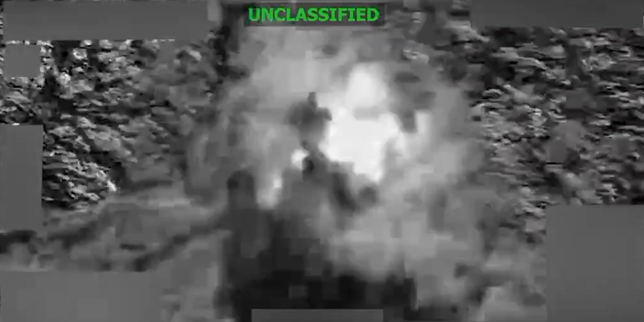
When the disabling fire begins, it is precise. The marksmen on the American vessels are trained to hit engines, not people. They aim for the cowling of the outboard motors, attempting to shred the machinery and kill the momentum.
But precision is a fragile thing on a moving platform, shooting at another moving platform, on a chaotic ocean. A sudden swell lifts the target. A wave drops the interceptor. A fraction of an inch at the muzzle becomes feet at the target.
The bullets find their mark, but they also find flesh.
The engines die. The noise evaporates, replaced by the slapping of water against the hulls and the groans of the injured. When the boarding team steps onto the suspect craft, they are no longer just law enforcement officers. They are triage medics.
They administer aid. They apply tourniquets. But out here, the nearest trauma center is a helicopter ride that might take hours, assuming a flight deck is within range. Sometimes, the clock simply runs out.
The Collateral of the Covert War
The public rarely hears about these encounters unless something goes wrong. We consume the end product of this war—the headlines detailing a multi-ton seizure, the street value calculated in the hundreds of millions—without ever considering the human collateral.
The man who died on that boat did not have his name etched into a prominent news ticker. To the system, he is a statistic that validates the necessity of the patrol. To his family in some coastal village, he is a son or a father who went out to sea and simply never came back, swallowed by the vast anonymity of the Pacific.
This is the uncomfortable truth of maritime security. It is a war of attrition fought against an enemy that relies on the infinite supply of human desperation. For every boat intercepted, three more slip through the net. For every engine disabled, another is bolted onto a hull in a hidden estuary.
The Coast Guard crew members return to their ship. They wash the salt and the blood from the deck of their interceptor. They log the hours, the fuel consumed, and the ammunition expended. They do their duty with a professionalism that is both admirable and chilling, because they know that tomorrow, the ocean will be just as dark, and just as empty.
The real tragedy is not that the system failed; it is that the system worked exactly as it was designed to. The machinery of deterrence requires friction, and friction in the dark produces heat.
As the cutter resumes its pattern, the wake behind it irons out into the flat, uncaring surface of the sea. The ocean erases the footprints of the chase within minutes. The dark water closes over the spot where a life ended, leaving nothing but an empty horizon and the quiet, persistent hum of the next patrol.