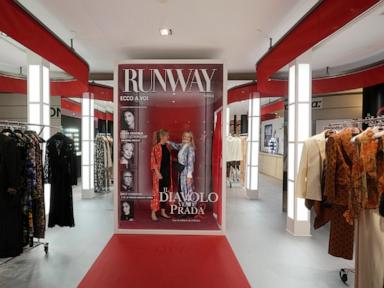
The announcement of a sequel to The Devil Wears Prada has sent the usual suspects into a predictable frenzy. Every trade publication is currently churning out the same tired narrative: Miranda Priestly’s return will revitalize the Milanese fashion scene and "put a spotlight" on Italy’s cultural capital.
It is a comforting lie. Meanwhile, you can find similar events here: The Final Frame and the Ghost of Summerisle.
The truth is that Milan does not need a spotlight; it needs an autopsy. By framing a sequel around the glitz of the Quadrilatero della Moda, Hollywood is doing what it does best: selling a postcard of a city that has become a museum for its own ego. If you think a movie about aging magazine editors is going to save the soul of Italian luxury, you aren't paying attention to the balance sheets or the streets.
The Myth of the Fashion Capital
The "lazy consensus" suggests that Milan is the beating heart of global style. In reality, Milan is the high-security vault of global style. There is a difference. One implies life; the other implies preservation. To understand the bigger picture, check out the excellent report by The Hollywood Reporter.
I have sat in the back of those dark, wood-paneled showrooms on Via Montenapoleone. I have seen the panic when a designer suggests something that isn't a variation of a trench coat or a leather tote that costs more than a mid-sized sedan. Milan isn't innovating; it is iterating.
The industry insiders praising this sequel are the same ones who ignored the rise of Shenzhen and the creative explosion in Seoul until it was too late. They cling to the idea of the "Italian Dream" because it justifies their three-martini lunches at Baretto. But the "Italian Dream" is currently being manufactured by conglomerates like LVMH and Kering—French giants that own the very heritage Milan claims to protect.
Miranda Priestly Is an Anachronism
The original film was a masterpiece of satire because it captured a specific moment when print media held the keys to the kingdom. A single nod from an editor could launch a career.
That world is dead. It didn't just fade; it was demolished.
In a world of direct-to-consumer drops and algorithmic trends, the idea of a terrifying editor-in-chief gatekeeping "cerulean" is laughable. If The Devil Wears Prada 2 tries to pretend that a magazine masthead still dictates what ends up in a bargain bin, it will be a period piece, not a contemporary commentary.
The real power today doesn't sit in an office in Lower Manhattan or a palazzo in Milan. It lives in the data centers of social media platforms. The sequel shouldn't be about Miranda fighting for her budget; it should be about her realizing she is a ghost in a machine she no longer understands.
Why the "Spotlight" Is Actually a Blindfold
When movies romanticize Milan, they ignore the city’s actual crisis. Behind the marble facades, the infrastructure is aging, the cost of living is driving out the young artisans who made "Made in Italy" mean something, and the creative class is fleeing to Berlin or London where they can actually afford to breathe.
By focusing on the 1% of the 1% who still care about runway seating charts, the film obscures the reality of the industry:
- The Artisanal Collapse: Small family-owned workshops in the North are shuttering because they can't compete with the scale of private equity-backed brands.
- The Homogenization of Luxury: Every store on the Via della Spiga looks the same because they are all chasing the same high-net-worth traveler.
- The Creative Vacuum: When was the last time a truly disruptive, world-changing brand launched out of Milan? We are still dining out on the reputations of names that peaked in the 1990s.
The Problem with Traditional Luxury Logic
The competitor article argues that this film will boost tourism and "prestige." This is the same logic that leads cities to host the Olympics—a massive short-term spike followed by long-term debt and stagnation.
Traditional luxury logic dictates that scarcity and mystery create value. But in the 2020s, the "mystery" of the fashion industry has been exposed as a mix of exploitative supply chains and massive marketing spends. If the sequel doesn't address the ugliness beneath the silk—the environmental cost of "fast luxury" and the death of true craftsmanship—it is just an expensive commercial.
I once watched a major Italian house burn millions on a "rebranding" that consisted of changing the font on their shopping bags. That is the Milanese way: focus on the surface while the foundation cracks. A movie spotlighting this behavior isn't a tribute; it’s a distraction.
The Counter-Intuitive Truth: We Need the Devil to Lose
If we want fashion to mean something again, we need the "Miranda Priestly" model to fail. The top-down, authoritarian approach to style is what made the industry so stagnant in the first place.
The most interesting things happening in Italian culture right now aren't happening on runways. They are happening in decentralized creative hubs, in independent film, and in sustainable textile labs that the big houses are too slow to adopt.
Imagine a scenario where the sequel actually had the courage to make its protagonist irrelevant. Imagine if Andy Sachs didn't come back to save the magazine, but to watch it burn and build something horizontal, transparent, and actually human in its place.
But they won't do that. They will give us shots of the Duomo, some beautiful coats, and a soundtrack that makes us feel like we are part of an exclusive club.
Stop Asking if Milan Is Ready for the Movie
The question isn't whether Milan is ready for the spotlight. The question is whether we are ready to admit that the spotlight is shining on a stage with no actors left on it.
We are obsessed with the nostalgia of the 2000s because we are terrified of the present. We want Miranda Priestly back because she represents a time when things felt certain, even if that certainty was built on cruelty and exclusion.
Italy's fashion capital doesn't need a movie to save it. It needs to stop looking in the mirror and start looking out the window. It needs to stop being a "capital" and start being a laboratory again.
The industry wants you to believe that this sequel is a sign of life. Don't fall for it. It's just a very well-dressed funeral procession for an era that should have stayed buried.
If you want to see the future of style, turn off the movie and look at the kids who are making clothes out of trash in their garages. They are doing more for the "prestige" of fashion than a thousand Mirandas ever could.
The devil wore Prada. The future wears whatever it wants, and it isn't asking for permission from a magazine.
Stop romanticizing the gatekeepers. They’ve already lost the keys.