The Kinetic Illusion
Most analysts are staring at the flashes in the sky and missing the shift on the ground. When news broke that Iran launched missiles toward Israel, the immediate response from the mainstream press was a predictable, panicked rush to use the word "unprecedented." They painted a picture of a region on the brink of total collapse, a domino effect of fire and steel that would rewrite the map.
They are wrong.
What we witnessed wasn't the start of a new war, but the desperate signaling of an old regime trying to maintain a crumbling status quo. If you think this is about a ceasefire breach, you’ve already fallen for the surface-level narrative. This wasn't a strategic masterstroke. It was a high-stakes, low-yield performance meant for internal consumption and regional posturing. To understand why, you have to stop looking at the trajectory of the missiles and start looking at the trajectory of the power players involved.
The Ceasefire Was Never the Point
The prevailing wisdom suggests that a ceasefire is a holy grail of stability. It isn't. In the Middle East, a ceasefire is often just a logistical pause—a period used to replenish stockpiles and recalibrate GPS coordinates. When the competitor headlines scream that Iran "violated" the peace, they ignore the fact that "peace" in this context is a technicality, not a reality.
I have watched diplomats pour years into "de-escalation" frameworks that ignore the fundamental incentives of the actors on the ground. Iran doesn't launch missiles because a ceasefire failed; it launches them because its proxy network is under existential pressure. The missiles are a symptom of weakness, not a display of strength.
The Calculus of Failure
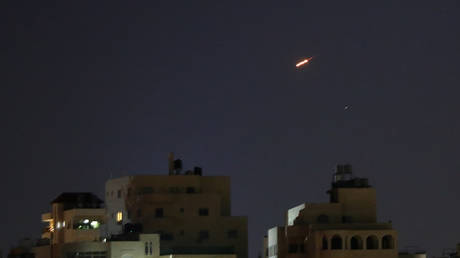
Consider the sheer physics of the engagement. Iran launched a mix of cruise missiles and loitering munitions. The success rate? Abysmal. When a nation fires hundreds of projectiles and the majority are intercepted by a combined defense net of the IAF, the US, and regional partners, the "message" isn't one of terror. It’s a message of obsolescence.
- Defense Saturation Fails: The "swarm" theory—that enough cheap drones can overwhelm expensive interceptors—proved to be a mathematical fantasy against a coordinated, multi-layered defense.
- The Intelligence Gap: Israel and its allies didn't just see the missiles coming; they likely knew the fueling schedules.
- The Proxy Paradox: By firing directly from Iranian soil, Tehran admitted that its "Axis of Resistance" is currently unable to do the heavy lifting.
The Myth of the Rational Actor
Western media loves to treat Tehran like a grandmaster on a chessboard. This is a dangerous romanticization. The decision to launch was likely a messy, contested choice made by a fragmented leadership trying to satisfy a hardline domestic base while simultaneously begging the international community for sanctions relief.
The "lazy consensus" says this was an act of aggression. The nuance is that it was an act of preservation.
If Iran did nothing after its senior commanders were targeted in Damascus and beyond, the regime’s "deterrence" would be exposed as a total fiction. They had to swing. They just chose to swing with a lead weight tied to their ankles. They wanted the optics of a strike without the consequences of a full-scale regional conflagration. They missed the mark on both counts.
Stop Asking the Wrong Questions
People keep asking: "Will this lead to World War III?"
The answer is no, and the question itself reveals a fundamental misunderstanding of modern warfare. We aren't in 1914. We are in a world of gray-zone conflict where kinetic strikes are often less impactful than cyber-attacks or economic strangulation.
Instead of asking about the "next move," we should be asking: Why is the West still surprised?
We've seen this cycle for decades. A provocation occurs, a "red line" is crossed, missiles fly, and the pundits act like they've never seen a fireworks show before. The truth is that the regional architecture has fundamentally shifted. The Abraham Accords weren't just a photo op; they created a de facto security architecture that makes these Iranian volleys look like tantrums rather than tactical threats.
The Real Cost of "Restraint"
There is a pervasive idea in diplomatic circles that "proportionality" is the only path to safety. This is a fallacy. In this theater, proportionality is often interpreted as permission. When the international community pressures Israel for "restraint" following a direct state-on-state attack, they aren't preventing war. They are subsidizing the next round of missile launches.
I’ve seen this play out in boardrooms and situation rooms alike: if you don't reset the cost-benefit analysis for your adversary, they will keep running the same play. Iran continues to launch because the cost of doing so remains manageable. Until that changes, the "ceasefire" is just a countdown.
The Intelligence Blind Spot
We need to talk about the data. The media focuses on the number of missiles. They should be focusing on the telemetry.
The fact that these systems were tracked from the moment of ignition suggests a level of regional cooperation that was unthinkable ten years ago. Jordan, Saudi Arabia, and other Arab nations are no longer willing to let Iranian hardware transit their airspace with impunity. This isn't just about Israeli defense; it’s about a regional coalition that is tired of Tehran's destabilization efforts.
The competitor's article likely framed this as "Israel vs. Iran." That is an outdated lens. It is now "The Status Quo Coalition vs. The Revisionist State."
The Economic Reality No One Mentions
Let’s look at the numbers. Each of those Iranian missiles costs hundreds of thousands, if not millions, of dollars to produce and launch. The Iranian rial is in a freefall. The "brave" leadership in Tehran is burning the nation's remaining wealth on a kinetic display that resulted in zero strategic gains.
- Internal Dissent: The Iranian public isn't cheering for these missiles; they are wondering why they can't buy meat or medicine.
- Energy Markets: Notice how oil didn't hit $150 a barrel? The markets have priced in Iranian "aggression." The world knows this is theater.
- Technology Transfer: Every failed strike provides the West with a treasure trove of data on Iranian guidance systems and signatures.
By launching this "unprecedented" attack, Iran effectively gave its enemies a free live-fire training exercise.
The Nuance of the "First Time" Narrative
The media loves the phrase "for the first time." It creates clicks. It generates urgency. But the "first time" Iran attacked Israel directly was simply the moment the mask slipped. They have been attacking Israel via Hezbollah, Hamas, and the Houthis for years.
Treating this missile launch as a "new chapter" is like watching a movie for two hours and acting shocked when the villain finally walks onto the screen. The plot hasn't changed; the characters just stopped whispering.
The Hard Truth
If you want to understand the Middle East, stop reading "expert" takes that rely on 1990s geopolitics. The old rules are dead.
- Deterrence is not a static state: It’s a perishable commodity.
- Proxies are liabilities: When the proxy fails, the patron is forced into the light, where they are vulnerable.
- Technology > Ideology: A religious fervor is no match for a sophisticated, integrated missile defense system.
The "unprecedented" attack was actually a predictable, desperate, and ultimately failing attempt by a regime to stay relevant in a region that is moving past it. The missiles were loud, but the silence of the Arab world in response was deafening.
The threat isn't that Iran will start a war. The threat is that the West will continue to misinterpret these death rattles as signs of life, leading to more "ceasefires" that do nothing but delay the inevitable.
Tehran didn't break the ceasefire. They broke themselves.