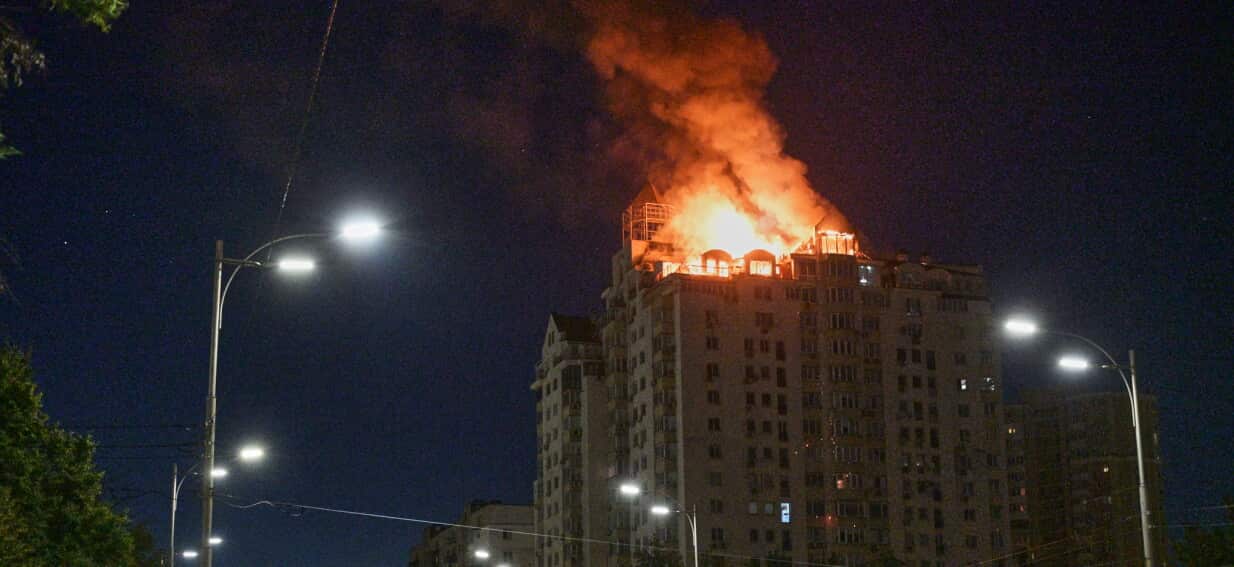
The media coverage follows a tiring, predictable script every time a hospital fire makes headlines. Two dead in Germany. Dozens choked by smoke. The immediate reaction from politicians, bureaucrats, and armchair safety experts is always the same: we need tighter codes, more automated systems, and heavier investment in fireproof infrastructure.
They are diagnosing the wrong disease. Read more on a similar topic: this related article.
The lazy consensus blames aging infrastructure or a lack of cutting-edge—scratch that—modern suppression tech. But as someone who has spent two decades auditing healthcare facilities and dismantling broken operational frameworks, I can tell you the terrifying truth nobody wants to admit. The obsession with structural fire codes is exactly what makes these buildings death traps.
We have built a system that prioritizes bureaucratic compliance over actual human survival. When a fire breaks out in a modern medical ward, patients do not die because the walls failed to meet code. They die because we have engineered an environment that paralyzes the human response. More reporting by The Guardian explores comparable views on this issue.
The Flawed Premise of Defend in Place
The core architecture of hospital fire safety rests on a single concept: "Defend in Place."
Because you cannot easily evacuate intensive care units, neonatal wards, or non-ambulatory geriatric patients down a stairwell, international building codes rely on fire-rated compartments. The theory dictates that if a fire starts in Room A, the heavy fire doors, drywall, and dampers will contain the smoke and flames for 30 to 90 minutes. This supposedly gives staff time to execute a staged, horizontal evacuation to the next smoke compartment.
It looks brilliant on a blueprint. It fails miserably in reality.
Imagine a scenario where a localized fire erupts in a standard care unit at 3:00 AM. The automated systems trigger perfectly. Magnetic door holders release, sealing the smoke barriers. The HVAC system shifts to exhaust mode. On paper, the building is doing its job.
In practice, those closing doors instantly isolate the skeleton night staff from the very patients who need manual extraction. The physical barriers designed to keep the fire out also lock the staff out—or lock the patients in. The smoke dampers that are supposed to seal off ventilation ducts frequently fail due to lack of mechanical maintenance, turning the building’s hidden ceiling voids into toxic gas distribution networks.
By relying on the building to fight the fire, we have excused the human element from the equation.
The Bureaucracy of Compliance vs. The Reality of Chaos
Hospital administrators love paper trails. They love checking boxes for national accreditation bodies and local fire marshals. They will spend millions retrofitting a wing with fire-retardant ceiling tiles while completely ignoring the operational rot underneath.
Look at the standard "People Also Ask" queries that dominate public discourse after a disaster like the one in Germany:
- Why don't hospitals have sprinklers in every room?
- Are older hospitals inherently unsafe?
These questions are fundamentally flawed. They assume that hardware solves human crises.
Let us address the sprinkler myth directly. Retrofitting every square inch of an active psychiatric or intensive care ward with high-pressure water suppression systems creates massive secondary risks. Water damage ruins life-support equipment. Accidental discharges trigger immediate evacuations that cause more patient trauma than localized smoke. More importantly, sprinklers suppress flames; they do not instantly stop the generation of highly toxic carbon monoxide and hydrogen cyanide from burning medical plastics. It is the gas that kills, long before the temperature rises.
The real danger is not the age of the building. The danger is the gap between compliance documentation and real-world execution.
I have watched hospitals ace their annual fire inspections by showing off impeccable maintenance logs for their alarm panels. Yet, during an unannounced nighttime drill, those same facilities revealed a catastrophic flaw: the staff on duty had no idea how to override an automated security lock on an emergency exit when the main power grid dipped. They were compliant on paper, but completely helpless in the dark.
Staffing Ratios Are the Only True Firewalls
You can buy the most advanced fire-rated materials on the market, but they are useless without eyes and hands on the floor. The relentless drive toward corporate optimization and staff rationing is the true culprit behind hospital fire fatalities.
When a fire breaks out in a hotel, guests run. When a fire breaks out in a hospital, patients wait to be saved.
| Variable | The Compliance Illusion | The Operational Reality |
|---|---|---|
| Night Shift Coverage | 1 Nurse per 4 Patients (On Paper) | 1 Nurse per 15 Patients (Due to Call-outs) |
| Evacuation Time | 3 Minutes per Ward Section | 12 Minutes Minimum per Non-Ambulatory Patient |
| System Dependency | 100% Reliance on Automated Suppression | High Failure Rate of Mechanical Dampers |
Consider the logistics of moving a single ventilated patient. It requires at least two trained staff members, a portable ventilator, and cleared pathways. If a ward housing thirty highly dependent patients is staffed by two nurses and one nursing assistant during a night shift, the math is simple and brutal. Even if the fire walls hold for an hour, the staff physically cannot move the bodies fast enough.
The focus on structural fixes is a convenient smoke screen for executives. It is far easier to blame an unpredictable electrical fault or a lack of capital funding for infrastructure than it is to admit that your bare-minimum staffing model makes emergency evacuation a mathematical impossibility.
We are forcing skeleton crews to play hero in an environment engineered by bureaucrats who have never held a flashlight in a smoke-filled hallway.
The Counter-Intuitive Solution: Radical De-escalation of Tech
If we want to stop treating hospital fires as inevitable tragedies, we must stop looking to the tech sector for salvation. More sensors, more automated alerts, and more complex control panels only increase the cognitive load on an already panicked staff.
When an alarm sounds, a nurse shouldn't have to navigate a multi-layered digital interface on a central console to determine if it is a false positive from a patient vaping or a real catastrophic event in the laundry chute.
We must simplify.
First, mandate hard minimum staffing floors that are tied directly to the evacuation velocity of the specific patient demographic. If a ward cannot be cleared horizontally within five minutes by the staff physically present on a Tuesday at 2:00 AM, that ward is over capacity. Period.
Second, pivot away from passive structural containment and toward aggressive, localized manual suppression training. Give staff the immediate, unhindered tools to fight a fire at its source before the automated systems seal the ward into isolated, unmanageable compartments.
This approach has downsides. It means lower profit margins for healthcare networks. It means reducing bed counts in facilities that cannot maintain adequate staffing ratios. It forces a hard conversation about the limits of institutional care. But the alternative is continuing to accept the body counts while pretending that another round of regulatory paperwork will somehow change the laws of physics and human limitations.
Stop asking how we can build a fireproof hospital. Start asking why we keep leaving our patients in buildings where no one is left to save them.