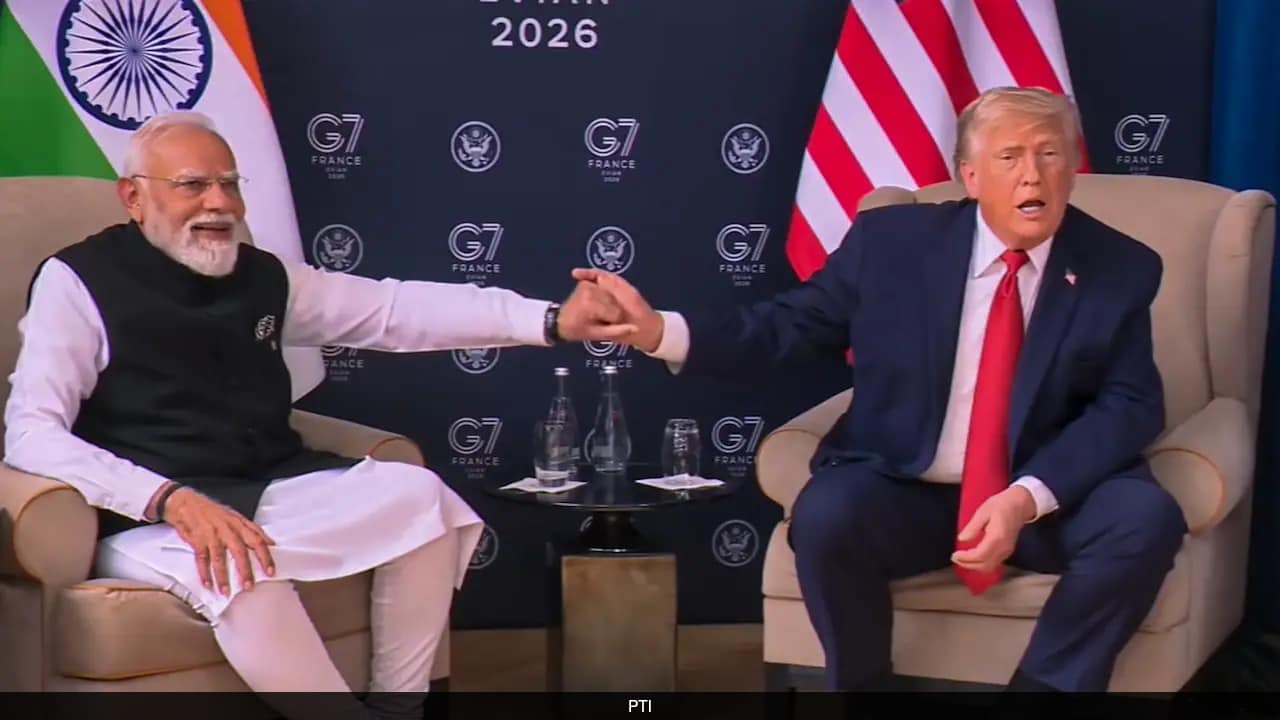
Diplomatic meetings are usually dry. Leaders stand behind podiums, read scripted talking points, and shake hands with plastic smiles. But when Indian Prime Minister Narendra Modi and US President Donald Trump sat down together at the G7 Summit in France, the standard script went out the window.
Between Trump calling Modi "an angel" who is secretly "as tough as a killer" and Modi offering strong praise for American peace initiatives, the bilateral meeting was anything but boring.
If you just skim the mainstream headlines, you'll see a lot of chatter about the phrase "new momentum, new energy in ties." But that's just standard diplomatic code. The real story lies in what these two leaders actually said when the cameras were rolling, especially regarding global trade, energy security, and the safety of thousands of workers caught in geopolitical crossfires.
Security Secrets From the Strait of Hormuz
The most critical part of the conversation didn't make the biggest front-page headlines, but it impacts your wallet directly. Modi brought up a major crisis brewing in West Asia: the safety of seafaring vessels and maritime trade routes.
Right now, the Strait of Hormuz is an absolute tinderbox. It's a narrow stretch of water, but it carries a massive chunk of the world's crude oil exports. If it closes, global oil prices skyrocket instantly. Modi didn't mince words here. He explicitly told Trump that keeping this specific route open is vital for the global economy.
But for India, this isn't just about fuel prices. It's deeply personal.
Indian citizens make up roughly 10% of all seafarers globally. Hundreds of thousands of Indian sailors are working on cargo ships and tankers right now, navigating through some of the most dangerous waters on earth. Recent tragic incidents involving the deaths of Indian sailors have put New Delhi on high alert.
Modi leaned heavily on this point during the meeting, stating plainly that the safety of seafarers is of the utmost importance. He put the ball in Trump's court, noting that as the US implements its new agreements and understandings in West Asia, the protection of these maritime workers needs to be the highest priority.
Trump's response was classic Trump. He acknowledged the danger, calling seafaring a "rough profession," and promised that the US and India would work tightly together on the issue.
The Trillion Dollar Trade Reality Check
Behind the warm praise and the smiles, there's a lot of hard-nosed economic friction that both leaders are trying to smooth over.
India currently holds a massive trade surplus with the United States—sitting at roughly $46 billion. That number has historically been a point of contention for Trump, who loves to complain about foreign tariffs on American goods. Yet, the tone at the G7 summit was surprisingly cooperative.
Trump openly teased that the two countries are very close to hammering out a significant trade deal. He called Modi a "tough negotiator" who catches people by surprise because he looks so nice but acts incredibly tough during closed-door trade talks.
The economic relationship is shifting toward massive energy purchases. India needs fuel to power its growth, and the US has a massive surplus of oil and gas. By committing to major American energy imports, India is essentially rebalancing the trade scale, giving Trump a political win at home while securing its own energy future. Trump summarized it perfectly: "They need it, and we have it."
Defense Guarantees Without the Paperwork
Perhaps the most shocking moment of the entire press interaction came when Trump was asked directly about US-India defense ties.
Usually, military alliances are bound by thick, carefully worded legal contracts that take decades to sign. When asked what would happen if India faced an external military attack, Trump didn't hide behind diplomatic ambiguity.
He stated outright that even without a formal mutual defense contract, if India were attacked, the US would be there to help.
"I think it's a great relationship. I can tell you this: without even having a contract... if they were attacked, we would be there to help." — Donald Trump at the G7 Summit.
That is an incredibly bold declaration for an American president to make on the fly. It shows how far the strategic partnership has moved past traditional non-alignment.
The Core Quotes You Need to Know
To understand where this relationship is heading for the rest of 2026, you have to look at the exact language used during the bilateral exchange. Here are the core quotes that defined the meeting:
- On the state of the alliance: "Since our meeting in Washington last year, our relations have gained a new momentum and a new energy. India and the US are moving forward together on several fronts." — PM Modi
- On Middle East diplomacy: "I commend your leadership on the progress made in the efforts to restore peace in West Asia. Thanks to your efforts, a new hope for peace and stability in the region has been rekindled." — PM Modi
- On the shipping crisis: "You and I agree that keeping the Strait of Hormuz open is vital for the global economy. India has consistently emphasized the importance of ensuring freedom of navigation." — PM Modi
- On the personal dynamic: "He looks so nice, like an angel. But actually, he's as tough as a killer. But he looks so good. So he gets you by surprise." — President Trump
What This Means for Global Politics
Don't let the overly casual banter fool you. This meeting signals that the US-India partnership is becoming the central pillar of geopolitical strategy in both the Indo-Pacific region and the Middle East.
By praise-showering Trump's West Asian peace initiatives, Modi is securing a seat at the table for India in future Middle Eastern trade and infrastructure projects. By addressing Trump's obsession with trade deficits through massive oil and gas purchases, India is successfully shielding its export economy from painful American tariffs.
If you are tracking international business, energy markets, or global security, watch the follow-through on the shipping lane agreements over the next few weeks. The rhetoric is great, but the actual naval coordination in the Strait of Hormuz will show whether this "new energy" translates into real-world security. Keep a close eye on upcoming shipping manifest changes and energy pricing updates; that's where the real impact of this meeting will show up first.