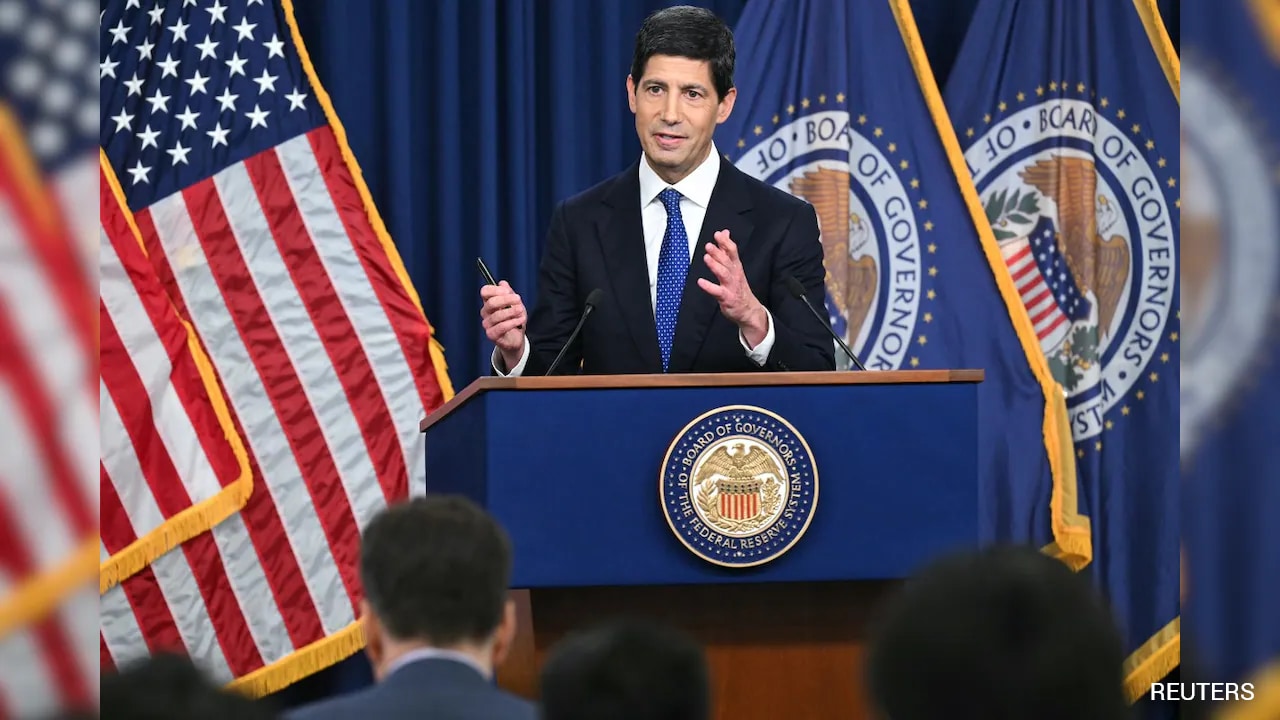
Central bank tightening operates through a precise transmission mechanism that alters corporate cost structures and consumer purchasing power, while executive branch criticism of these rate adjustments reflects an inevitable structural conflict between short-term political incentives and long-term monetary stabilization. When a central bank adjusts its benchmark interest rates upward to suppress broad-based inflation, it initiates a sequential cooling of aggregate demand by increasing the cost of capital across commercial and consumer lending markets. This monetary intervention frequently triggers sharp friction from political leadership, who face immediate electoral consequences from slowing economic growth, creating a classic tension between institutional independence and political objectives.
The Transmission Channels Of Central Bank Tightening
To understand the friction between monetary authorities and political leaders, one must examine the specific mechanics through which a policy rate hike propagates through the macroeconomy. The transmission mechanism relies on three distinct operational channels.
The first is the interest rate channel, which directly affects the cost of borrowing and the yield on savings. As the central bank raises its policy rate, commercial banks immediately reprice prime lending rates, mortgages, and variable debt instruments. This upward repricing increases debt-service obligations for both households and corporations, forcing a contraction in discretionary spending and capital expenditure.
The second is the asset price channel. Higher discount rates reduce the net present value of future corporate cash flows, compressing equity valuations. Simultaneously, rising yields on fixed-income instruments draw capital away from riskier assets. The resulting contraction in household wealth dampens consumer confidence and triggers a negative wealth effect, further suppressing aggregate demand.
The third is the credit channel. As borrowing costs rise, financial intermediaries tighten credit standards to mitigate default risks. This reduction in the volume of available credit disproportionately impacts small and medium-sized enterprises that rely heavily on bank financing rather than public debt markets.
The Political Economy Of Rate Hikes
The executive branch operates under a compressed time horizon bounded by electoral cycles, typically prioritizing near-term employment growth, disposable income expansion, and favorable asset prices. Conversely, central bank mandates are structured around medium-term price stability and maximum sustainable employment, insulating monetary policymakers from immediate political retaliation.
When a central bank executes a restrictive monetary policy, the economic costs manifest immediately in the form of higher borrowing expenses, decelerating housing markets, and softening employment metrics. The benefits—namely, the containment of inflationary pressures and the preservation of long-term purchasing power—accumulate gradually over several quarters. This temporal mismatch generates intense political hostility.
Political actors often characterize monetary tightening as a hostile act against economic growth or employment. This rhetoric serves two functions: it signals responsiveness to constituents burdened by higher financing costs, and it attempts to exert public pressure on central bankers to pivot toward monetary easing. However, succumbing to this political friction undermines the credibility of the monetary authority, risking unanchored inflation expectations and forcing even more severe interventions later.
Evaluating The Inflationary Baseline
Inflationary pressures typically emerge from a structural imbalance between aggregate demand and aggregate supply, or from persistent cost-push factors such as rising energy prices, supply chain bottlenecks, or wage-price spirals. When a central bank deploys rate hikes, it cannot directly manipulate supply-side constraints. Instead, its sole instrument is the dampening of aggregate demand to bring it into equilibrium with constrained supply capacity.
This asymmetric capability explains why monetary tightening often feels blunt and disruptive. By deliberately inducing an economic slowdown, the central bank aims to arrest the self-fulfilling psychology of rising prices, where consumers accelerate purchases and workers demand higher wages to offset anticipated future inflation.
Structural Limitations Of Monetary Intervention
Monetary policy is not a precise surgical tool; it is a macroeconomic lever with significant operational lags. The full economic impact of a rate hike typically takes between twelve and eighteen months to permeate the financial system. Consequently, central bankers must make forward-looking adjustments based on probabilistic economic forecasts rather than concurrent data.
Furthermore, aggressive monetary tightening risks overshooting, potentially triggering an abrupt contraction or liquidity stress within vulnerable sectors of the financial system. Conversely, premature easing risks embedding inflation at elevated levels, eroding real wages and destabilizing long-term capital allocation.
Strategic Allocation Under Monetary Friction
Corporate strategists and institutional investors navigating an environment of high interest rates and political friction must restructure their operational models away from debt-dependent growth toward balance sheet resilience. Capital allocation frameworks should prioritize cash-flow generation, optimized working capital management, and debt restructuring to lock in fixed maturities before further tightening materializes. Organizations that depend on low-cost leverage face severe margin compression, requiring aggressive cost rationalization and pricing power assessments to survive the transition to a higher cost-of-capital regime.