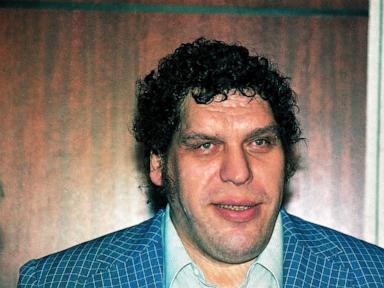
The installation of an official North Carolina Highway Historical Marker for André René Roussimoff—known globally as André the Giant—in Ellerbe, North Carolina, represents more than a localized act of nostalgia; it is a calculated deployment of "Legacy Infrastructure" designed to capture micro-tourism value. While standard reporting focuses on the sentimental narrative of a wrestling icon retiring to a quiet farm, a rigorous analysis reveals a deliberate intersection of cultural heritage preservation and regional economic development. The marker functions as a fixed asset with negligible maintenance costs that leverages an established global brand to redirect geographic transit patterns.
The Triple Constraint of Cultural Landmarks
The efficacy of a roadside marker as a strategic tool depends on three specific variables: Historical Authenticity, Brand Resonance, and Locational Friction.
- Historical Authenticity: Roussimoff’s connection to Ellerbe was not a fleeting promotional appearance but a long-term residency. He purchased a 46-acre ranch in Richmond County in 1980, using it as his primary residence until his death in 1993. This provides the "Geographic Proof of Concept" required for state-sanctioned historical recognition.
- Brand Resonance: André the Giant exists as a Tier-1 intellectual property within the professional wrestling and cinematic universes. His physical dimensions—resulting from acromegaly—created a visual shorthand for the "larger-than-life" archetype. This resonance ensures that the marker appeals to a demographic broader than local historians, capturing the attention of Gen X and Millennial travelers driven by 1980s pop-culture kitsch.
- Locational Friction: Ellerbe is a municipality with a population density that necessitates "Destination Triggers" to convert pass-through traffic into stationary consumers. By placing a marker on US 220, the North Carolina Department of Natural and Cultural Resources (DNCR) reduces the friction of discovery, turning a non-descript transit route into a "Point of Interest" (POI).
The Biological Reality of the Roussimoff Brand
To understand the scale of the memorial, one must quantify the physical and pathological anomalies that defined Roussimoff’s career. His stature was not merely a marketing gimmick but the result of excessive growth hormone production from the pituitary gland.
- Metric Analysis of Stature: While billed at 7'4" and 520 pounds, clinical estimates suggest a peak height closer to 7'0", with significant weight fluctuations. The physical toll of acromegaly includes joint degeneration, cardiomegaly, and respiratory issues, which directly influenced his decision to seek the low-impact environment of an Ellerbe ranch.
- The Mobility Paradox: As Roussimoff’s brand value peaked during the late 1980s (specifically around WrestleMania III in 1987), his physical mobility was in sharp decline. The Ellerbe farm served as a "Private Restoration Zone," an essential counterweight to the extreme rigors of the touring wrestling industry. This contrast between the public spectacle of the giant and the private seclusion of the farmer creates the narrative tension that sustains the local mythos.
Regional Economic Displacement and the Halo Effect
The placement of a historical marker operates on the principle of the "Halo Effect," where the prestige of a recognized figure is transferred to the surrounding geography. For a town like Ellerbe, this creates a specific economic pipeline.
The Conversion Funnel for Roadside Markers
The value proposition follows a predictable sequence:
- Impulse Deceleration: A driver sees the marker and slows down, breaking the "transit-only" mindset.
- Physical Engagement: The traveler exits the vehicle to photograph the marker, increasing the dwell time in the municipality.
- Ancillary Spend: Increased dwell time leads to high-probability transactions at local fuel stations, restaurants, and convenience stores.
The North Carolina Highway Historical Marker Program, established in 1935, is a state-managed curation system. By including Roussimoff, the state effectively "blue-chips" a pop-culture figure, granting him the same structural legitimacy as a Revolutionary War general or a political leader. This institutional validation is critical for attracting high-intent "Heritage Tourists" who travel specifically to document these markers.
The Logistics of Legend Maintenance
Roussimoff’s presence in Ellerbe was characterized by a specific set of logistical adaptations that have become part of the local oral history, which must be distinguished from factual operational data.
- Infrastructure Adaptation: Reports of custom-built furniture and reinforced flooring on the Roussimoff ranch are not merely anecdotes; they are structural requirements for a resident weighing over 500 pounds. These modifications represent a "Customized Living Environment" that high-mass individuals must implement to navigate standard domestic architecture.
- Community Integration: Unlike modern celebrities who utilize gated compounds, Roussimoff’s integration into Ellerbe was high-visibility and low-friction. This lack of social distance between the "Giant" and the rural citizenry converted him from an outsider into a "Local Asset," which is the foundational requirement for the current memorialization.
Analyzing the Selection Criteria for State Recognition
The North Carolina DNCR does not award markers based on popularity alone. The "Criteria for Inclusion" are rigid, requiring that the subject be deceased for at least 25 years and have made a significant contribution to history or culture.
The approval of the Andre the Giant marker (marker number K-70) signals a shift in the definition of "Historical Significance." It acknowledges that professional wrestling, once dismissed as low-brow spectacle, has achieved the status of "Cultural Folklore." Roussimoff is the first professional wrestler to be honored with such a marker in the state, establishing a precedent for the "Athletic-Entertainment Hybrid" as a valid category of historical study.
The Strategic Liability of Cultural Oversimplification
While the marker serves as a potent marketing tool, it risks flattening a complex human narrative into a two-dimensional caricature. The "Giant" was a man trapped in a body that was effectively a biological countdown. The rapid deterioration of his spine and heart is the dark subtext to the "gentle giant" imagery marketed by the WWF (now WWE) and the local tourism boards.
Investors and local stakeholders must recognize that the longevity of this memorial asset depends on maintaining the balance between the "Spectacle" (The Giant) and the "Citizen" (Roussimoff). If the narrative shifts too far toward the spectacle, the marker becomes a temporary novelty. If it leans too far toward the citizen, it loses the broad-market appeal necessary to drive significant transit volume.
Optimizing the Ellerbe Tourism Portfolio
The André the Giant marker should not be viewed as a standalone solution for regional growth but as a "Lead Magnet" within a broader "Portfolio of Interests." To maximize the ROI of this historical asset, the local strategy must evolve beyond the physical sign.
- The Digital Extension: The marker acts as a physical anchor for digital content. Geographic tagging on social media platforms allows for the aggregation of user-generated content, creating a self-sustaining marketing loop that the town does not have to fund.
- The Cluster Strategy: Ellerbe must link the Roussimoff marker to other regional assets (e.g., the Rankin Museum of American Heritage, which houses André the Giant memorabilia) to create a "Cluster of High-Value Touchpoints." A single marker is a 5-minute stop; a cluster is a half-day excursion.
The data suggests that the most successful rural revitalization efforts do not rely on a single "Game-Changing" event, but on the accumulation of "Micro-Assets" that collectively change the perception of a location. The André the Giant marker is a high-yield micro-asset. It uses the gravity of a dead superstar to pull moving capital out of the slipstream of a North Carolina highway and deposit it into the local economy.
The strategic play for Ellerbe is the transition from "Passing Point" to "Pilgrimage Site." This requires the aggressive protection of the Roussimoff narrative—ensuring that the town remains the primary custodian of his personal history, even as his global image is commodified by multi-billion dollar entertainment conglomerates. The marker is the deed to that claim.