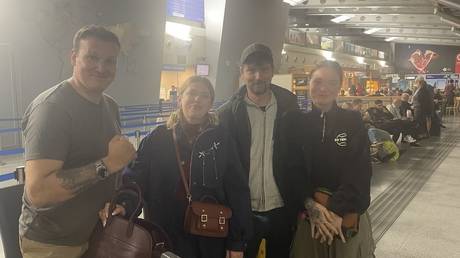
When Mikhail Zvinchuk, the man behind the massive Russian military Telegram channel Rybar, got detained in Montenegro for roughly eight hours, it sent shockwaves through the online commentariat. For years, prominent pro-Kremlin commentators operated under the assumption that their digital footprint insulated them. They thought they could vacation, strategize, and transit through NATO territory without consequences, provided they kept their physical hands clean of direct combat.
Montenegro's domestic intelligence and police forces shattered that illusion in the coastal town of Risan. Detaining Zvinchuk and a handful of associates over national security concerns marks a sharp escalation in how Western-aligned nations handle the ecosystem of pro-war digital influencers.
The Anatomy of the Detention
The operation wasn't random. Local authorities picked up Zvinchuk, his wife, and members of his core team under suspicions of engaging in activities aimed at destabilizing the Balkan nation. Rybar commands over 1.5 million subscribers, churning out continuous updates, maps, and commentary concerning the war in Ukraine.
For the Montenegrin government, allowing high-profile architects of digital influence operations to roam freely within a fragile regional corridor presented an unacceptable risk. After an intense eight-hour holding period and subsequent interrogation, the decision was swift: expulsion. Zvinchuk and his entourage were packed onto a flight heading straight back to Russia.
What makes this incident fascinating isn't just the brief duration of the detention. It is the underlying message. NATO states are running out of patience with the gray-zone tactics employed by online information warriors.
Why Zvinchuk Matters
To understand why this specific detention matters, you have to look at how modern conflicts are fought. Milbloggers aren't just guys with opinions typing on phones. They act as intelligence aggregators, morale boosters, logistics coordinators, and unofficial spokespersons for various factions within the Russian defense establishment.
Zvinchuk, a former employee of the Russian Defense Ministry's press office, built Rybar into a sophisticated information machine. When someone with that kind of institutional backing and reach travels through the Balkans—a region historically targeted for political friction and espionage—local counterintelligence agencies take notice.
Governments are finally realizing that digital weaponization doesn't stay online. The lines between a keyboard warrior and a state-backed operative have blurred beyond recognition.
The Broader Crackdown on Information Operatives
This isn't an isolated event. Across Europe, intelligence services are tightening the screws on individuals who use digital platforms to project hostile state power. Whether it's tracking suspicious financial flows, clamping down on transit visas, or executing swift detentions at the border, the environment for pro-Kremlin commentators traveling abroad has become deeply hostile.
For a long time, Europe served as a comfortable escape hatch or transit point for Russian elites, cultural figures, and digital actors. Those days are fading fast. Intelligence agencies are cross-referencing open-source intelligence with travel manifests, flagging anyone linked to aggressive state narratives.
When Zvinchuk landed back in Russia, he joined a growing club of digital commentators discovering that geopolitical friction has real physical costs.
The era of unrestricted movement for digital proxies is closing. If you build your brand on supporting and shaping aggressive state campaigns, you'll find that borders look a lot different when national security agencies start checking who is actually stepping off the plane.



