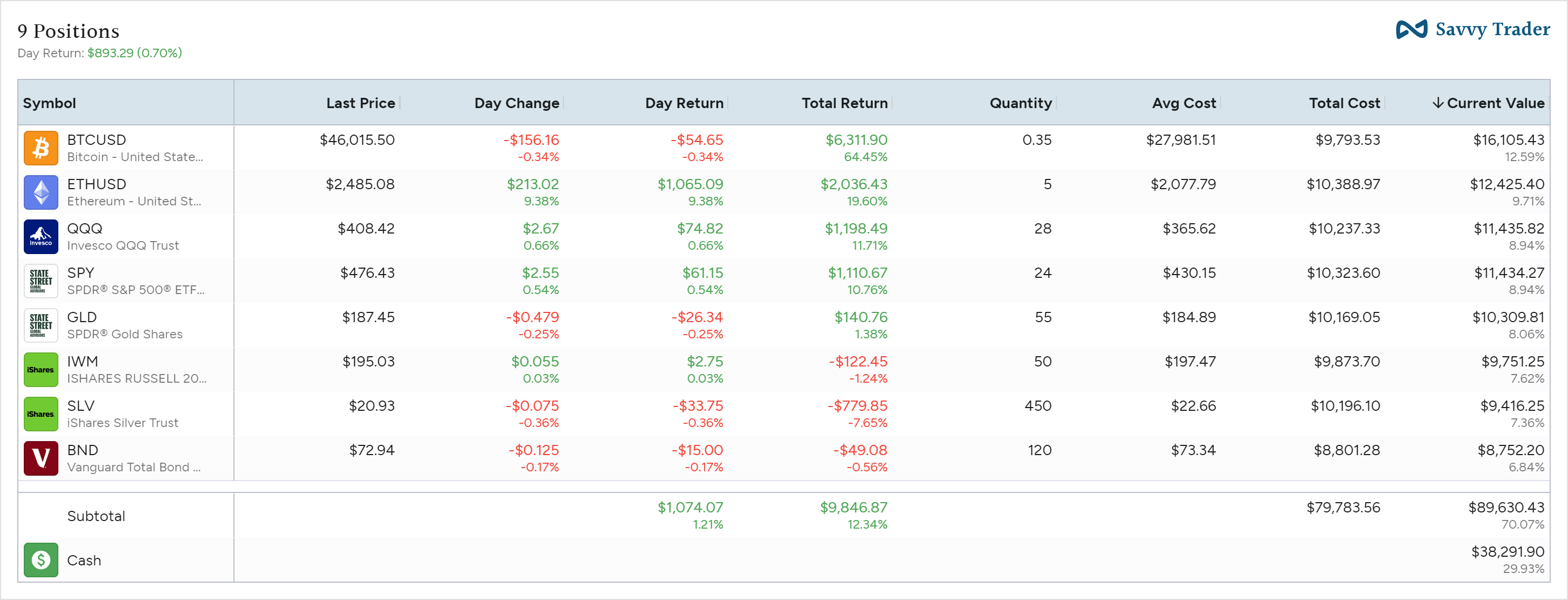
You don't need a complex algorithm to see that the market is twitchy. Investors are obsessing over every basis point and every earnings whisper. I've spent the last month reviewing my 31 portfolio stocks to see which ones are actually pulling their weight and which ones are just taking up space. Managing a portfolio this size isn't about constant trading. It’s about being a gardener. You prune the dead weight and water the plants that show the most promise.
Right now, most people are chasing the same five tech giants. That's a mistake. While everyone looks one way, the real value usually sits right behind them. This month, I’m doubling down on three specific names. These aren't speculative moonshots. They’re businesses with high cash flow and a clear path to winning their respective niches.
Why 31 stocks is my sweet spot
Diversification is often just a fancy word for "I don't know what I'm doing." If you own 100 stocks, you're basically owning an index fund but paying more in time and effort. If you own five, one bad CEO decision ruins your decade. I find that holding around 30 names gives me enough breathing room to survive a sector crash without diluting my best ideas into oblivion.
Each month, I rank these 31 companies. I look at revenue growth, debt-to-equity ratios, and how they handle their competition. If a company drops to the bottom of my list for three months straight, it’s gone. No sentimentality. No "waiting for it to bounce back." The market doesn't care about your feelings, and neither should your spreadsheet.
The current macro environment is tricky. We've seen sticky inflation and a labor market that refuses to quit. This means companies with "pricing power"—the ability to raise prices without losing customers—are the only ones I want to own. If a business has to beg its customers to stay when costs go up, it doesn't belong in a serious portfolio.
The case for Alphabet as a value play
It feels weird to call one of the biggest companies on earth a "value play," but look at the numbers. Alphabet is currently trading at a multiple that suggests the market is terrified of AI disrupting search. People think ChatGPT or Perplexity will kill Google.
They're wrong.
Google has the data. It has the distribution through Android and Chrome. Most importantly, it has YouTube. YouTube is the greatest advertising machine ever built, and it’s increasingly becoming a dominant player in the connected TV space. While everyone worries about search queries, YouTube is quietly eating the lunch of traditional cable and even other streaming giants.
I’m buying more here because the "AI threat" is priced in, but the "AI integration" upside isn't. Google is weaving Gemini into its entire workspace. That’s not a defensive move. It’s an offensive one. They're making their products stickier. When a company with a balance sheet that looks like a small country's GDP is trading at a reasonable price, you buy it. You don't overthink it.
Visa is the toll booth of the global economy
If you want to sleep well at night, own the companies that take a tiny slice of every transaction. Visa doesn't lend money. They don't take credit risk. They just provide the rails. Every time someone taps their phone or swipes a card in London, Tokyo, or New York, Visa gets paid.
The move toward a cashless society isn't a new story, but it's an ongoing one. Emerging markets are still in the early innings of this transition. Plus, Visa is expanding into "value-added services" like fraud protection and data analytics. These are high-margin businesses that make their core service even more indispensable.
The stock often gets hit when people worry about consumer spending slowing down. Sure, a recession might see a dip in transaction volume. But people don't stop buying groceries or paying bills. They just change how they spend. Visa wins regardless of whether you're buying a luxury handbag or a loaf of bread. It’s a boring business. I love boring businesses. Boring businesses pay for my lifestyle.
Why I am finally pulling the trigger on UnitedHealth Group
Healthcare is messy, political, and complicated. That’s exactly why UnitedHealth Group (UNH) is a powerhouse. They are the definition of vertical integration. They don't just provide insurance through UnitedHealthcare; they provide the actual care through Optum.
Optum is the secret sauce. It’s a massive network of doctors, clinics, and pharmacies. By owning the provider and the insurer, they can manage costs in a way that "pure-play" insurance companies can't touch. This leads to better margins and more predictable earnings.
The stock has faced some headwinds recently due to regulatory scrutiny and rising medical loss ratios. The market reacted by selling off, which is a gift for long-term investors. The demographic tailwinds are undeniable. The population is getting older. Older people need more healthcare. UNH is positioned to capture that demand better than anyone else. I’m adding to my position this month because the long-term thesis is stronger than the short-term noise.
How to handle the laggards in the portfolio
Not everything is a winner. Out of my 31 stocks, about five of them are currently underperforming the S&P 500. It happens. The key is knowing the difference between a "broken stock" and a "broken company."
A broken stock is when the price goes down, but the business is doing fine. That’s a buying opportunity. A broken company is when the fundamentals shift. Maybe they lost a key patent. Maybe a new competitor is eating their margins. Maybe the CEO is making questionable acquisitions to hide a lack of organic growth.
I’m currently watching two of my retail holdings very closely. Their inventory levels are creeping up, and their margins are thinning. If they don't show a turnaround in the next quarterly report, they’re getting cut. You have to be ruthless. Your portfolio isn't a museum for your past ideas. It's a tool for your future wealth.
Checking the vitals of your holdings
You should be checking a few specific metrics every single month. I don't care about the daily price fluctuations. I care about the "vitals."
- Free Cash Flow Growth: Is the company actually generating more cash than it spends?
- Operating Margins: Are they becoming more efficient or less?
- Debt Serviceability: Can they handle their interest payments if rates stay high?
- Share Count: Are they buying back shares or diluting you into the ground?
If these four things look good, the stock price will eventually follow. It might take six months or three years, but the math always wins in the end.
Most investors fail because they get bored. They see a stock go sideways for a year and they sell it to buy whatever is trending on social media. That is how you lose money. Wealth is built by sitting on your hands and letting compounding do the heavy lifting. I'm staying the course with my 28 other holdings while aggressively adding to Alphabet, Visa, and UnitedHealth.
Stop checking your brokerage account every hour. Go through your holdings. Read the latest 10-K filings. Check the cash flow statements. If the reasons you bought the stock are still true, then stay put. If the story has changed, get out. It's that simple.
Take a hard look at your largest positions today. Ask yourself if you’d buy them at their current price. If the answer is no, you might want to rethink why you’re still holding them. Start by ranking your own portfolio and see which three names deserve your next contribution.