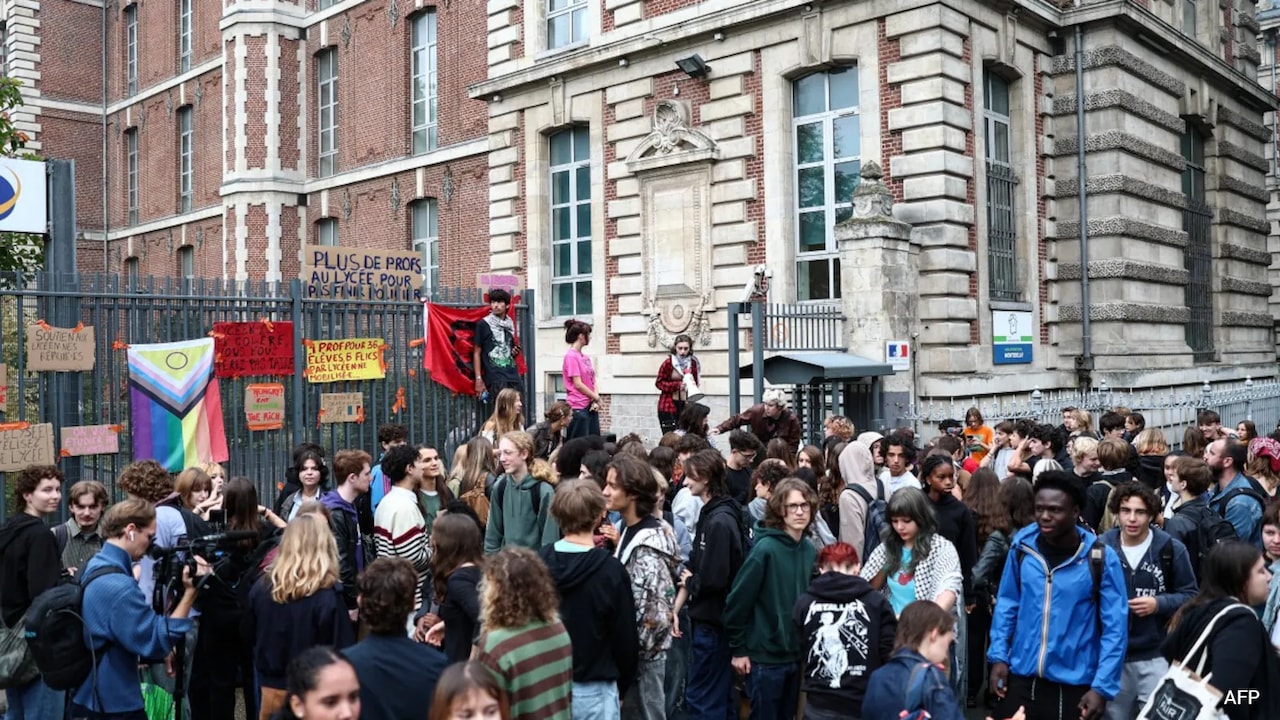
Dawn broke cold over the Place de la République, casting long, sharp shadows across the frost-dusted cobblestones. By six in the morning, the air smelled of damp asphalt and stale espresso from the corner tabac. Then came the sound that millions of French families have grown to dread and respect in equal measure: the heavy, metallic rattle of padlocks sliding into place.
Nearly five hundred schools. Across entire departments, from the industrial periphery of Paris to the sun-bleached outskirts of Marseille, the iron gates remained shut.
No bells rang. No children spilled across the asphalt with backpacks swinging and muffled laughter cutting through the morning chill. Instead, small knots of teenagers—some shivering in oversized puffer jackets, others draped in the tricolor flag—stood shoulder-to-shoulder with tired teachers and anxious parents. They were not playing hooky. They were making a statement.
To understand why an entire nation's educational infrastructure ground to a sudden halt, you have to look past the dry wire reports and the neat statistical summaries. You have to look at the kitchen tables where coffee cups sat half-empty the night before, while parents tried to explain to their kids why the math doesn't add up anymore.
Consider a hypothetical mother named Hélène, waking up at five in the morning in a cramped apartment outside Lyon. She is a nurse. Her shift starts at seven. Her son, Lucas, is fifteen—old enough to understand that his high school curriculum is shifting beneath his feet, young enough to feel the claustrophobia of a system that feels increasingly distant from the realities of modern life. When the teachers' unions and student federations called for a massive mobilization against proposed educational reforms and budget tightening, Hélène didn't scold Lucas for joining the walkout. She packed him an extra sweater and told him to keep his phone charged.
"They aren't just fighting over classroom sizes," she told her neighbor in the stairwell, her voice tight with a mixture of exhaustion and fierce pride. "They are fighting for what a future actually looks like in this country."
That is the invisible stake of the French school closures. It is never just about brick-and-mortar buildings or administrative decrees from desks in Paris. It is about the social contract.
In France, the school is more than an institution of learning. It is the great engine of the Republic, the place where disparate lives are supposed to be sanded down into equal citizens through the shared study of philosophy, history, and literature. When nearly five hundred schools close their doors simultaneously over student protests, it is a flashing red light on the dashboard of the state. It signals a profound fracture in trust.
The grievances driving these closures are layered and jagged. On one side, student councils point to crumbling facilities, underfunded vocational tracks, and a pervasive sense that their generation is being funneled into an economy that offers more instability than opportunity. On the other side, teachers watch their profession hollow out under the weight of bureaucratic mandates, staff shortages, and rising classroom densities that turn teaching into crowd control.
When these two streams of frustration merge, they become a tidal wave.
By mid-morning, the protests moved from quiet picket lines outside shuttered gates to the pulsing heart of city centers. Flares hissed red smoke into the gray autumn sky. Chants echoed off centuries-old stone facades, rhythmic and defiant.
Police lines stood in disciplined stillness, helmets tucked under arms or donned with practiced ease. There is a familiar choreography to these demonstrations, a dance as old as the Fifth Republic itself. Both sides know the steps. The state protects public order; the citizens exercise their constitutional right to disrupt it. Yet beneath the familiarity lies a genuine, trembling uncertainty. How many more mornings will the gates stay shut? How long can a system stretch its seams before something tears irreparably?
We often talk about social unrest as if it were weather—a sudden storm that rolls in, disrupts our commute, and passes once the sky clears. We look for the numbers. Five hundred schools. Thousands of students. Dozens of detained protestors. We quantify the disruption to reassure ourselves that order will soon be restored.
But human lives do not fit neatly into spreadsheets.
Think of the teenager standing behind a makeshift banner, his fingers numb from the cold, shouting until his throat burns. He is not thinking about GDP growth or legislative compromises. He is thinking about whether he will afford rent in this city five years from now. He is thinking about whether his diploma will open doors or lock them.
Think of the veteran teacher who spent thirty years trying to ignite a passion for Victor Hugo in kids who are increasingly worried about whether their planet will remain habitable.
When the sun finally dipped below the horizon, the crowds thinned. The flare smoke drifted away, leaving only bits of cardboard placards and crushed paper cups scattered across the pavement. Municipal sweepers moved in with heavy brooms, clearing the debris with methodical indifference.
Tomorrow, the politicians will debate in gilded halls. Tomorrow, the newspapers will analyze the political fallout of a paralyzed school system.
But tonight, in five hundred shuttered schools across France, the courtyards are dead silent. The iron gates remain locked. And the questions that brought thousands of people out into the freezing dawn remain suspended in the dark, waiting for an answer that no decree can easily write.


