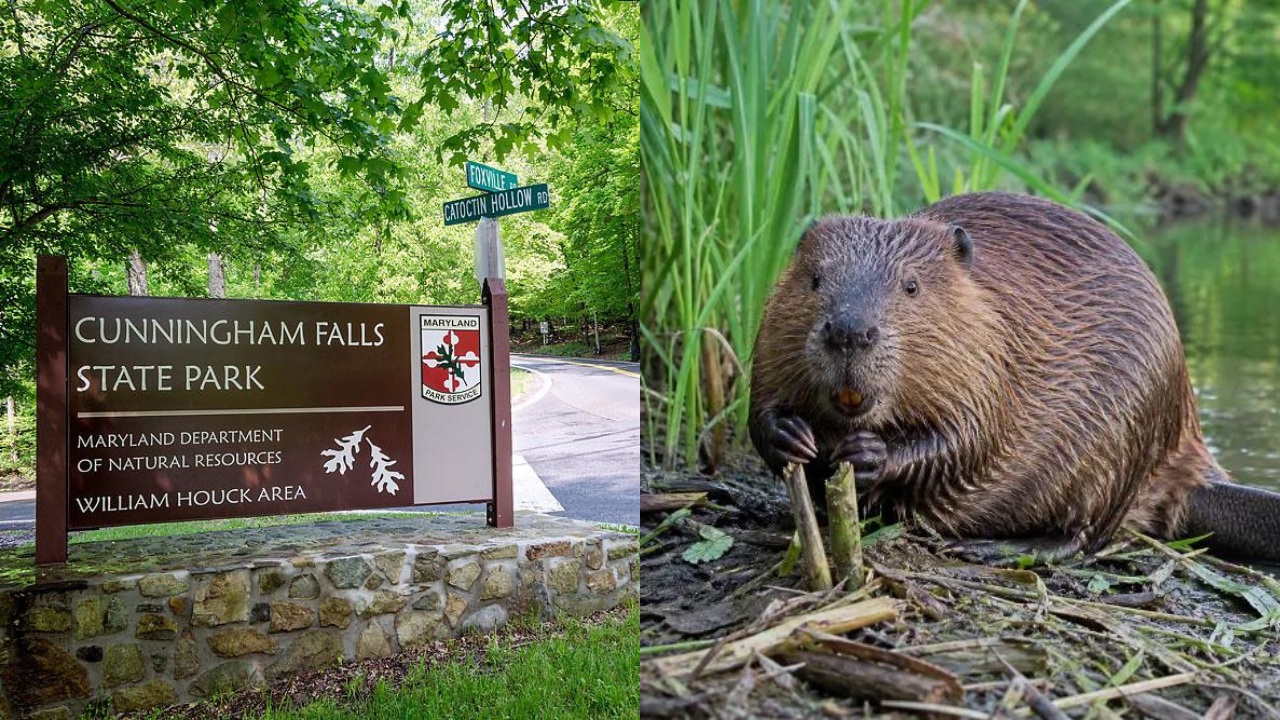
The mist hangs low over the Patapsco River, clinging to the rotting cypress knees and the rusted guardrails of Maryland's quiet county parks. It is the kind of morning that feels ancient, untouched by concrete or alarm clocks.
Then came the scream.
It was not the sound of a hiker twisting an ankle on a granite root, nor the sharp, breathless cry of a child scraping a knee on gravel. It was something entirely outside the lexicon of a Sunday morning stroll. It was sharp. Furious. Followed immediately by the heavy, water-logged slap of a tail hitting the surface of the Patapsco.
Mark Vance was standing barely twenty feet away, clutching a thermos of lukewarm black coffee. He had come for the stillness. Instead, he watched a middle-aged runner—a regular, someone who knew every dip and curve of the trail—stumble backward out of the brackish shallows, clutching a bleeding, mutilated calf.
"It grabbed me," the runner gasped, his face the color of wet lime. "Right under the surface. I thought it was a dog. I swear to God, I thought a stray dog had locked onto my leg."
It was not a dog.
Within fourteen days, it would happen again. Two separate attacks, two separate victims, zero warning. In a suburban corridor where the most violent encounter one usually expects is a tick clinging to a woolen sock, the local wildlife had suddenly rewritten the social contract.
Beavers. North America's architectural engineers. The fuzzy, buck-toothed architects of elementary school textbooks, symbols of industrious harmony with nature, had chosen violence.
Consider what happens next when reality shatters a comfortable myth.
We build our lives around comforting categorizations. Herbivores eat plants. Carnivores hunt meat. Wild animals run away from humans. These are the quiet assumptions we pack into our picnic baskets along with the red-and-white checkered napkins. We look at a beaver dam and we see a furry little artisan building a cozy lodge for its kits. We do not see a forty-pound rodent armed with chisel-like incisors that grow continuously for the entire span of its life, powered by jaw muscles strong enough to fell an oak.
When a beaver bites a human, it feels like a personal betrayal of the ecosystem.
Let us be entirely clear about the mechanics of the event, stepping for a moment into the cold ledger of verified fact. Wildlife officials across Maryland scrambled microphones, set live traps, and issued urgent press releases that read like dispatches from an alternate timeline. Rabies tests were ordered. Warning signs were hammered into the soft earth along the water's edge.
Rabies. That was the immediate, terrifying whisper running through the park district. A rabid beaver loses its innate fear of humans, its internal compass spinning wildly out of control until every moving shadow looks like an existential threat. When a creature whose entire existence is defined by quiet industry suddenly goes rogue, disease is the first suspect we reach for to preserve our worldview.
Yet, as the lab results trickled back, a stranger, more complex truth began to emerge. Not all of them were rabid.
Some were simply doing what parents have done since the dawn of time. They were protecting their nurseries.
Picture a hypothetical mother beaver—let us call her Dam 4—squatting in the submerged timber of a Maryland inlet. To her, the murky water is not a scenic backdrop for your morning jog. It is the cradle of her lineage. It is the fortress wall keeping the snapping turtles and the coyotes away from her vulnerable, furless kits huddled in the dry chamber of the lodge.
To a beaver, a human wading through the shallows or letting a retriever splash near the dam does not look like a peaceful neighbor enjoying a morning out. It looks like a leviathan. A lumbering, two-legged titan invading the nursery.
When a human gets too close to that invisible perimeter, the warning system kicks in. First comes the tail slap—a concussive boom designed to announce presence and sound the alarm. If the titan ignores the thunderclap, if the heavy boots keep splashing closer to the underwater entrance of the lodge, the calculus changes.
The chisel teeth do not negotiate. They defend.
We rarely talk about the sheer audacity of our footprint in these spaces. We pave parking lots three hundred yards from a marsh, erect interpretive signs about biodiversity, and assume the local fauna read the zoning laws. We expect nature to be polite. We expect the deer to pose gracefully for photographs, the geese to march in single file, and the beavers to stay on the educational channel.
When they refuse to read the script, we panic.
Mark Vance watched the second attack from the safety of the wooden observation deck two weeks after the first. A local fisherman, waist-deep in his waders, casting a spinner bait toward a fallen birch, suddenly let out a strangled yelp. His rod flew into the air, spinning end over end before crashing into the lily pads.
The water boiled. A sleek, dark shape breached the surface, locked onto the rubberized neoprene of the fisherman's boot with the grim tenacity of a bulldog, and shook its heavy head. The fisherman didn't strike back with malice; he flailed, slipping backward into the muck, cursing the river and everything in it. The beaver vanished beneath the tea-colored water as quickly as it had arrived, leaving behind a silence so thick you could hear the mist dripping from the leaves.
The park was closed by noon. Yellow police tape fluttered across the trailhead like cheap ribbons at a crime scene.
What drives an animal famous for its pacifist tree-chopping habits to target upright walkers?
Look closer at the seasonal rhythms of the watershed. Late spring and early summer mark the dispersal period for yearling beavers. Young kits, now grown and pushed out of their natal lodges by a new litter, must pack their bags and swim downstream to find a vacant stretch of river or creek. But Maryland is crowded. Every prime stretch of slow-moving water is already claimed, mapped, and defended by older, established pairs.
Imagine a teenage vagabond kicked out of the family home, wandering down a crowded street with nowhere to sleep, exhausted, starving, and hyper-vigilant. Now add four incisors of iron-hard orange enamel and zero patience for suburban joggers.
The stress of habitat fragmentation is an invisible weight. We carve up watersheds with culverts, choke streams with silt runoff from nearby housing developments, and squeeze wildlife into shrinking pockets of green space. Then we wonder why the wildlife starts biting back.
We treat nature like an outdoor museum exhibit, expecting museum rules to apply. Do not touch the artifacts. Stay behind the yellow line. Keep your voice down. But a river is not a gallery. It is a living, breathing engine of survival, competition, and raw, unvarnished instinct.
When the Maryland Department of Natural Resources finally managed to remove the offending animals, the local forums erupted. Some cheered the restoration of safety. Others wept digitally for the displaced architects, posting pixelated tributes to creatures they had never noticed until the headlines made them famous.
Both reactions miss the deeper mark.
The danger was never that the beavers had suddenly gone mad en masse. The danger was our own profound amnesia. We forgot that we are sharing these narrow ribbons of wilderness with creatures that do not care about our morning jogs, our fishing licenses, or our weekend schedules.
The yellow tape has since come down. The trails have reopened. Walk down to the Patapsco today at dawn, and you will see the dog walkers returning, earbuds in, eyes fixed on their screens, stepping gingerly over the exposed roots.
The water looks calm again. The surface is smooth as glass, reflecting the gray morning sky. But just beneath that glassy skin, down where the mud meets the sunken birch logs, the orange teeth are still growing.
:max_bytes(150000):strip_icc()/ar-American-Cheese-taste-test-horizon-4x3-54cc339550cd44b9a818c17bdfd5428d.jpg)