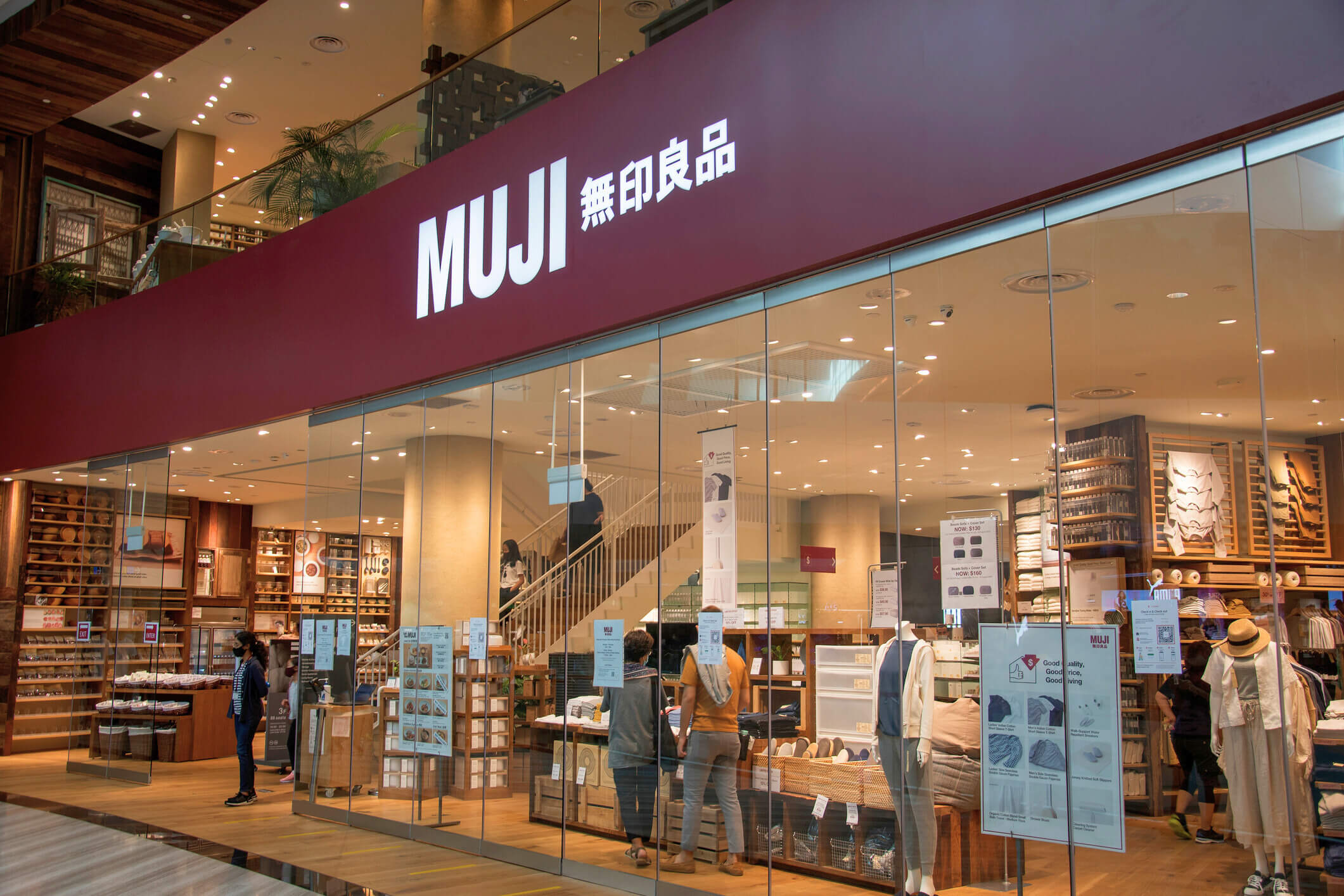
Retail analysts love a clean narrative. Right now, the consensus is glowing: Ryohin Keikaku, the parent company behind Muji, figured out how to survive a brutal price war and ferocious local competition in China, and now it is exporting that exact survival manual to the rest of the world.
It sounds brilliant on a slide deck. In practice, it is a slow-motion identity crisis.
The lazy consensus assumes that what saved Muji in Shanghai and Beijing will save it in New York, London, and Paris. That logic ignores basic retail physics. Muji did not win in China by doubling down on what made it an icon; it survived in China by becoming a localized grocery and daily-necessities discounter to fend off domestic clones like Miniso and Nome. Exporting that defensive crouch to Western and non-Chinese Asian markets is not a growth strategy. It is a capitulation of brand equity.
The Myth of the Universal Retail Playbook
I have watched legacy retailers blow hundreds of millions of dollars trying to copy-paste regional turnarounds onto global footprints. Executives see a spike in same-store sales in one territory, panic about stagnation in another, and force-feed the winning formula across borders without asking why it worked in the first place.
In China, Muji faced a specific, existential threat. For years, Muji positioned itself there as an aspirational, imported lifestyle brand—charging significantly more in yuan than the exact same items cost in yen back in Tokyo. That pricing umbrella invited an army of local knockoffs. Competitors mimicked Muji’s minimalist aesthetic, sourced from the same factories, and undercut its prices by half.
Ryohin Keikaku had no choice. To stop bleeding market share in China, management slashed prices repeatedly, moved product development into local Chinese studios, shifted heavily into low-margin food and daily consumables, and opened massive experiential flagships with farms, bakeries, and hotels.
That was not innovation. That was triage.
When a brand is fighting a street brawl against domestic copycats on their home turf, localized discounting and hyper-localized assortment make total sense. You do what you must to keep foot traffic moving. Taking that same emergency surgery and performing it on healthy or differently sick patients in North America and Europe is reckless.
What Muji Actually Sells in the West vs. China
To understand why this global rollout is flawed, look at unit economics and consumer psychology.
In Japan and China, Muji functions like an elevated, design-conscious convenience and department store. Shoppers walk in for a pack of socks, a curry pouch, a wooden spatula, and a skin toner. High frequency. Low basket size. Razor-thin margins offset by massive volume and dense store networks.
In the West, Muji has never been a high-frequency neighborhood convenience store. Real estate in Soho, Manhattan or Oxford Street, London is too expensive, and store footprints are too sparse for a shopper to rely on Muji for their weekly groceries or paper towels. Western consumers visit Muji for design arbitrage—getting Japanese industrial design, stationary, storage systems, and minimalist apparel at a fraction of high-end boutique prices.
When Muji imports its China playbook globally—emphasizing localized mass-market consumables, aggressive price-tier restructuring, and local design teams—it attacks its own moat.
- Margin Compression: Shifting mix toward food and daily essentials drags down gross margins. In high-rent Western cities, lower gross margins per square foot are lethal.
- Aesthetic Dilution: Muji’s entire global allure rests on Kanketsu—simplicity and Japanese sensibility. When local design teams in disparate regions start tailoring products to local tastes, the strict design discipline erodes. It stops feeling like a curated Japanese system and starts feeling like an unremarkable private-label store.
- The Uniqlo Trap: Fast Retailing (Uniqlo’s parent company) succeeded globally by keeping product development ruthlessly centralized in Tokyo while localizing marketing and sizing. Muji is doing the exact opposite: decentralizing product creation based on its China model.
Dismantling the "Localization Is Everything" Dogma
Ask any retail consultant how a global brand should expand today, and they will parrot the same tired line: You must localize everything.
That advice is half-baked. There is a massive difference between operational localization and identity localization.
Operational localization means adjusting supply chains, fit sizing, store formats, and checkout friction to fit local habits. Identity localization means changing what your products are and what your brand stands for to appease local mass-market tastes.
Imagine a scenario where Porsche decided that because SUVs saved its balance sheet in North America and China, it should stop engineering flat-six sports cars in Germany and let regional offices design local family minivans. Revenue might spike for six quarters. By year five, the brand is dead.
Muji is flirting with the retail equivalent of that trap. Its China strategy relied heavily on building a local supply chain and local R&D hub in Shanghai to create goods specifically for Chinese consumers. That works when a single country represents a massive, contiguous market of over a billion people with shared digital ecosystems and logistics.
Try replicating that localized R&D model across Europe, Southeast Asia, and North America, and you end up with fragmented inventory, bloated SKUs, and a muddled brand identity. You lose the economies of scale that made "no-brand quality goods" (Mujirushi Ryohin) profitable in the first place.
Why People Ask the Wrong Question About Muji
If you look at search trends and retail forums, shoppers and analysts keep asking the same two questions: Why is Muji so expensive outside Japan? and Can Muji beat Miniso?
Both questions miss the point entirely.
First, Muji is expensive outside Japan because of import duties, transoceanic freight, expensive Western urban real estate, and currency fluctuations—not because management is greedy. Trying to solve that price gap by stripping out Japanese design heritage and sourcing cheap local consumables destroys the only reason a shopper in Chicago or Berlin walks past a Target or an IKEA to enter a Muji.
Second, Muji cannot—and should not—try to beat Miniso at Miniso’s game. Miniso is a fast-fashion variety retailer built on licensing, impulse trinkets, and hyper-aggressive franchise expansion. Muji is an industrial design philosophy created by icons like Ikko Tanaka, Kenya Hara, and Naoto Fukasawa. The moment Muji tries to out-discount or out-localize fast-retail variety chains, it steps into a race to the bottom where its cost structure guarantees a loss.
The Brutal Truth About the China Turnaround
Even the premise that the China playbook is an unqualified triumph deserves scrutiny.
Yes, revenue rebounded after painful store closures and price cuts. Yes, localized products like specialized bedding and regional food items moved volume.
What the celebratory press releases gloss over is the cost of that survival:
- Brand Prestige Erosion: In tier-one Chinese cities, Muji is no longer viewed as a premium design authority. It is viewed as a utilitarian mid-tier staple. Once a brand surrenders pricing power in a market, getting it back takes a decade.
- Inventory Complexity: Expanding into fresh food, cafes, and hyper-local SKUs dramatically increases supply chain spoilage and markdown risk.
- Capital Intensity: Experiential flagships with hotels and bookstores make great PR photos, but their return on invested capital is notoriously sluggish compared to tight, high-turnover modular retail boxes.
To be fair, my contrarian stance has a glaring vulnerability: wall-street impatience. Publicly traded retail companies do not get five years to patiently educate Western consumers on the beauty of Japanese minimalism while same-store sales sit flat. Shareholders demand immediate top-line growth. The China playbook offers a tempting sugar high—drop prices, localize SKUs, push consumables, and watch transaction counts rise. It looks great in the next two quarterly earnings calls, even if it hollows out the brand over the next twenty.
What Muji Should Actually Export
If Ryohin Keikaku wants true global durability, it needs to put the China playbook back in the drawer where it belongs and export its Japanese operational discipline instead.
- Centralize the Core, Localize the Shell: Keep 85% of product design and material engineering anchored in Japan. Maintain the strict, obsessive standards around acrylic storage, stationery, travel gear, and basic apparel. Use regional teams strictly for sizing adjustments, packaging translation, and store-level visual merchandising.
- Win on Modularity, Not Price: Muji’s superpower is that a storage drawer bought in 2014 still stacks cleanly with a drawer bought in 2026. Western fast-retail competitors change designs every season. Muji should market its permanence and modular compatibility—a direct antidote to disposable consumerism.
- Shrink the Footprint, Fix the Supply Chain: Instead of massive, capital-heavy experiential temples outside Asia, focus on smaller, hyper-curated urban locations backed by fast regional e-commerce fulfillment. Stop trying to sell heavy, low-margin groceries in expensive Western storefronts.
A playbook written to survive a knife fight in one market will get you killed in a chess match in another. Muji spent forty years proving that stripping away excess creates timeless value; it is a tragedy to watch it bloat its global strategy just to chase short-term volume.