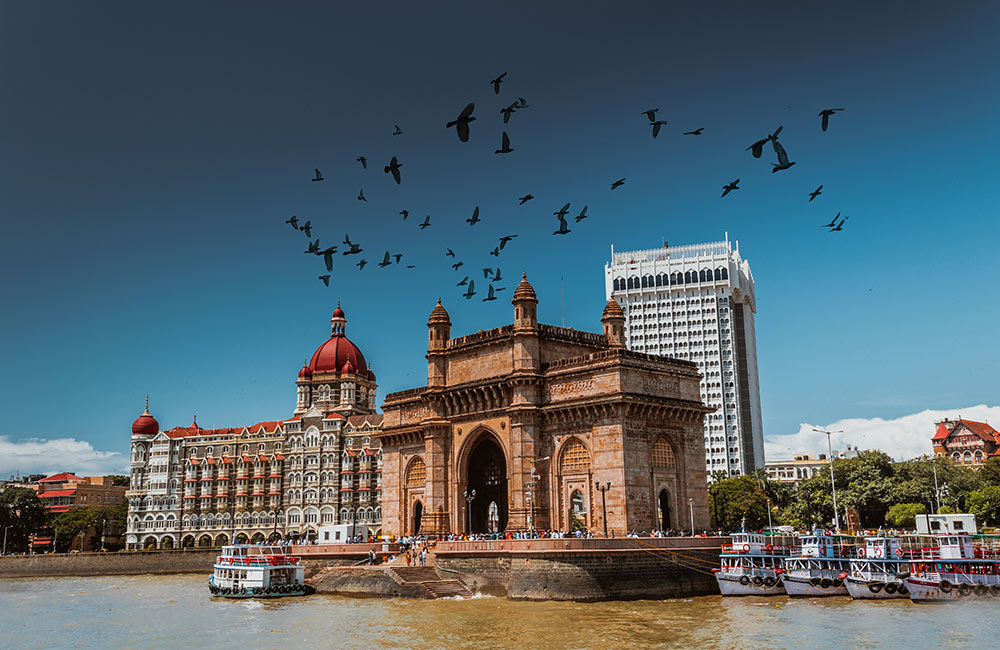
Step outside in Mumbai during the late-year shift, and the air does not just warm you. It clings. It tastes faintly of salt, diesel, and wet concrete that never quite dries between monsoons.
For decades, the response to this creeping suffocation from India’s entertainment capital was predictable. Air conditioners hummed louder. Tinted windows rolled up higher. Cinema offered an escape to snowy Swiss valleys while the streets outside buckled under heatwaves and unseasonal cloudbursts.
That insulation is cracking.
As the Earthshot Prize 2026 events opened in Mumbai this November, bringing Prince William’s global environmental initiative to the shores of the Arabian Sea, the familiar glamour of red-carpet arrivals carried a different frequency. Actors Rakul Preet Singh and Bhumi Pednekar stepped up to the microphones not to promote a Friday box-office release, but to talk about survival, soil, and the uncomfortable math of a warming planet.
Skepticism is the rational reflex here. We have all seen the spectacle of private-jet environmentalists lecturing the public on carbon footprints while adjusting designer lapels. It is easy to dismiss celebrity climate advocacy as seasonal noise—a PR polish applied right before awards season.
Yet dismissing what happened in Mumbai this week misses a critical shift in how environmental urgency actually moves through a society of 1.4 billion people. Data does not change behavior. Charts showing parts-per-million of atmospheric carbon do not make a commuter in Andheri rethink single-use plastics, nor do they force municipal contractors to protect coastal mangroves. Stories do. And in India, the people who hold the megaphone for mass storytelling live in Mumbai.
The Architecture of Indifference
To understand why two Bollywood actors speaking at an environmental summit matters, you first have to look at the wall they are trying to break through.
Climate change suffers from a branding problem rooted in human psychology. Our brains evolved to react to immediate, visible threats—a predator in the tall grass, a sudden flash flood, a fire on the horizon. We are terrible at processing slow-motion emergencies. When a crisis unfolds over thirty years in fractions of a degree, our nervous system hits the snooze button.
Consider a hypothetical family living in a high-rise overlooking the Mithi River in Mumbai. Let us call them the Deshmukhs. Every July, they watch the water rise. They complain about the traffic, buy an extra air purifier when the winter smog rolls in from construction sites, and assume that someone in a government ministry is handling the big picture. The crisis feels abstract because their daily routine still functions. Until the day the power grid fails during a 42-degree heatwave, or the localized flooding turns a twenty-minute commute into a six-hour ordeal.
I remember standing on the Versova promenade a few years back after a severe cyclone brushed the coast. The tide had pushed back onto the road not just seawater, but mountains of tangled polythene, broken flip-flops, and packaging from decades past. It was the ocean returning our receipts. Standing there, breathing in the sour smell of rotting wet waste mixed with sea spray, the abstract graphs of global warming vanished. It felt personal, local, and deeply embarrassing.
That gap—between the overwhelming scale of global planetary data and the intimate reality of a clogged drain outside your apartment—is where most climate communication dies. Scientists speak in probabilities and peer-reviewed caveats. Politicians speak in five-year election cycles.
Celebrities, for better or worse, speak in emotion and aspiration.
Two Different Playbooks on the Same Stage
When Rakul Preet Singh and Bhumi Pednekar addressed the gathering at the Earthshot Prize 2026 kickoff in Mumbai, they were not reading from the same script. Their presence highlighted two distinct ways public figures are finally maturing past vague slogans like "save the earth."
Bhumi Pednekar has spent years building credibility in this space before it became fashionable on film sets. Through her advocacy platform, Climate Warrior, she has consistently pushed the conversation away from elite eco-luxury and toward basic civic accountability. On stage in Mumbai, her focus returned to a stubborn truth: environmental collapse is not an equal-opportunity destroyer.
Think of climate change like a leak in the roof of an apartment building. The penthouse residents might notice a damp patch on the ceiling and call a contractor. The families living on the ground floor end up ankle-deep in water, watching their furniture rot.
Pednekar’s insistence on highlighting vulnerable communities—farmers watching erratic monsoons ruin a year’s harvest, coastal fishing villages losing their shorelines to erosion—forces an urban, affluent audience to look at the ground floor. When an actor known for grounded, socially sharp cinema refuses to let the conversation stay purely theoretical, she lends her audience’s empathy to people who rarely get invited to international summits.
Rakul Preet Singh approached the moment from a different, equally vital angle: daily habit and personal agency.
For millions of young fans, the climate crisis triggers a paralysis known as eco-anxiety. The problem looks too massive. What difference does one person’s steel water bottle make when coal plants are burning across continents? Singh’s public messaging, echoed during the Mumbai event, targets that exact sense of helplessness. By focusing on conscious consumption, plant-forward choices, and reducing everyday waste, she translates planetary stewardship into mundane, repeatable actions.
Critics argue that individual lifestyle tweaks cannot solve an industrial emissions problem. They are right about the math, and wrong about the psychology. Nobody fights to pass systemic green policies if they have not first practiced caring about their own footprint. Personal habits are the gateway drug to civic pressure.
Why Earthshot Chose Mumbai in 2026
The decision to bring the Earthshot Prize 2026 events to Mumbai was not an accident of geography. Founded by Prince William in 2020, the prize was designed around a specific historical analogy: President John F. Kennedy’s 1962 "Moonshot" speech, which galvanized an entire nation around an audacious technological goal within a single decade.
The Earthshot model takes that ten-year urgency and applies it to five concrete targets: protecting and restoring nature, cleaning our air, reviving our oceans, building a waste-free world, and fixing our climate. Each year, five winners receive one million pounds each to scale solutions that are already working on the ground.
Hosting the 2026 proceedings in India places the spotlight squarely on the frontline of the global climate paradox.
India is home to roughly a sixth of humanity. It is building roads, hospitals, power grids, and homes at a speed the Western world has not seen since the post-war boom. Asking a developing nation to simply freeze its growth to satisfy Western emissions targets is both unfair and politically impossible. At the same time, India sits squarely in the crosshairs of extreme weather. From melting Himalayan glaciers feeding the Ganges to rising sea levels threatening Mumbai’s financial district, the country cannot afford to repeat the dirty industrial playbook of the 19th and 20th centuries.
India has to invent a new path—growing rapidly while decarbonizing simultaneously. And it is already proving that frugal, scalable innovation works. Previous Earthshot winners and finalists from India, such as Kheyti’s "Greenhouse-in-a-Box" for smallholder farmers and Takachar’s portable machines that turn agricultural waste into fertilizer instead of deadly Delhi smog, show what happens when local ingenuity meets global capital.
When Mumbai hosts this summit, the city itself becomes the case study. It is a metropolis built on seven reclaimed islands, home to more than twenty million people, generating over six thousand metric tons of waste every single day, yet still possessing fragile urban mangrove forests that act as the city’s biological shock absorbers during monsoon surges.
The Invisible Stakes of Cultural Permission
So we return to the core tension. Does it really matter what Rakul Preet Singh or Bhumi Pednekar say into a microphone while cameras flash?
Let us look at how social norms actually shift. Behavioral economists have studied how populations abandon entrenched habits—from smoking indoors to refusing seatbelts. Rarely does change happen because everyone suddenly reads a government white paper. Change happens when a critical mass of visible, admired figures alters what is considered normal, aspirational, or embarrassing.
In Indian pop culture, wealth and status were long signaled through excess. Big weddings with mountains of wasted food. Imported bottled water on every table. Fleet after fleet of idling SUVs.
When top-tier actors walk into major industry events repeating outfits, calling out plastic waste on film sets, and openly discussing soil degradation and air quality, they quietly rewrite the status symbols. They grant cultural permission for ordinary people—and more importantly, for corporate sponsors and film producers—to care without looking preachy.
It is still imperfect. The film industry remains a massive consumer of energy, air travel, and temporary set materials. A single blockbuster shoot can generate tons of discarded plywood, styrofoam, and diesel exhaust. Calling out that hypocrisy is fair, and necessary. Honestly, it is hard not to feel a flicker of cynicism whenever a luxury-sponsored summit talks about saving the planet. We are all complicit in systems that burn carbon just to keep the lights on and the economy moving.
But waiting for flawless messengers means waiting forever. Perfection is the enemy of momentum.
Beyond the Red Carpet
The real test of the Earthshot Prize 2026 gathering in Mumbai will not be measured in Instagram impressions or glossy headlines about celebrity attendees. It will be measured in the unglamorous months that follow, long after the international delegates fly home and the red carpets are rolled up into storage.
It will show up in whether Mumbai’s film studios actually adopt zero-waste production standards. It will show up in whether young Indians watching clips of Pednekar and Singh decide to back local innovators cleaning up urban lakes and rethinking packaging. It will show up in whether policymakers feel enough public heat to protect the remaining coastal wetlands from real estate encroachment.
As the evening settled over Mumbai during the opening ceremonies, the Arabian Sea breeze finally kicked in, pushing back the afternoon humidity for a few brief hours. Out beyond the shoreline lights, millions of tons of water rose and fell against the concrete tetrapods lining Marine Drive—patient, indifferent to box-office numbers, indifferent to speeches, keeping score in millimeters every single year.


