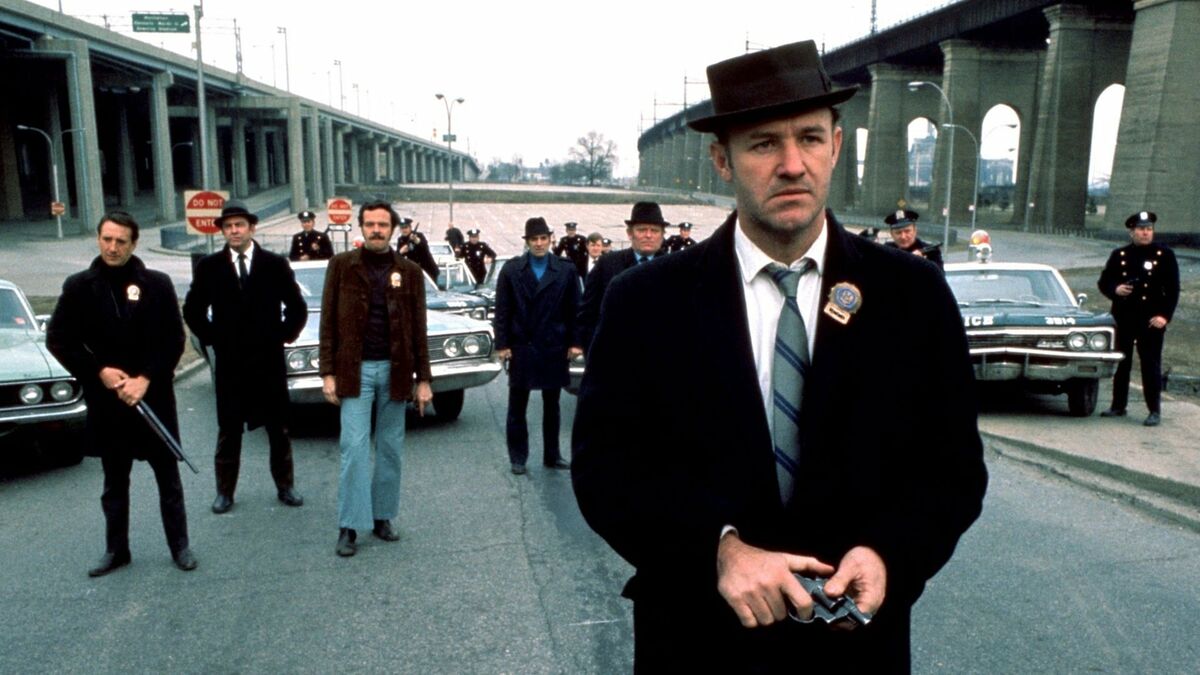
The traditional city hall reporter wants you to believe they are a digital-age Woodward or Bernstein, lurking in parking garages and decoding cryptic whispers from disgruntled whistleblowers. They tell stories about "shoe-leather journalism" and "building trust over coffee."
It’s a fantasy.
Most local scoops aren't the result of brave truth-telling. They are the byproduct of a symbiotic, slightly stagnant ecosystem where reporters and bureaucrats trade favors to keep each other relevant. If you think the "scoop" you read over your morning toast was a hard-won victory for transparency, you’ve already lost the game.
The reality of municipal reporting is far more transactional, far more calculated, and infinitely more cynical than the industry admits.
The Access Trap: Why Your Source is Using You
The biggest lie in journalism is that "access" equals "insight."
In the corridors of power, access is a leash. When a City Manager or a Council Member hands a reporter a "scoop" about a new development project or a budget surplus, they aren't doing it out of a sense of civic duty. They are framing the narrative before the opposition can get their boots on.
I have watched reporters celebrate a "leak" that was actually a carefully timed press release disguised as a secret. If a source gives you information, they own the way you tell it. The moment you pivot and write something truly damaging about that source, the "scoops" dry up.
True investigative work doesn't come from sources who like you. It comes from documents that can't talk back.
The Math of Information Decay
Consider the shelf life of a political secret. In a standard municipal environment, the value of a piece of information ($V$) can be modeled as a function of time ($t$) and the number of people who know it ($n$):
$$V(t, n) = \frac{I}{e^{n \cdot t}}$$
Where $I$ is the initial impact. As $n$ increases—meaning more staffers and interns become aware of a scandal—the value for a reporter to "break" it decreases because the risk of a leak to a competitor grows exponentially. This pressure forces reporters to publish half-baked stories just to be first, sacrificing the deep dive for the dopamine hit of a "Breaking" banner.
Stop Following the Personnel Changes
Most city hall reporters waste 40% of their time on personnel churn. Who got hired as the new Parks and Rec Director? Who resigned from the Planning Commission?
Nobody cares.
Unless the person was escorted out by the FBI, personnel changes are noise. They are the "lazy consensus" of local news—easy to write, easy to verify, and completely meaningless to the taxpayer's bottom line.
If you want to find where the bodies are buried, stop looking at the faces and start looking at the Amortization Schedules.
I’ve seen newsrooms ignore a $200 million bond restructuring because it was "too technical" for the audience, only to lead the front page with a 300-word fluff piece about a retiring librarian. The librarian is a nice story; the bond restructuring is the reason your property taxes are going to spike for the next thirty years.
The Audit is the Only Source That Matters
If you want a real scoop, stop getting coffee with the Mayor’s Chief of Staff. Start reading the Comprehensive Annual Financial Report (CAFR).
- Look for "unfunded liabilities." This is where cities hide the fact that they've promised pensions they can't pay.
- Check the "notes" section of the audit. That’s where the legal settlements live. If a city is paying out millions in police misconduct settlements but isn't talking about it, the CAFR will tell you.
- Track the "inter-fund transfers." This is the municipal version of a shell game, moving money from the water utility fund to the general fund to mask a deficit.
The PR-to-Journalism Pipeline is a Conflict of Interest
We need to talk about the revolving door.
In every major city, there is a predictable path: work at the local paper for five years, get to know everyone in City Hall, and then jump ship to become the city’s Public Information Officer (PIO) for double the salary.
This creates a "soft-touch" culture. Reporters are hesitant to burn bridges with the people who might be their future bosses. They call it "maintaining professional relationships." I call it a preemptive surrender.
When your "insider" tells you they have a lead, ask yourself: is this a lead, or is this a PR professional practicing their pitch on a friendly ear?
The "Public Comment" Delusion
Reporters love to quote "outraged citizens" from city council meetings. It provides easy drama. It’s also statistically irrelevant.
The people who show up to speak at 7:00 PM on a Tuesday are rarely representative of the city's actual demographics or concerns. They are the "NIMBYs" (Not In My Backyard), the professional agitators, and the bored.
Relying on public comment for the "pulse of the city" is like relying on Twitter for a nuanced take on geopolitics. It’s a shortcut for reporters who are too tired to do actual data analysis on how a policy will affect 100,000 residents who were too busy working to attend a meeting.
A Better Way to Measure Impact
Instead of quoting the man yelling about a bike lane, look at the Permit Data.
Imagine a scenario where a city claims to be "pro-small business." A lazy reporter interviews three shop owners. A sharp reporter pulls the median processing time for commercial building permits over the last five years. If that number has climbed from 30 days to 90 days, you don't need a quote. You have a story.
The Myth of the "Exclusive"
In the digital age, the "exclusive" lasts exactly four minutes. That’s how long it takes for a competitor to rewrite your lead, change three adjectives, and post it on their own site without attribution.
Chasing the 4-minute lead is a fool's errand. It’s a race to the bottom that rewards speed over accuracy.
The only exclusives worth having are the ones that are indisputable and un-copyable. These are the stories built on proprietary data analysis or a year-long paper trail. If your "scoop" can be summarized in a tweet by your rival ten minutes later, you didn't have a scoop. You had a press release that you got slightly early.
The Death of the Beat is a Good Thing
The industry moans about the "death of the beat reporter." They say that without a dedicated body in the City Hall press room, democracy dies in darkness.
I disagree.
The beat reporter is often the first person to be "captured" by the institution. They become part of the furniture. They start talking like the bureaucrats they cover. They use terms like "fiscal year-end adjustments" and "zoning variances" without explaining them, because they’ve forgotten that normal people don't speak Council-ese.
The most dangerous reporter at City Hall isn't the one who’s been there for twenty years. It’s the outsider who walks in, looks at a standard operating procedure, and asks, "Wait, why the hell are you doing it this way?"
Burn the Rolodex
The era of the "insider scoop" is over. Or at least, it should be.
If you are a reporter—or a reader—waiting for a source to whisper the truth in your ear, you are a passive participant in your own manipulation. The real stories aren't hidden in secret meetings. They are hidden in plain sight, buried in 400-page PDF budget documents and Excel spreadsheets that no one bothers to download.
Stop looking for a Deep Throat. Start looking at the General Ledger.
The bureaucrats are counting on you being too bored to check the math. Prove them wrong.
Stop asking for permission to tell the story. The data is public. The records are there. The "scoop" is a lie told by people who want to feel important. The truth is much colder, much more boring, and significantly more expensive.
Go find the money. Everything else is just theater.