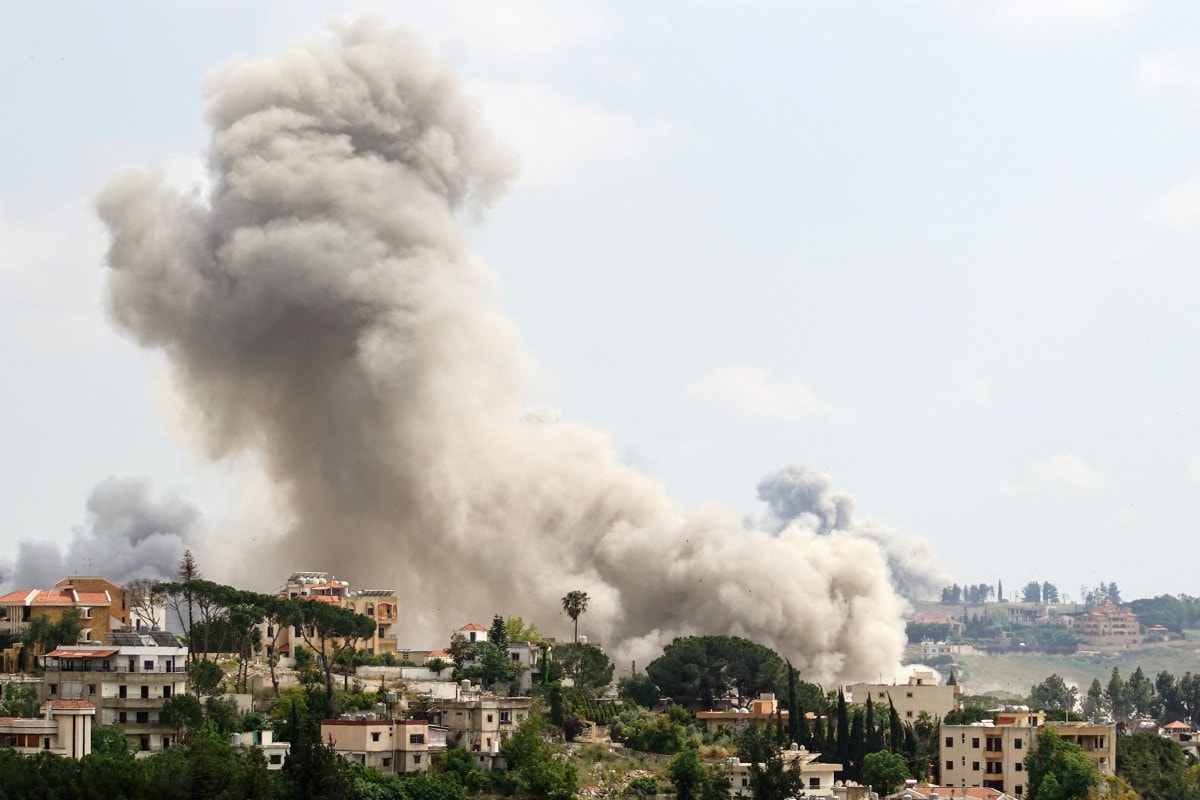
Mainstream media outlets are suffering from a chronic case of wishful thinking. The recent headlines blare with triumphant declarations that Israel and Lebanon have agreed to renew their fragile ceasefire after intensive negotiations with the United States. They paint a picture of tireless diplomats burning the midnight oil to hand the world a "diplomatic breakthrough."
It is a comforting narrative. It is also entirely wrong. In other developments, read about: The Diplomatic Delusion Why India and Afghanistan Cannot Handshake Their Way Past Geography.
The lazy consensus dominating the news cycle treats this ceasefire as a fragile glass ornament that can be preserved if all parties just handle it with enough diplomatic care. This view mistakes a tactical pause for a strategic resolution. The reality is far more cynical. This brokered agreement is not a step toward peace; it is a structural mechanism used by both sides to rearm, reposition, and prepare for the next, more devastating phase of conflict.
The United States did not broker a peace deal. It negotiated a intermission. The Guardian has analyzed this critical topic in extensive detail.
The Fatal Flaw of the Sixty Day Buffer
Every talking head on cable news points to the implementation period—specifically the 60-day window for the Lebanese Armed Forces (LAF) to deploy south and Hezbollah to withdraw north of the Litani River—as the core achievement. This is a fundamental misunderstanding of the region's military architecture.
I have spent years analyzing Middle Eastern security frameworks, and if there is one undeniable truth, it is that lines on a map do not alter asymmetric warfare realities. Resolution 1701 tried this exact experiment in 2006. It failed spectacularly. To believe that repeating the exact same mechanism in 2026 will yield a different result is the definition of policy insanity.
The premise is flawed because it treats Hezbollah like a conventional army that can simply pack up its tanks and march north. Hezbollah is an integrated social, political, and military fabric woven directly into the villages of Southern Lebanon.
- They do not wear uniforms when they are not actively fighting.
- Their weapons caches are built beneath civilian infrastructure.
- Their intelligence spotters live in the very houses the LAF is supposed to monitor.
When the Lebanese army moves south, they are not policing a demilitarized zone. They are patrolling neighborhoods managed by the very entity they are supposed to displace. The LAF lacks both the political mandate and the military teeth to forcibly disarm Hezbollah. To expect them to do so is to demand that the Lebanese state trigger its own civil war.
The Enforcement Lie
The most glaring deception in the current agreement is the newly proposed "international oversight mechanism" led by the United States. The media treats this as a major upgrade from the toothless UNIFIL missions of the past.
Let us break down the mechanics of how this actually plays out on the ground. Imagine a scenario where Israeli intelligence spots a clandestine tunnel construction or a missile transport system just south of the Litani River. Under the terms of this "breakthrough" agreement, Israel cannot simply strike it without violating the ceasefire. Instead, they must report it to the oversight committee. The committee must then verify the claim, coordinate with the LAF, and request an investigation.
By the time that bureaucratic wheel turns, the asset is moved, the tunnel is camouflaged, and the tactical advantage is lost.
If Israel bypasses the committee and strikes pre-emptively, the US-led diplomatic framework collapses instantly, and Washington accuses Jerusalem of undermining Western diplomatic capital. If Israel waits for the committee, Hezbollah successfully entrenches itself further. This creates a perverse incentive structure where compliance guarantees vulnerability, and non-compliance guarantees diplomatic isolation.
Why Both Sides Signed a Deal They Intend to Break
If this deal is so structurally deficient, why did both Israeli Prime Minister Benjamin Netanyahu and the Lebanese government sign off on it? The answer lies in domestic political consumption and logistical exhaustion, not a sudden desire for coexistence.
For Israel, the northern campaign achieved significant tactical successes—decapitating Hezbollah’s senior leadership and destroying visible border infrastructure. However, conventional armies face diminishing returns in counter-insurgency warfare. The Israeli Defense Forces (IDF) needed a operational pause to:
- Rotate tired reserve units who have been fighting on multiple fronts for over a year.
- Replenish depleted iron dome interceptors and precision-guided munitions, heavily relying on the speed of US resupply lines.
- Manage the economic strain of a prolonged war that has displaced tens of thousands of citizens from Galilee.
For Hezbollah and its backers in Tehran, the ceasefire is an absolute strategic necessity. It is a lifeline. They suffered catastrophic intelligence failures and lost their command-and-control hierarchy. They signed this agreement for one reason: time. They need a window of quiet to rebuild their communications infrastructure, appoint new commanders, and smuggle fresh shipments of guided missiles through Syrian transit corridors.
This is not a peace process. It is a pit stop in a NASCAR race.
Dismantling the Prevalent Questions
The public is asking the wrong questions because the media provides the wrong context. Let us address the flawed assumptions floating around standard policy debates.
Question: Won't economic aid to Lebanon incentivize the government to keep Hezbollah in check?
Answer: Absolutely not. This assumes the Lebanese state operates like a Western democracy where financial leverage dictates policy. The Lebanese government is trapped in a state of political paralysis. Hezbollah holds a veto over the state’s security decisions through its armed wing, which is significantly more powerful than the national army. Injecting international aid into Beirut does not magically give a weak prime minister the power to disarm an Iranian-backed militia.✨ Don't miss: The Fragile Silence of a Room Without Weapons
Question: Can US diplomatic pressure force long-term compliance from Israel?
Answer: Only temporarily. No amount of pressure from Washington will convince an Israeli government to tolerate a hostile proxy army sitting on its northern border indefinitely. The October 7 attacks fundamentally altered Israel's security calculus. The old doctrine of "containing" threats is dead. If the oversight mechanism fails to stop Hezbollah from rearming—and it will—Israel will launch a subsequent, more aggressive incursions regardless of what the US State Department advises.
The High Cost of Diplomatic Theatre
The real danger of this Washington-brokered agreement is that it breeds dangerous complacency. By manufacturing a temporary illusion of stability, it prevents the international community from addressing the root cause of the conflict: the geopolitical reality that Iran uses Lebanon as a forward missile base to threaten regional stability.
By focusing on the symptoms (border skirmishes) rather than the disease (the asymmetric proxy strategy), diplomats ensure that the next outbreak of violence will be significantly worse. The weapons smuggled into Lebanon during this peaceful interlude will be faster, more precise, and harder to detect. The next escalation will not look like the localized border fighting of the past year; it will be an all-out regional conflagration that drags the entire Levant into chaos.
Stop celebrating the paper achievements of diplomats who are more concerned with short-term political cycles than long-term strategic realities. This ceasefire is a countdown clock, and the alarm is already set.