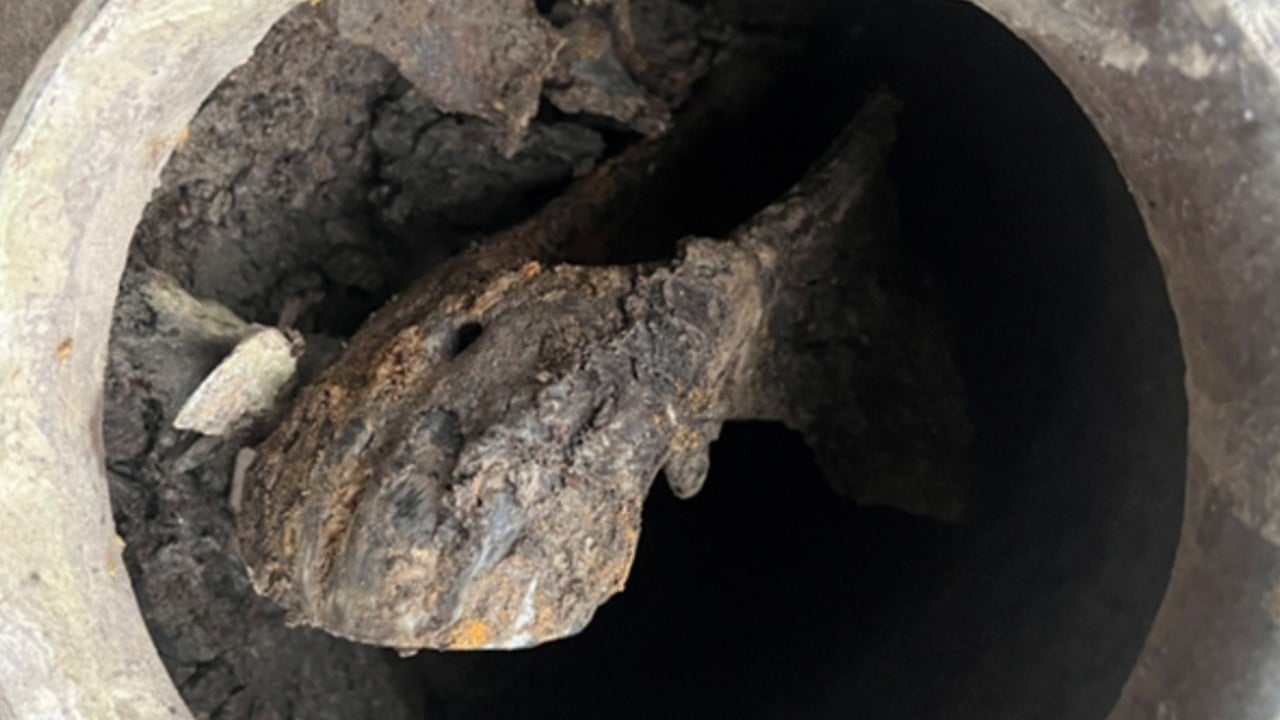
Mainstream archeology has a glaring blind spot. Every time researchers excavate an ancient pit, dust off some bone fragments, and find something they cannot immediately categorize as a spoon or a sword, they default to the same lazy, predictable conclusion. They call it a ritual. They call it an elite sacrificial tradition.
We saw this exact intellectual surrender again with the recent reporting on Chinese excavations uncovering horse-head remains. The narrative was instantly set in stone. Media outlets and academic papers lined up to tell you how these findings shed light on the deeply spiritual, highly structured ritualistic world of the ancient elite. They paint a picture of solemn aristocrats engaging in pious devotion, spending immense wealth to appease ancestors or secure safe passage into the afterlife.
It is a beautiful story. It is also completely wrong.
The obsession with viewing ancient discoveries through a purely religious or ritualistic lens ignores basic human nature, economic reality, and military logistics. Those horse heads sitting in ancient pits were not a demonstration of spiritual piety. They were the cold, calculating remnants of geopolitical posturing, hyper-inflationary currency management, and raw military logistics.
If you want to understand the ancient world, you need to stop thinking like a theologian and start thinking like a central banker and a chief logistics officer.
The Ritual Trap of Modern Archeology
Academic consensus loves a clean, untangleable narrative. When you label a site as a sacrificial tradition, you escape the burden of proving economic utility. You get to talk about the spiritual psyche of the Dynastic elite instead of doing the hard math of agrarian supply chains.
Think about what a horse actually represented in ancient China, particularly during the Shang, Zhou, or Han eras. A horse was not a pet. It was not mere livestock like a pig or a goat. A horse was the equivalent of a modern Main Battle Tank or an armored personnel carrier. It was the apex military technology of its era. The breeding, training, and maintenance of horses required an astronomical allocation of state resources, grazing land, and specialized labor.
To suggest that an elite class regularly slaughtered their finest military assets solely because they wanted to show off their piety to dead ancestors is to misunderstand how power maintains itself. Elites do not stay elite by destroying their own defense infrastructure for a vibe.
When we look at these horse-head discoveries, we are not looking at a church service. We are looking at an ancient defense budget being decommissioned, or worse, a deliberate scorched-earth economic policy disguised as tradition.
Currency Control and Value Inflation
To understand why an ancient ruler would bury perfectly good horses, or parts of them, you have to look at how wealth was stored and manipulated. In periods lacking fiat currency or standardized global banking, tangible assets served as the ultimate store of value.
Imagine a scenario where a local warlord or regional governor accumulates an unprecedented surplus of horses through successful breeding or trade with northern nomadic tribes. In a closed economic system, an oversupply of military assets dilutes their value. If every minor official has access to a cavalry, the central authority loses its monopoly on violence.
Burying horses was not an act of worship; it was an act of supply manipulation.
By taking dozens or hundreds of horses out of circulation permanently, the ruling elite artificially maintained the scarcity—and therefore the value—of the remaining stock. It is the exact same economic mechanism used when central banks burn currency or when agricultural conglomerates destroy surplus crops to keep market prices from crashing.
The horse pits are ancient quantitative tightening.
By framing this as a sacred sacrificial tradition, modern commentators mistake an aggressive monetary policy for a religious awakening. The elites were not trying to please the gods. They were trying to keep their neighbors from out-arming them by bottlenecking the supply of weaponized livestock.
The Logistics of the Scorched-Earth Bureaucracy
Let us look closer at the physical reality of these discoveries. Why are we often finding just the heads or specific skeletal arrangements rather than whole, pristine animals? The mainstream explanation claims this symbolizes a curated, ritualistic offering, where specific parts of the animal held mystical significance.
Let us apply some operational logic instead.
Managing a massive military camp or an elite funeral procession involves severe sanitation risks. Decaying horse flesh breeds disease, contaminates groundwater, and attracts scavengers. If an elite figure died, or if a treaty was struck requiring the ceremonial culling of assets, you did not simply leave hundreds of tons of meat to rot near your living quarters.
The separation of horse heads from the rest of the carcass suggests a highly organized butchery and distribution operation. The meat went to the troops, the laborers, or the local population as a massive, state-sponsored feast to secure loyalty. The hides went to armor production. The bones were salvaged for tools or divination materials.
The heads—heavy, low in meat yield, and distinctively identifiable as the ultimate symbol of the animal’s identity—were buried. Why? Because you cannot easily fake a horse head. If a vassal state owed a tribute of fifty horses to be retired or dedicated to a treaty, burying the heads proved compliance without wasting the valuable caloric and material resource of the rest of the animal.
It was an audit trail.
A pit of horse heads is the ancient equivalent of a shredded document or a stamped receipt. It proved to the central inspectors that the asset had been taken off the board, while the actual utility of the animal was recycled back into the state machine. Calling this an elite sacrificial tradition misses the entire industrial infrastructure behind it.
The Geopolitical Signaling Failure
Another foundational error in the competitor's analysis is the idea that these burials were inward-looking, meant to reinforce internal social hierarchies or satisfy personal spiritual anxieties. This completely misreads the external pressures facing ancient Chinese polities.
Ancient China was not an isolated vacuum. It was a brutal, shifting chessboard of competing states, fractured fiefdoms, and constant threats from mobile nomadic groups along the frontiers. Every action taken by an elite clan was scrutinized by rivals looking for signs of weakness.
When you bury a massive cache of horse remains, you are sending an explicit broadcast to your neighbors. But the message is not "Look how religious I am." The message is "I have so many military assets, so much surplus wealth, and such a secure grip on my supply chains that I can afford to throw away what your entire kingdom struggles to breed in a decade."
It was an act of aggressive intimidation.
It is the historical version of a billionaire lighting a cigar with a hundred-dollar bill, or a nuclear power staging a massive, wildly expensive military parade just to show the world that their equipment works. It is a flex. If a rival state realizes you can afford to bury fifty horses just to mark a burial or a treaty, they think twice about invading your borders next spring.
By categorizing this under the soft, comforting umbrella of tradition, modern historians strip the ancient actors of their strategic intelligence. These rulers were not mystical zealots blindly following superstitious scripts. They were hard-nosed realists utilizing every psychological tool at their disposal to deter aggression.
Dismantling the PAA Consensus
When people search for information regarding ancient Chinese sacrifices, the standard questions always reflect the same fundamental misunderstandings. Let us address them with reality rather than academic fluff.
Why did ancient Chinese elites sacrifice horses specifically?
They did not choose horses because of an inherent spiritual holiness. They chose them because horses were the ultimate high-value, high-impact currency of the ancient world. Sacrificing a chicken proves you can afford dinner. Sacrificing a dog proves you can manage a household. Sacrificing a horse proves you control an empire. It was a scale of economic power, nothing more.
How do horse burials explain ancient Chinese social structures?
They show a highly centralized, command-and-control economic structure capable of destroying massive amounts of capital without facing immediate collapse. It reveals an elite class that possessed a absolute monopoly over the most vital military resource of their time, allowing them to dictate terms to the lower classes and neighboring states through conspicuous destruction.
Was animal sacrifice a regular part of daily ancient life?
For the elite, it was a regulated tool of statecraft. For the common person, absolutely not. The average agrarian laborer could not afford to sacrifice an animal that assisted in tilling fields or provided essential sustenance. The fact that we find these pits exclusively associated with high-status sites proves that this was an elite macro-economic lever, not a grassroots cultural practice.
The Cost of the Counter-Intuitive Truth
Admitting that these discoveries are rooted in cold logistics and power politics rather than pure religious tradition comes with a downside. It strips away some of the romanticism we like to attribute to the ancient world. It is far more poetic to imagine ancient people driven by deep, mysterious spiritual convictions than it is to realize they were playing the same dirty games of political leverage, resource hoarding, and economic manipulation that we see today.
But ignoring the pragmatic reality does a profound disservice to the intelligence of our ancestors. They were not primitive superstitious actors incapable of strategic thought. They understood resource allocation, threat deterrence, and market supply far better than the modern academics currently analyzing their bones.
The next time you read an article claiming a new archaeological find sheds light on a sacrificial tradition, look past the incense and the altars. Look for the ledger. Follow the supply chain. Find out who owned the assets, who benefited from their removal from the market, and who was intimidated by the display.
History is not written by the pious. It is written by the tacticians.