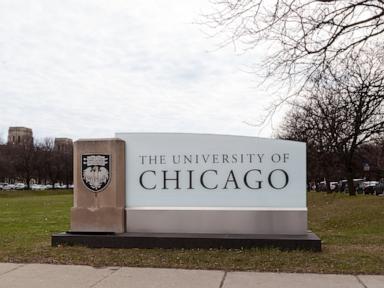
Campus police name a person of interest. The headline drops. Within twenty minutes, group chats are burning, Reddit threads are dissecting alibis, and everyone feels like justice has already been served.
It hasn't.
Standard campus crime reporting treats the naming of a person of interest like a plot twist in a procedural drama. A suspect emerges from the shadows. Tension rises. The public watches to see if handcuffs follow. When a story involves a reported sexual assault at a fraternity house—at the University of Chicago or any other major research university—that narrative gets turbocharged by decades of cultural baggage around Greek life, elite institutions, and campus accountability.
Most coverage stops right there. One person in the spotlight. One house under scrutiny. One neat little frame.
That frame is lazy. Worse, it is analytically broken.
A "person of interest" is not a finding of guilt, not a formal charge, and not proof that an investigation is moving toward conviction. In criminal procedure, the phrase is an investigative shorthand used by law enforcement when someone may have information, proximity, or a connection to an incident—whether as a witness, an associate, or a potential suspect. Treating a person of interest label as a near-conviction distorts how campus sexual assault actually happens, how investigations stall or succeed, and why institutions keep repeating the same PR choreography every semester.
The Lazy Consensus Around Campus Crime Headlines
Look at how typical campus reporting handles a breaking police alert. First comes the timeline of the call. Then comes the location—almost always anchored to a recognizable campus landmark or Greek organization. Then comes the update: police have identified a person of interest.
The implicit takeaway for the reader is simple. Progress is happening. Someone is in the crosshairs.
I have spent years watching universities, municipal police departments, and campus media cover high-stakes misconduct cases up close. I have seen institutions blow credibility and millions of dollars in legal defense because leadership treated a preliminary investigative step like a finished verdict—or, conversely, hid behind procedural vagueness until students lost all trust in the process. Every single time, the public conversation gets trapped in the same binary: either the university is covering things up, or the police have found their guy.
Neither side is looking at the actual mechanics.
In real-world investigations, especially those involving alcohol, parties, private off-campus or chapter residences, and conflicting accounts, identifying a person of interest is often just the starting line of a grueling evidentiary slog. Witness memories degrade fast. Digital footprints are messy. Consent and capacity disputes require careful forensic and testimonial sorting that rarely fits neatly into a breaking-news alert.
When headlines treat "person of interest identified" as a climax rather than a footnote, readers walk away with two false assumptions. First, they assume the investigation is nearly solved. Second, they assume the institutional problem begins and ends with one individual—or one frat house.
Why "Person of Interest" Means Something Very Different Than People Think
Let's clear up the terminology before going any further, because precision matters here more than outrage.
In law enforcement parlance, a person of interest has no fixed statutory definition. Unlike a suspect, whom investigators have reasonable grounds to believe may have committed a crime, or a defendant, who has been formally charged in court, a person of interest sits in a wide, ambiguous middle zone. Police might want to interview the person because they were at the same gathering, spoke with the reporting party, owns or has access to a relevant space, or fits a partial description.
That ambiguity is not a bug in police communication. It is a reflection of early-stage uncertainty.
Yet campus ecosystems routinely flatten that nuance. Rumors fill the vacuum where legal definitions belong. Social media turns a preliminary investigative lead into a public trial, often before investigators have finished collecting basic physical or digital evidence.
Here is the uncomfortable reality that nobody likes admitting during a campus uproar: premature certainty hurts accountability. When the public fixates on one name or one fraternity house too early, two things happen. First, misidentification or overreach can derail an investigation or trigger secondary harm when rumors outrun facts. Second, tunnel vision blinds people to the environmental conditions that make assaults possible across an entire campus—regardless of whether a specific event happens in a fraternity house, a dorm, an off-campus apartment, or a house party.
Imagine a scenario where campus authorities release a brief notice stating that police have identified a person of interest connected to an alleged assault at a student residence. Within hours, students on social media name someone based on hearsay from the party. Even if investigators later clear that individual or shift focus elsewhere, the social damage is already done—and the harder questions about bystander intervention, alcohol environments, reporting barriers, and institutional response get pushed to the margins.
That is why asking "Who is the person of interest?" is often the wrong primary question.
The Questions People Actually Ask—And Why They Miss the Point
When a story like this breaks, search behavior follows a predictable script. People type questions into search bars looking for fast clarity. Most of those questions are understandable. Many of them rest on shaky premises.
Does identifying a person of interest mean an arrest is coming soon?
No. Not necessarily.
An arrest requires probable cause—a specific legal threshold backed by articulable facts and circumstances that would lead a reasonable person to believe a crime was committed and that the specific individual committed it. A person of interest can be questioned, cleared, re-interviewed, or never charged at all. In sexual assault investigations, where corroborating evidence can be complex and timelines are frequently contested, moving from initial lead to arrest—or to prosecution—can take weeks, months, or never happen if the evidentiary bar under criminal law is not met.
Anyone reading a breaking alert expecting handcuffs by morning is reading a press release through a television lens.
Why do sexual assault reports so often center on fraternity houses?
Part of the answer is visibility and concentration. Fraternities and social houses host frequent gatherings with high densities of students, alcohol, and guests, which naturally concentrates incidents and public attention in specific physical spaces.
Stop there, though, and you miss the larger picture.
Framing sexual violence primarily as a "frat house problem" lets the rest of the campus off the hook. Research and campus climate data across major U.S. universities—including work by institutions and scholars studying campus safety and Title IX enforcement, such as the Association of American Universities (AAU) campus climate surveys and federal Clery Act reporting frameworks—consistently show that sexual misconduct occurs across a wide range of campus settings, including residence halls, off-campus housing, and social events unaffiliated with Greek organizations.
When commentators treat Greek life as a convenient scapegoat, they confuse a high-profile venue with the root causes: norms around binge drinking, power dynamics, fear of retaliation or stigma, confusion over university versus criminal reporting tracks, and uneven accountability structures.
Can a university punish someone even if criminal charges aren't filed?
Yes—and that distinction confuses almost everyone on a college campus.
Criminal court and university disciplinary or Title IX processes operate under different standards, authorities, and remedies. Criminal prosecution is brought by the state and requires proof beyond a reasonable doubt to impose penal consequences like incarceration or probation. University proceedings are administrative processes governed by institutional policy and federal regulatory frameworks, which address campus safety, access to education, and student conduct—often using a preponderance-of-the-evidence standard or clear-and-convincing standard depending on applicable rules and institutional policy at the time.
Because those tracks are separate, a case can stall or close on the criminal side while institutional measures—such as no-contact directives, housing or campus restrictions, or disciplinary hearings—proceed differently, or vice versa. Conflating the two leads people to misread every procedural update.
What Actually Works When Campus Accountability Is on the Line
If outrage clicks and speculation scrolls, what actually moves the needle on safety and real accountability?
Not armchair sleuthing. Not performative press statements that say nothing while sounding solemn. Real change requires tightening the mechanics that usually fail when emotions run high.
- Separate investigative updates from speculative narratives. Institutions and student media should state plainly what a "person of interest" status actually means in plain English every single time the phrase is used. Clarity lowers rumor velocity without obstructing an active investigation.
- Audit the environment, not just the headline. Whenever an incident is linked to a chapter house, dorm, or student organization, leadership should examine concrete operational factors: guest policies, alcohol service norms, training quality, physical security, and how quickly bystanders or hosts can summon help without fear of getting tangled in minor policy infractions.
- Make reporting pathways unmistakable. Students frequently do not know the difference between calling local police, contacting campus police, seeking confidential advocacy/support resources, and initiating an institutional report. Confusion suppresses reporting and leaves survivors navigating a maze while already in crisis.
- Track outcomes, not just announcements. Universities love announcing task forces and safety reminders right after a headline hits. Real accountability means publishing consistent, transparent data over time on reports, response timelines, prevention programs, and structural reforms—long after the news cycle moves on.
The Downside of Taking a Cool, Structural View
There is a real cost to pushing back against sensationalism in cases like this, and I will not pretend otherwise.
When you insist on procedural precision and structural analysis in the middle of a breaking campus crime story, you can sound detached—or worse, like you are minimizing what a reporting party may have endured. That is a legitimate risk. A clinical breakdown of legal terms or campus statistics should never come at the expense of basic human seriousness toward someone reporting harm.
There is also a practical limitation to calling for institutional rigor: institutions move slowly, and transparency is often partial due to privacy laws, ongoing investigations, and liability concerns. Pointing out how the system works does not magically fix a broken culture overnight.
Still, emotional heat without clear thinking is a terrible substitute for justice. If we want fewer assaults, better investigations, and real accountability rather than fleeting outrage, we have to look past the easiest headline hook and fix the machinery underneath.
Stop treating a police lead like a verdict—and start demanding real structural accountability before the next alert hits everyone's phone.