We love our clean narratives. We crave the pristine binary of victim and villain, the cinematic transcript where a definitive statement seals a moral truth. When a high-profile case hits the news cycle, the public instantly divides into opposing camps, each armed with weaponized snippets from police interviews. The media feeds this hunger, treating leaked logs and preliminary transcripts as gospel evidence of institutional failure or infallible guilt.
Stop.
The recent fixation on transcripts where a complainant asserts absolute certainty to campus police misses the entire architecture of how memory, trauma, and investigative procedure actually collide under pressure. Everyone is arguing about whether a 100 percent certainty claim proves credibility or exposes a flawed process, while completely ignoring the structural reality of how human cognition operates inside a precinct interrogation room.
I have watched public relations crises spiral because investigators and reporters alike misread the basic psychology of crisis statements. We treat human speech in a crisis as if it were a sworn legal brief drafted by a corporate attorney over three weeks. It is not. It is a biological stress response wearing syntax.
The Myth Of Absolute Certainty In Trauma Testimony
The lazy consensus in modern discourse splits into two lazy extremes. One camp argues that if a person states they are 100 percent sure, any subsequent wobble in details, timeline, or demeanor is a calculated fabrication. The opposing camp argues that any external scrutiny of that certainty statement is inherently malicious, a systemic attempt to silence survivors.
Both sides are catastrophically wrong because both treat human memory as a high-definition video recording.
Decades of cognitive psychology research from authorities like Elizabeth Loftus demonstrate that high-stress events alter encoding. When adrenaline floods the system, central details are locked in with hyper-focus, while peripheral details dissolve or distort. More importantly, when an individual speaks to an authority figure like a police officer in the immediate aftermath of a terrifying incident, they often lean into absolute language as a psychological defense mechanism. Saying "I am 100 percent sure" is frequently an emotional shield against the terrifying realization that their world has just unraveled. It is an assertion of control in a moment of utter helplessness.
When transcripts catch someone making an absolute declaration, investigators are not looking at a mathematical proof. They are looking at a snapshot of a nervous system redlining.
If you penalize people for linguistic certainty during trauma, you encourage an impossible standard where only clinical, robotic detachment is deemed credible. But if you accept absolute linguistic certainty as infallible fact, you abandon investigative rigor entirely. The sweet spot of truth lies in the messy, contradictory details that surround that certainty statement—the timestamps, the physical environment, the corroborating digital footprints.
Why Campus Police Are Built For Failure
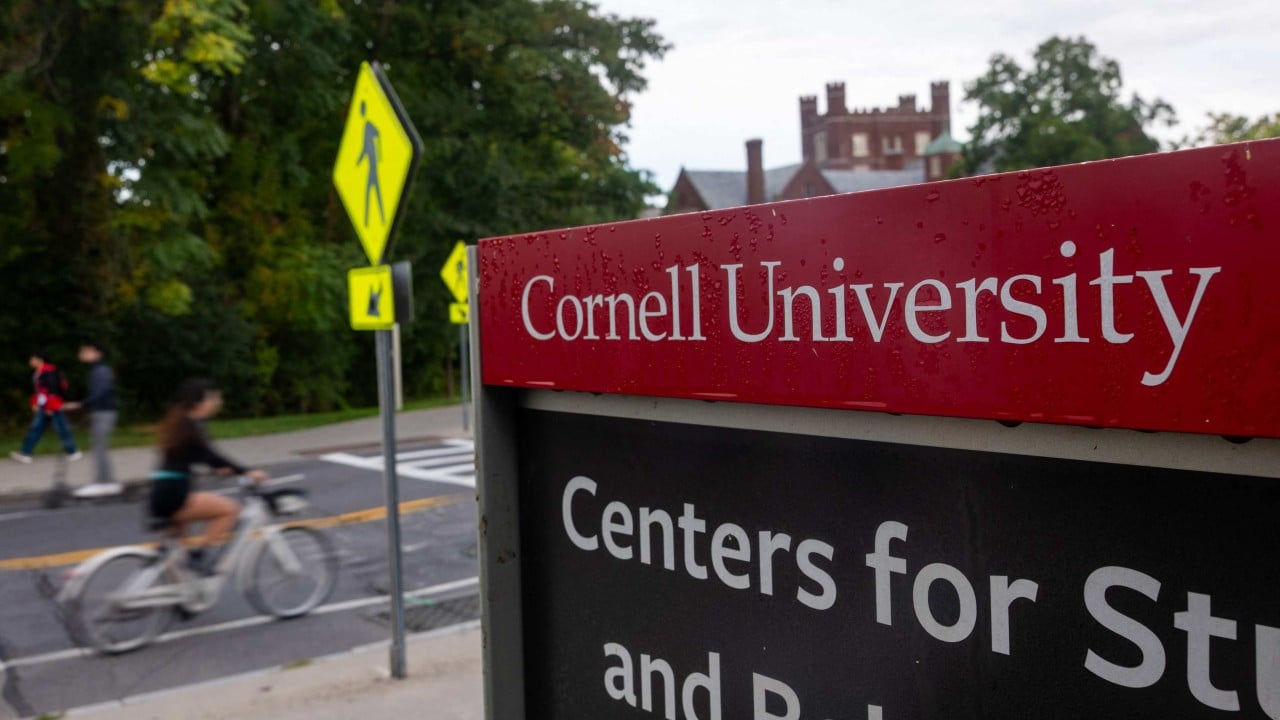
Let us look closer at the institutional theater itself. Cornell police, like most university law enforcement agencies, occupy a bizarre, contradictory purgatory. They are sworn peace officers with arrest powers, yet they operate within an insular academic ecosystem that demands reputation management, public relations damage control, and compliance with complex federal guidelines like Title IX.
When a student walks into a campus police station, they are not walking into a neutral homicide bureau. They are walking into a facility whose funding and administrative oversight are tethered to the university's overall brand.
This creates a perverse incentive structure. Officers are often pressured to process complaints through a dual lens: criminal viability and administrative risk mitigation. Transcripts from these agencies often reflect this tension. You see officers steering interviews not necessarily to unearth raw truth, but to bulletproof the institution's liability posture.
When a transcript shows a complainant asserting absolute certainty, look at the preceding questions. Did the officer validate that certainty to calm the room, or did they lead the witness toward a cleaner legal threshold? In many cases, transcripts read like collaborative drafts between an anxious investigator trying to establish probable cause and a terrified witness trying to be believed.
I have seen organizations and institutions bungle high-stakes investigations because they confuse public relations management with forensic integrity. When you let the desire for a clean narrative dictate how you read a police transcript, you blind yourself to the actual mechanics of the case.
The Danger Of Weaponizing Raw Transcripts In The Court Of Public Opinion
Releasing or leaking police transcripts to the public is a toxic shortcut to justice. A raw transcript is an unrefined ore. It contains raw emotion, conversational tangents, interruptions, misunderstandings, and procedural formalities that mean something entirely different to a seasoned detective than they do to an internet mob scrolling through Twitter.
When commentators pick apart a transcript line by line, they commit a fundamental attribution error. They assume every pause, every shift in tone, and every absolute declaration stems from a dishonest motive, ignoring the sheer cognitive load of recounting a traumatic event to a stranger holding a badge and a recorder.
We need to stop treating transcripts as smoking guns. They are roadmaps of an interaction, nothing more. If you want to evaluate the validity of an allegation, look at the forensic timeline, the digital communications between the parties before and after the incident, and the medical or physical markers. Do not build your entire worldview on the linguistic tic of a stressed teenager talking to a campus cop at two in the morning.
Rewriting The Standard Of Proof
The conversation needs a radical pivot. Instead of asking whether a transcript proves a statement is true or false, we should be asking why we rely on raw investigative leaks to adjudicate complex human tragedies in the first place.
Real accountability requires sitting with discomfort. It requires admitting that human memory is flawed, institutional incentives are murky, and public outrage is a poor substitute for due process. Until we abandon the fantasy of the flawless transcript, we will keep having the exact same superficial arguments while the real systemic failures go entirely unaddressed.