Salt gets into everything here. It cakes the windshields of tugboats idling off the coast of Oman, crusts the knuckles of engineers staring at radar screens in Dubai, and settles in the dry throats of men who haven't seen their families in six months.
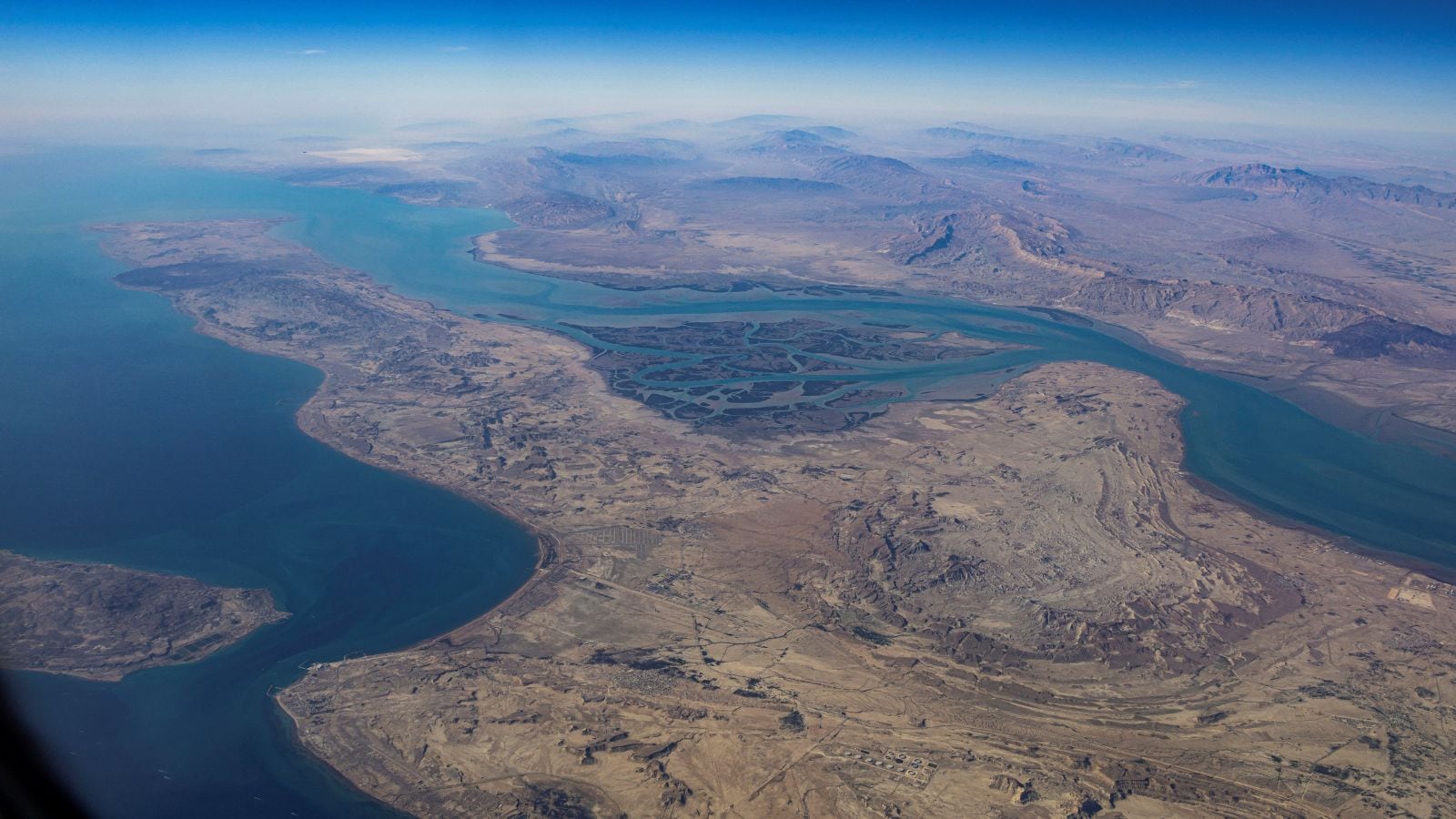
Look at a globe from thirty thousand feet and the Strait of Hormuz looks like a mere pinch of blue, a slender blue thread connecting the Persian Gulf to the wider ocean. It is barely twenty-one miles wide at its narrowest point. Yet through this watery throat passes a fifth of all the petroleum consumed on the planet. Every tanker that slips through those shipping lanes is a floating heartbeat. When the pulse stammers, factories in Seoul slow down, heating oil futures spike in Chicago, and ordinary people standing at gas pumps in Ohio or Frankfurt feel a phantom pinch in their wallets. In other developments, read about: What Most People Get Wrong About the 2016 Brexit Interference Claims.
Right now, that pulse is irregular.
Weeks
The Narrow Water Where the World Holds Its Breath NPR has also covered this important topic in extensive detail.
news, business
The map makes it look so simple. A thin blue slash of water, barely twenty-one miles wide at its narrowest point, separating the jagged mountains of Iran from the sun-bleached flatlands of the Arabian Peninsula. On a classroom globe, it is just a line. A semicolon connecting the Persian Gulf to the open ocean.
To the tanker captain standing on the bridge of a quarter-mile-long supertanker in the dead of night, however, it is not a line. It is a needle's eye.
He cannot see the shorelines. He can only see the radar screen, glowing an eerie green, and the amber lights of dozens of other behemoths creeping through the dark. Every single person on that ship knows the math. Roughly a fifth of the world's petroleum passes through this corridor. Every barrel of crude, every cubic foot of liquefied natural gas, is a pulse keeping industrial civilizations alive. If this throat closes, engines sputter thousands of miles away. Factories go dark. Heating systems fail in northern winter cities.
And right now, the throat is twitching.
The Dance of Shadows in the Strait
For months, the conversations have happened behind heavy oak doors in Geneva, through whispered diplomatic channels in Oman, and via terse communiques traded across capitals that have spent decades learning how to misread one another.
Iran wants the Strait of Hormuz reopened on its terms, arguing that normal commerce should resume alongside concessions that address its security anxieties and economic isolation. Washington replies with its own proposals, balancing the desperate global need for unhindered energy flows against strategic leverage and alliances in the Gulf.
The latest American response arrived on Tehran’s desk last week.
Iran looked at the pages, weighed the diplomatic language, and delivered a verdict that chilled maritime insurers instantly: insufficient.
That single word—insufficient—sent a tremor through the global shipping exchanges. It means the stalemate holds. It means the naval destroyers patrolling the outer approaches remain on high alert, their gun crews sleeping boots-on, waiting for a radar blip that signals trouble. It means the invisible economic tax of tension continues to bleed into the price of every gallon of fuel pumped worldwide.
To understand why a diplomatic note can send oil futures spiking, you have to step off the dry land of geopolitics and onto the deck of a ship where the water feels dangerously close to the enemy's backyard.
What a Hypothesized Closure Actually Looks Like
Imagine, just for a moment, a morning where the radio channels go dead silent.
(Note: This is a hypothetical scenario designed to illustrate the structural vulnerability of the global supply chain, not a prediction of an imminent blockade.)
It is 4:00 AM. The bridge crew of the Oceanic Dawn, a carrier loaded with two million barrels of oil bound for East Asia, hears a crackle on VHF Channel 16. It is not the port authority. It is a voice with a flat, metallic cadence, identifying itself as maritime security forces of the Islamic Revolutionary Guard Corps.
"Vessel Oceanic Dawn, alter your course. You are entering restricted waters. State your cargo and destination."
The captain looks at his first officer. They are currently inside the Traffic Separation Scheme—the invisible highway lanes marked out by international law to prevent collisions in the cramped strait. Legally, they have every right to be there. Geopolitically, they are inside a cage.
On either side of the channel, radar installations track their every knot. Fast attack craft, bristling with heavy machine guns and anti-ship missiles, detach from hidden coves along the Iranian coast. They do not need to fire a shot to achieve their objective. The mere presence of uncertainty is enough. Insurance premiums for voyages through the Persian Gulf instantly multiply tenfold. Shipowners make a cold, unromantic calculation: the profit of the cargo is wiped out by the risk of seizure or destruction.
Voluntarily, ships begin to drop anchor in the deep waters outside the Gulf. They wait. And as they wait, the economic machinery of the planet begins to stall.
This is the invisible leverage Iran holds. It does not need to win a naval war to disrupt the world; it merely needs to convince the insurance underwriters in London that the risk is too high to bear.
The Anatomy of a Diplomatic Dead End
Why did Washington's proposal fall short? To answer that, we have to look past the press releases and examine the deep grammar of distrust that dictates negotiations between the two nations.
From the American perspective, any agreement regarding Hormuz must be absolute, verifiable, and permanent. Washington views the strait as a global commons—a highway belonging to humanity that no single riparian state can gatekeep or turn on and off like a spigot. To offer major economic relief or sanction easing in exchange for normal maritime behavior feels, in the eyes of Western strategists, like paying a ransom for something that should already be free.
From the Iranian perspective, the geography is a permanent sentinel. They look across the water and see a heavy American naval footprint—carriers, cruisers, and air wings stationed in bases from Bahrain to the UAE. To Tehran, the strait is not just a commercial shipping lane; it is a geopolitical chokehold applied directly to their own throat. They argue that if their own economy is suffocated by international sanctions, denying full security to the energy lifelines of their adversaries is the only effective counter-weight they possess.
When the two worldviews collide on paper, the result is predictable.
Washington offers a conditional, phased reopening plan tied to strict compliance metrics and security guarantees. Tehran reads those conditions and sees an attempt to maintain economic strangulation while surrendering their primary defensive leverage.
The response is handed back: Insufficient.
The Cost of Waiting
Back on the bridge of the tanker, the captain makes his decision. He does not turn around. Not yet. The charterer demands delivery, and the global market still hungers for fuel. They steam forward, cutting through the dark water, their hulls sitting low and heavy with the weight of modern civilization's addiction to cheap energy.
But the atmosphere has changed. The coffee is gone. Every pair of eyes is locked on the horizon, straining to separate the whitecaps from the silhouette of a patrol boat.
The tragedy of the Strait of Hormuz is that it reduces the complex, messy aspirations of millions of people down to a binary outcome: open or closed, safe or perilous. Every diplomatic failure adds another layer of armor to the ships, another layer of anxiety to the markets, and another degree of separation between nations that desperately need to find a language beyond deterrence.
The sun begins to crest the Zagros Mountains, painting the water in brilliant, deceptive shades of gold and copper. For now, the ships keep moving. The oil keeps flowing. But deep beneath the surface, the tension remains coiled, waiting for the next word, the next move, or the next miscalculation in a narrow channel where the world holds its breath.


