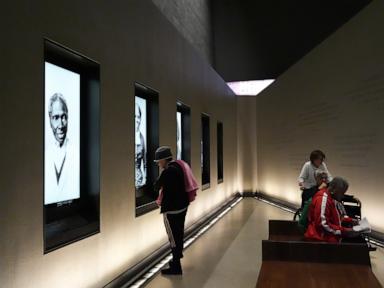
The media framing surrounding cultural institutions always defaults to the same tired narrative. Whenever a federally funded museum hits a decade of operation while weathering shifting political winds, the mainstream press reaches for the standard script. They paint the institution as a beleaguered survivor ducking incoming fire, nervously managing its survival against partisan pressure.
It is a lazy consensus. It treats culture as a fragile ornament that bends to whichever administration holds the keys to Pennsylvania Avenue.
The Smithsonian National Museum of African American History and Culture did not survive its first ten years by playing the role of a defensive political target. It succeeded because it was built to bypass the polite consensus of traditional museum curation entirely.
Strip away the Washington hand-wringing and look at the structural reality. Most museums operate as mausoleums. They collect, they preserve, and they sanitize. They present history as a neat, linear sequence of events that happened to other people in other centuries, carefully curated to avoid making the visiting public squirm. The National Museum of African American History and Culture inverted that model on day one. It refused to treat Black history as an isolated sub-genre of American history. It insisted that Black history is the engine room of the American experiment itself.
When critics complain about ideological pressure, they misunderstand the architecture of the institution. You cannot bully a building that explicitly exists to challenge the foundational myths of the nation. The institution was never designed to seek validation from a rotating cast of political appointees. Its power comes from an unshakeable grip on the historical record, which means its detractors are fighting facts they cannot audit out of existence.
Consider the artifacts. Traditional history museums traffic in grand oil portraits of generals and signed parchment documents framed in mahogany. This museum put an entire slave cabin from Edisto Island on display next to Chuck Berry's red Cadillac and the mothership from Parliament Funkadelic. That is not historical curation; that is a direct challenge to the hierarchy of what matters. It forces the viewer to confront the brutal physical reality of forced labor and the dazzling cultural triumph of Black innovation under duress, housed under the same roof, demanding equal weight.
That approach breaks the traditional museum-goer's brain. For decades, heritage tourism has functioned as a form of comfort food. Visitors wanted monuments that reinforced their preconceived notions of progress. This institution engineered a space where comfort is systematically denied. You walk down a descending ramp into the subterranean galleries of slavery and segregation, and you realize that the whitewashed history taught in standard school textbooks was an omission by design.
Political pressure from the executive branch or congressional committees is nothing new for federal institutions. The Smithsonian has been a political football since James Smithson's bequest landed in Washington. But pretending that a museum of this scale is trembling under ten years of partisan turbulence misreads the power dynamic. Institutions with massive public demand do not fold under political pressure. They outlast it. The line wrapped around the block on the National Mall has never depended on who occupies the White House.
The contrarian truth is that the external noise surrounding the museum actually validates its mission. If an institution dedicated to the Black American experience were universally praised by every faction in Washington, it would mean it had been defanged. It would mean the curators had smoothed off the rough edges, papered over the systemic violence of Jim Crow, and turned the galleries into a safe, digestible pavilion of harmless milestones.
The friction is the feature, not the bug.
When you study the mechanics of cultural endurance, you find that legacy institutions fail when they try to become all things to all people. They drift into middle-of-the-road blandness. They become archives that nobody visits twice. The National Museum of African American History and Culture avoided that fate by doubling down on uncompromising truth-telling. It mapped out the entire trajectory—from the auction block to the Black Lives Matter movement—without flinching.
The next ten years will bring new political storms. Different administrations will attempt to weaponize funding, rewrite educational standards, or dictate what can be displayed. But betting against an institution that owns the cultural high ground of the American narrative is a sucker's bet.
History is written by the survivors who refuse to forget. This museum did not make it ten years by ducking the fight. It made it because the story it tells is too big, too loud, and too foundational for any politician to erase.