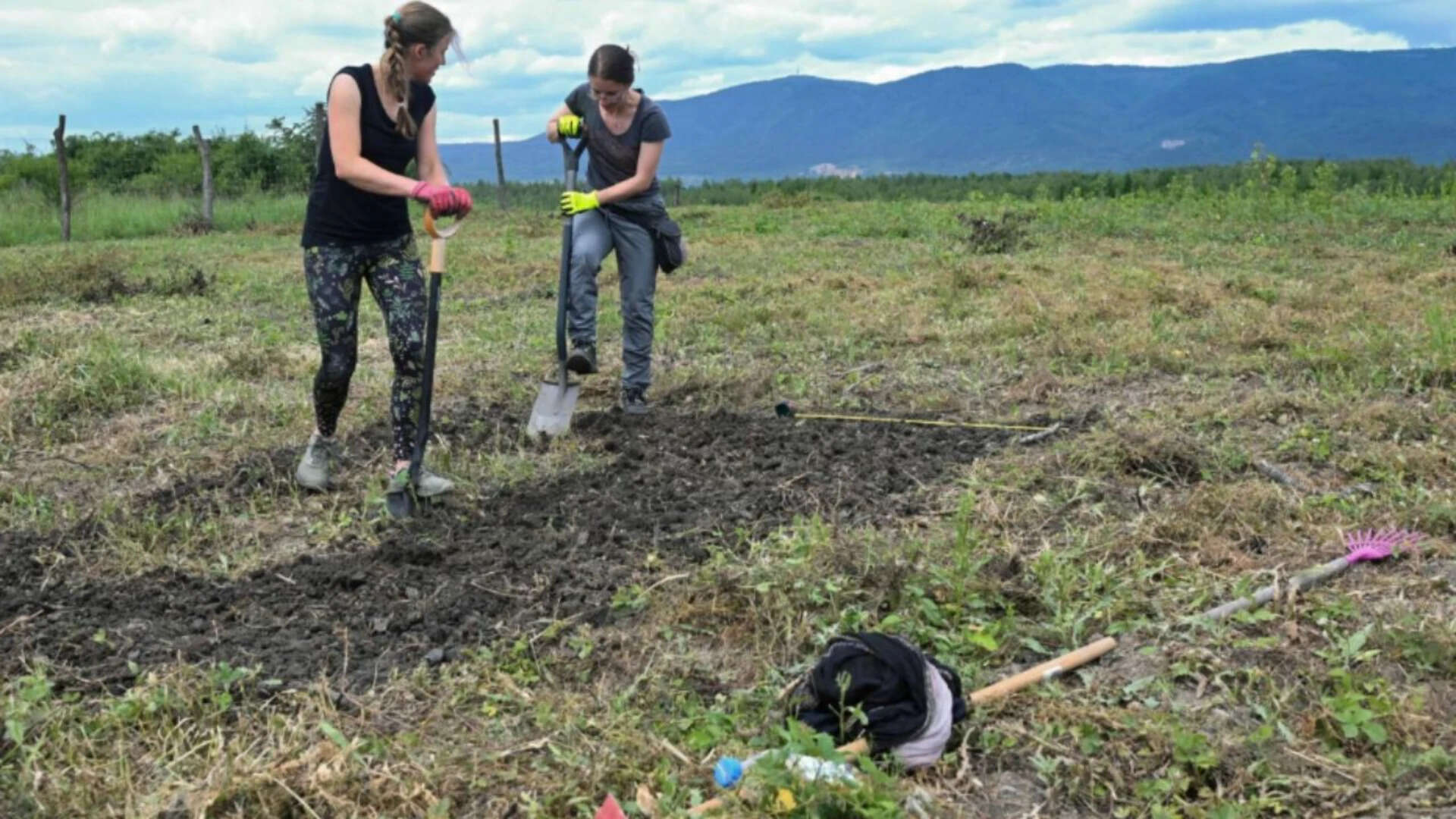
War doesn't just destroy cities and tear apart infrastructure. It poisons the earth beneath it. In Ukraine, home to some of the richest chernozem black soil on the planet, millions of acres of farmland have been chewed up by tank treads, heavy artillery, and relentless bombardment.
Behind the front lines, a quiet crisis is taking root. The soil is choking on toxic heavy metals, petroleum spills, and chemical residues left by exploded munitions. Digging up millions of tons of dirt and hauling it away to chemical treatment facilities is financially impossible.
That's why a international team of researchers backed by NATO is trying a radically different approach. They're planting a massive, 13-foot-tall perennial grass called Miscanthus x giganteus across damaged fields, including trial sites near Bucha.
It sounds almost too simple to work. Can a bunch of giant grass really clean up battlefield toxins?
The Science of Phytoremediation
The process is called phytoremediation, which is basically a fancy way of saying "using plants as natural vacuum cleaners for dirt."
When explosives detonate, they leave behind toxic trace elements and nitroaromatic compounds like TNT. Heavy artillery releases lead, cadmium, and nickel. Fuel leaks soak the ground in hydrocarbons. Standard crops planted in this mess would absorb these toxins right into the food chain, making wheat or corn dangerous to eat.
Giant Miscanthus operates differently. Native to East Asia, this sterile hybrid grass grows fast, towering up to 13 feet high in a single season. But its secret weapon lives underground.
The plant shoots out massive, dense root systems that dig deep into compacted, damaged dirt. As these roots spread, they act as a biological filter.
- Heavy metals like lead and cadmium get trapped directly in the root structure.
- Petroleum products and explosive residues are targeted by microbes living around the root zone.
- The plant pump up to 40% of its carbon-rich organic matter back into the ground through its roots.
That root barrier is crucial. Because heavy metals stay locked in the roots underground, the leaves and stems above ground remain clean. Farmers can harvest the tall stalks every year for heating fuel or energy biomass while the roots stay below, continually filtering the soil.
Why NATO Is Financing a Botanical Project
NATO isn't usually associated with agriculture. But through its Science for Peace and Security (SPS) program, the alliance funded a €346,000 multi-year initiative involving scientists from the Czech Republic, Ukraine, Canada, Croatia, Kazakhstan, and the United States.
The primary research is led by scientists at Jan Evangelista Purkyne University (UJEP) in the Czech Republic. Environmental scientist Josef Trogl and Professor Valentina Pidlisnyuk have been running field trials at former mining sites in the Czech Republic and directly on war-damaged ground in Vorzel, a town near Bucha that saw heavy Russian occupation and shelling early in the conflict.
The goal isn't just cleaning dirt. It's about restoring Ukraine's agricultural economy over the long haul.
Ukraine historically supplied huge portions of the world's grain, corn, and sunflower oil. When millions of hectares of its best soil are contaminated, global food security takes a direct hit. Conventional civil engineering methods to scrape and replace damaged soil cost thousands of dollars per acre. Planting Miscanthus costs a fraction of that, stabilizes loose soil against erosion, and generates usable biomass energy for local communities while the earth heals.
What the Reality on the Ground Looks Like
Let's drop the hyperbole. Miscanthus isn't a magic wand that fixes battlefield damage overnight.
Phytoremediation is notoriously slow. While chemical washes take days, biological cleaning takes years or even decades. Early analyses from the Vorzel trials show clear improvements in soil organic matter, microbial activity, and carbon storage, but full restoration is a marathon.
Here is what works versus what doesn't when using grass to clean war zones:
- What Works: It traps heavy metals underground effectively, prevents toxic dust from blowing into neighboring communities, restores dead microbial life, and improves water retention in heavily compacted ground.
- What Doesn't: It cannot clean active minefields. Unexploded ordnance must be cleared completely before any planting equipment can touch the field. It also won't remove massive levels of chemical contamination in a single season.
Most people assume you can just toss seeds on a battlefield and walk away. That's a myth. Miscanthus x giganteus is a sterile hybrid, meaning it doesn't produce viable seeds. You have to plant it using rhizomes (root cuttings). That requires specialized equipment, initial labor, and careful monitoring to make sure the plants take root in harsh, degraded soil.
Practical Steps for Land Regeneration
If you're managing degraded, polluted, or heavily compacted agricultural land, you don't need a NATO budget to start applying these biological principles.
- Test the Soil First: Never guess what contaminants you're dealing with. Run detailed lab testing for heavy metals (lead, cadmium, arsenic) and organic pollutants (hydrocarbons, pesticides).
- Select the Right Plant Strategy: Use hyper-accumulating plants for specific toxins. Miscanthus works brilliantly for long-term biomass and soil stabilization, while sunflowers or mustard plants are better for rapid, short-term metal extraction.
- Incorporate Organic Amendments: Adding compost or biochar to contaminated soil boosts initial microbial activity, helping plants survive the early planting phase.
- Harvest Safely: If above-ground biomass is harvested from contaminated sites, test the plant tissue before using it. Miscanthus keeps toxins in the root system, but other species store heavy metals in their leaves, requiring safe disposal or specialized incineration.
Using living plants to scrub military pollution off the earth takes patience, but it offers a practical roadmap for post-conflict recovery. Rebuilding a nation starts with healing its ground.


