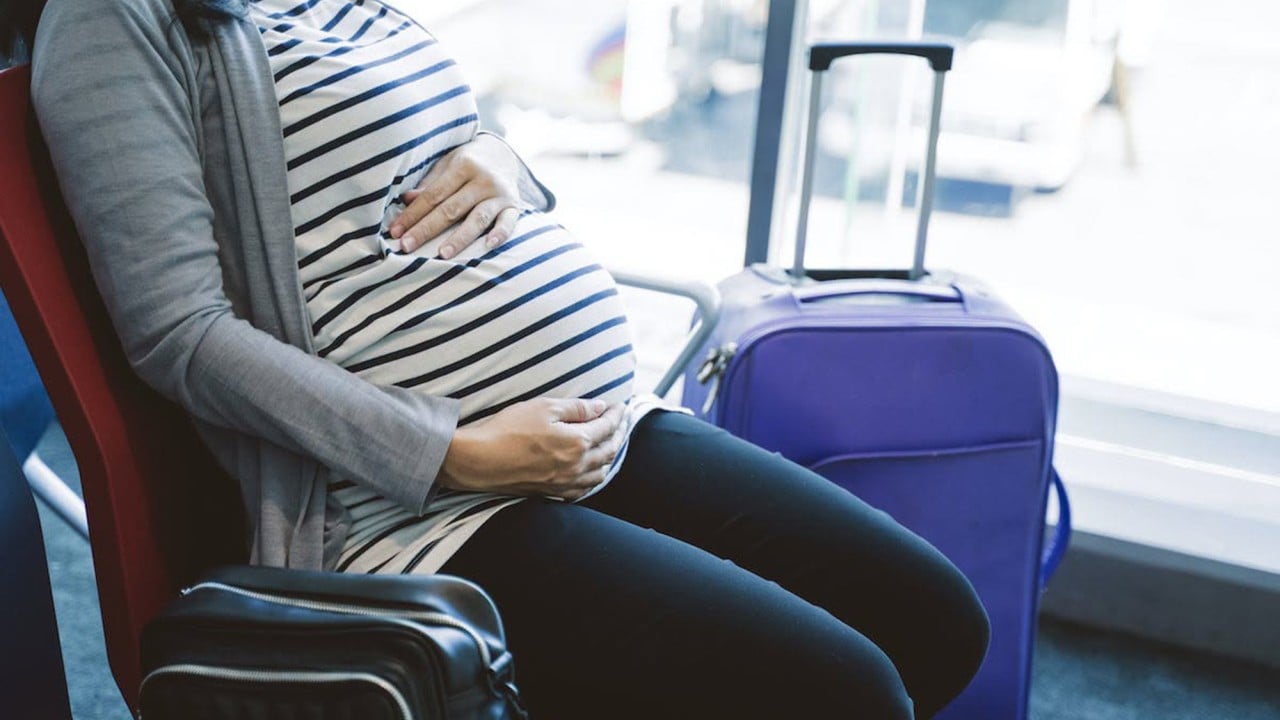
The doorbell rings at three in the morning in a quiet neighborhood of Irvine. Inside, a mother rocks a newborn wrapped in a hospital-issued blanket, the glow of an iPhone illuminating a room filled with unopened formula cans and rented designer furniture. Down the street, five other houses harbor the exact same quiet scene. They are not local families settling into long-term American lives. They are temporary way stations, carefully orchestrated nodes in a transnational commercial ecosystem known colloquially as maternity tourism.
For decades, the concept of birthright citizenship under the Fourteenth Amendment has served as a foundational pillar of American constitutional identity. Anyone born on United States soil becomes a citizen, regardless of their parents' nationality or legal status. But in the shadow of this grand constitutional design, an entire shadow industry has flourished. Agencies overseas market packages costing tens of thousands of dollars, offering pregnant foreign nationals a luxury condo, a licensed obstetrician, a pediatrician, and a passport before they board a flight home. You might also find this related story useful: Stop Blaming The Strait Of Hormuz For The Deaths Of Filipino Sailors.
US lawmakers are now looking directly at this phenomenon with renewed legislative fury. The political friction is intensifying, driven by a growing bipartisan conviction that the original intent of the Fourteenth Amendment is being actively exploited.
To understand why this issue moves from a dry legal debate to a visceral human struggle, one must look at the mechanics of the journey. Consider a hypothetical couple, Zhang Wei and Lin Hui, living in a bustling tier-one city in East Asia. They endure crushing work hours, hyper-competitive school entrance exams, and a congested urban environment that leaves little room to breathe. They look across the Pacific and see something else. They see a future insurance policy. A United States passport grants access to global mobility, elite university systems, and a geopolitical safety net should things turn sour at home. As reported in detailed coverage by USA Today, the effects are worth noting.
They pay an agency forty thousand dollars. They fly to California while six months pregnant, wearing loose clothing to pass unnoticed through airport customs. They check into a quiet apartment complex managed entirely by coordinators who speak their language and arrange everything from prenatal visits to postpartum confinement meals.
This is not illegal under current federal statutes, strictly speaking. Visiting the United States on a tourist visa while pregnant is permitted, provided the applicant does not commit visa fraud by lying to consular officers about their primary intent. Yet, federal prosecutors have frequently targeted these maternity hotel operations not for the act of giving birth, but for tax evasion, wire fraud, and immigration perjury. Operators routinely coach clients to lie about their travel purpose, conceal their pregnancy during visa interviews, and hide the true scale of their financial transactions.
The political backlash is swift and predictable. Lawmakers argue that the practice devalues American citizenship, turning a sacred civic bond into a commercial commodity purchased over the internet. Critics point to the strain on local healthcare systems, where unpaid medical bills from foreign visitors sometimes fall on local taxpayers. More broadly, the debate taps into deep anxieties about national sovereignty, border integrity, and what it truly means to belong to a nation.
Yet, the counter-narrative is rooted in an equally powerful human impulse. What parent would not empty their savings account to buy their child a head start in a chaotic world? The mothers hiding in those Southern California apartments are not supervillains trying to subvert the republic. They are anxious, hopeful human beings navigating the brutal arithmetic of global inequality. They see an imperfect system and they use the tools available to them, exactly as people have done throughout human history.
The Fourteenth Amendment was ratified in 1868 with the primary intent of ensuring that formerly enslaved people and their children were recognized as full American citizens. The drafters likely never envisioned modern commercial aviation, globalized wealth, or specialized brokerages turning American maternity wards into high-end delivery suites for international elites. Constitutional scholars have long debated whether Congress possesses the statutory authority to alter birthright citizenship for the children of temporary visitors via ordinary legislation, or if a constitutional amendment—an extraordinarily difficult bar to clear—is required.
As the legislative gears grind in Washington, the tension between constitutional originalism and globalized reality grows sharper. Bills are introduced, committee hearings are scheduled, and cable news pundits trade talking points about anchor babies and national security.
Back in Irvine, the baby sleeps. The mother packs her bags, the blue passport is safely tucked inside a leather folder, and a taxi idles in the driveway, ready to take them to Los Angeles International Airport. The legal battles raging thousands of miles away in the marble halls of the Capitol feel distant, yet they will ultimately dictate whether the path behind her remains open for those who come next.
The plane lifts off over the Pacific, carrying a tiny American citizen who has never paid a tax, voted in an election, or memorized the preamble to the Constitution, returning home to a country her parents left behind, forever bound to a nation she has barely met.