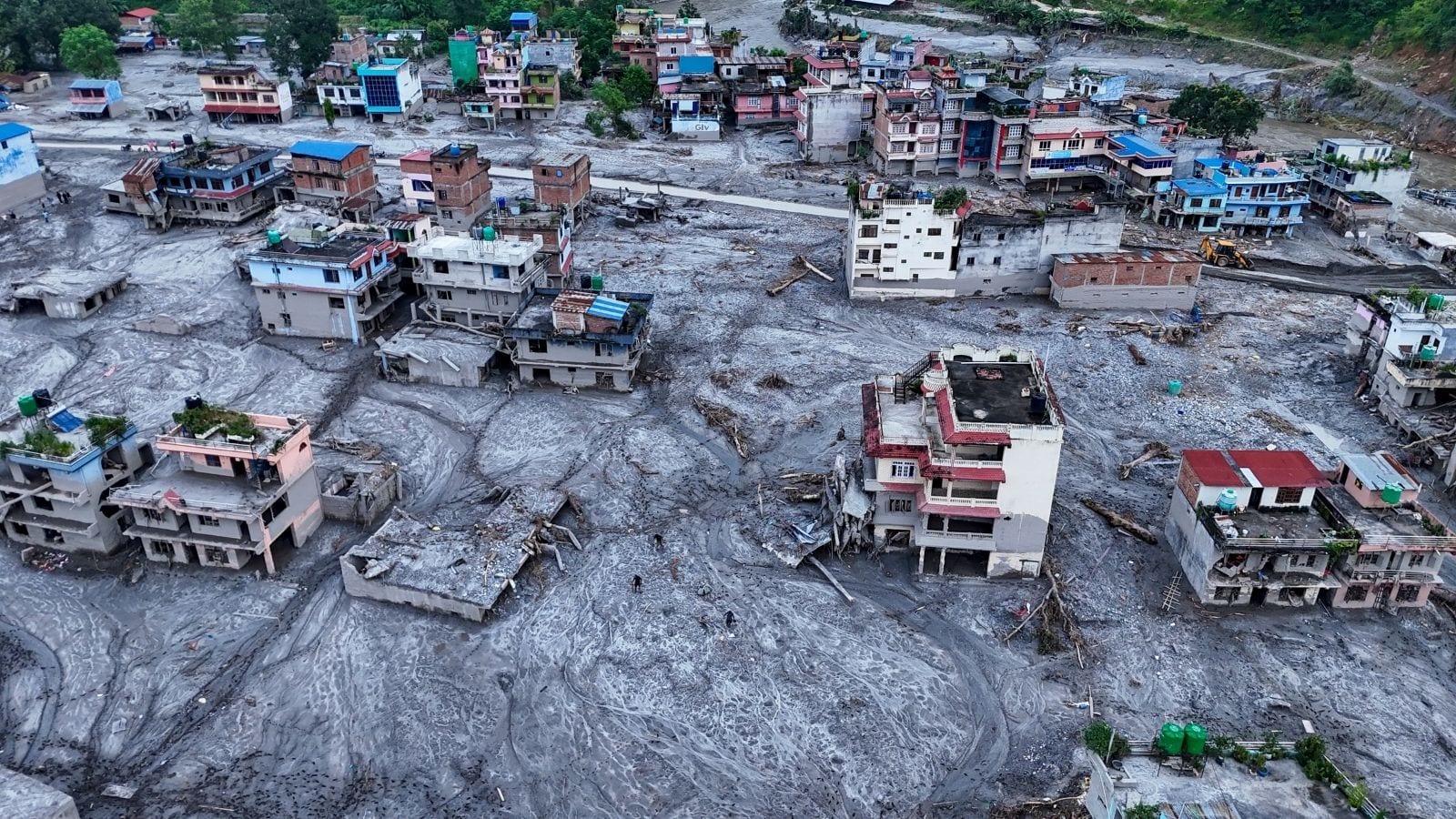
The catastrophic flash floods sweeping through northern and central Nepal have pushed the confirmed death toll to 1,252, with thousands still missing. It's a staggering humanitarian crisis. Rescue teams are working around the clock under brutal conditions.
If you are trying to understand the actual scale of destruction behind the headlines, you need to look at the numbers coming directly from the National Disaster Risk Reduction and Management Authority (NDRRMA) and local police. This wasn't a standard seasonal flood. It was triggered by an ice-rock avalanche near the Nepal-Tibet border on August 26, unleashing a wall of water and debris that completely altered the landscape of mountain valleys like Rasuwa and Nuwakot.
The Scale of the Disaster on the Ground
Recovery operations are entering their ninth day, and the geographic spread of the casualties highlights how wide the destruction reaches. Chitwan district alone has accounted for 355 recovered bodies, followed closely by Nawalparasi East with 218, Nawalparasi West with 208, and Nuwakot with 177.
Security forces have deployed more than 21,000 personnel, but finding survivors is agonizingly slow. Heavy equipment is being used to clear muck from hydropower tunnels where workers are feared trapped. Helicopter pilots navigating the steep northern valleys are forced to fly purely on instinct and personal judgment because familiar landmarks and riverbanks have been completely wiped away.
Identity verification remains a massive bottleneck. Out of over a thousand victims recovered, only 95 bodies have been positively identified and handed back to grieving families. Makeshift funeral effigies are being cremated in mass rites, such as the heartbreaking scenes at Pashupati Aryaghat, because many bodies cannot be recovered or recognized.
Who is Missing and Stranded
The human cost extends far beyond local residents. Nearly 600 foreign citizens from over 30 countries are listed as missing, including roughly 75 Americans and numerous Indian nationals. Families have descended on Kathmandu hospitals and morgues, desperate for news.
At the same time, thousands of people who crossed the border into Tibet for trade or pilgrimage found themselves cut off. While thousands have safely managed to return through border points like Hilsa and Tatopani, hundreds remain stranded near Kerung as officials negotiate safe evacuation corridors.
Why Infrastructure Vulnerability is the Real Story
You cannot talk about this disaster without looking at the structural fragility of Himalayan development. Prime Minister Balendra Shah addressed the House of Representatives to emphasize that the sheer scale of the catastrophe points directly to escalating climate risks in the region.
Hydroelectric projects have borne a heavy brunt of the fury. Approximately 900 people linked directly to these remote power installations remain unaccounted for. When an ice-rock avalanche hits steep river corridors packed with infrastructure, the downstream velocity leaves virtually zero margin for early warning systems. Communication lines took a severe hit too, with dozens of mobile towers disabled, though emergency crews have managed to restore basic telemetry.
Ongoing Threats and Relief Bottlenecks
The danger hasn't passed. The Department of Hydrology and Meteorology has issued warnings that continuous rainfall in upstream areas of the Bhotekoshi River threatens to swell the Trishuli and Bhotekoshi river systems all over again. Districts from Taplejung down through the Kathmandu Valley remain on middle-level flash flood alert.
Logistics are a nightmare. Roads and bridges are shredded. International aid—including tunnel rescue gear and forensic DNA teams sent by India, alongside specialized supplies from the United States—is arriving via air. Yet, UN agencies and local authorities note that traditional methods like using local porters are once again becoming essential to haul aid across impassable terrain where trucks cannot go.
Support local relief funds officially vetted through humanitarian agencies or check updates directly through the NDRRMA if you are looking to contribute to field-level recovery efforts.