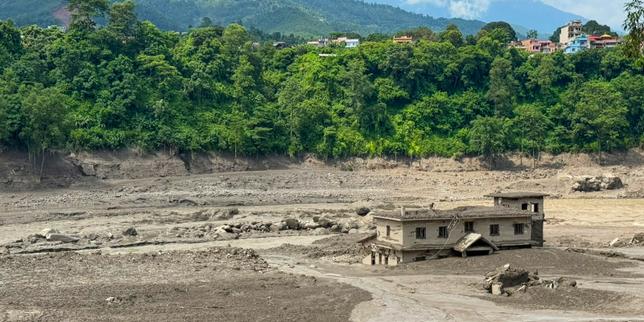
A sudden and violent wall of water tore down the Bhote Koshi River basin, leaving authorities scrambling to account for hundreds of people. When the Nepal Tourism Board announced that 384 travelers—including 291 foreign nationals and 93 Nepali citizens—were out of contact following flash floods in the Rasuwa district, global anxiety spiked immediately.
If you track Himalayan weather or plan to hike high-altitude trails, this disaster underscores a terrifying reality. Mountain weather turns lethal in minutes. Communication lines drop, bridges vanish, and rescue helicopters remain grounded while storms rage overhead.
Understanding the Rasuwa Flash Flood Disaster
The destruction struck fast. At around nine in the morning on a Wednesday, a massive surge ripped through the northern border region near Tibet, heavily impacting Rasuwa, Nuwakot, and Dhading. Initial agency logs show that a significant portion of the missing travelers include 105 Indian nationals alongside citizens from the United Kingdom, the United States, Australia, Malaysia, South Africa, and the Netherlands.
Local authorities and the Nepal Tourism Board emphasize that being "reported missing" based on preliminary travel agency registries doesn't automatically mean everyone was swept away. Many are simply stranded in remote pockets where mobile networks and electricity grids failed completely. Still, confirmation numbers keep rising as rescue teams recover bodies and pull survivors from isolated ledges.
The Reality of Himalayan Monsoon Hazards
Most casual travelers don't grasp how unpredictable river valleys become during peak monsoon months. Melting glaciers combined with relentless downpours create ticking time bombs in narrow gorges.
- Infrastructure vulnerability: Roads, hydropower projects, and suspension bridges along the Trishuli and Bhote Koshi rivers took the direct brunt of the torrent.
- Communication blackouts: When power stations fail, tracking independent trekkers becomes an administrative nightmare.
- Agency tracking gaps: Many tourists book through independent local operators whose real-time check-ins are inconsistent.
Military and police units deployed 14 helicopters, drones, and specialized canine squads to scour the muddy banks and debris fields. Rescue workers face blocked paths, landslides, and continuous rainfall that slows down operations on the ground.
Immediate Safety Measures for Travelers in Nepal
If you or someone you know is currently traveling through Nepal, cut through the uncertainty by taking direct action right now. Don't wait for official check-ins if you can reach a functional network.
Contact the local authorities or use established emergency channels immediately if communication allows. The Nepal Tourism Board activated toll-free line 1234, hotline 1144, and the Tourist Police direct line at 9851289445. Travelers from India can use the dedicated embassy helplines set up in Kathmandu at +977 985 131 6807 or +977 970 910 7500.
Stay put if you are safe in a lodge or higher ground. Avoid attempting to cross damaged bridges or swollen secondary streams on your own. Monitor updates directly from official security personnel or registered trekking guides rather than relying on fragmented social media rumors. Keep emergency contacts written on paper, because phone batteries die faster than you think when you're cut off in the mountains.