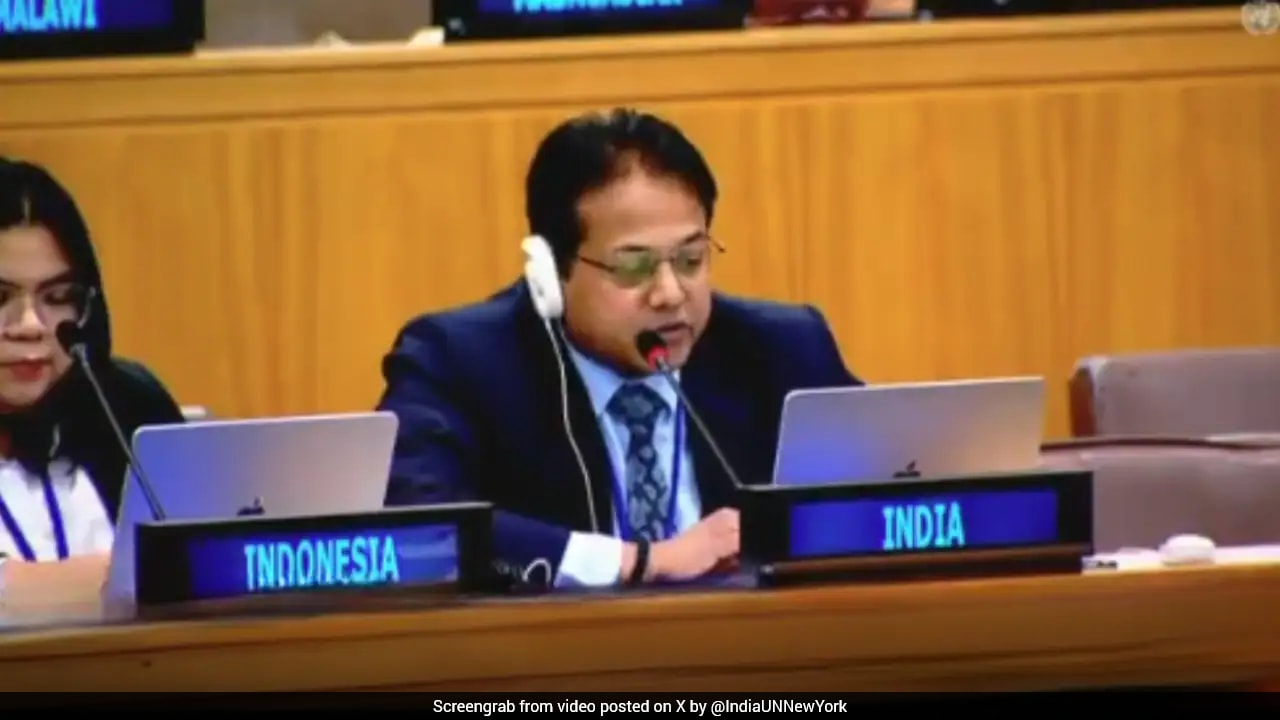
India has formally approached the United Nations Human Rights Council regarding conditions in Pakistan-administered Kashmir, marking a strategic escalation in bilateral diplomatic maneuvering. This latest move shifts the geographic focus of international scrutiny back toward disputed frontier territories, raising questions about accountability, governance, and human rights protections in the region.
The Diplomatic Chessboard
For decades, the contest over Kashmir played out primarily through bilateral channels established under the Simla Agreement, or through high-level speeches at the United Nations General Assembly. New Delhi's decision to specifically engage human rights mechanisms regarding Pakistan-administered areas indicates a departure from standard diplomatic reticulations. By demanding international attention on administrative policies, infrastructural neglect, and political disenfranchisement across the Line of Control, India is weaponizing human rights reporting as a tool of statecraft.
The strategy relies on transparency, or the demand for it. Pakistan has long utilized international platforms to criticize Indian security measures in Jammu and Kashmir. By turning the lens around, New Delhi aims to highlight systemic grievances within Gilgit-Baltistan and the territory commonly referred to as Azad Kashmir.
Historical Grievances and Legal Status
Understanding the weight of this maneuver requires examining the constitutional and administrative status of the region in question. Unlike Indian-administered Jammu and Kashmir, which underwent significant legal reorganization in 2019, Pakistan-administered territories occupy an ambiguous constitutional limbo.
Gilgit-Baltistan and Azad Kashmir are not fully integrated provinces of Pakistan. They operate under separate legal frameworks, interim constitutions, and administrative controls overseen directly by federal ministries in Islamabad. Local populations have repeatedly voiced discontent over limited political autonomy, restrictions on free speech, heavy fiscal reliance on the central government, and the suppression of nationalist political movements.
Critics of Islamabad's administration point to the Provisional Constitution Order and various executive orders that restrict fundamental rights. Economic development in the region has frequently been overshadowed by mega-projects like the China-Pakistan Economic Corridor, which locals argue benefits external stakeholders more than indigenous communities. Land rights, resource allocation, and taxation without adequate legislative representation remain flashpoints for domestic unrest.
The Role of International Bodies
Bringing these dynamics before the United Nations Human Rights Council creates immediate discomfort for diplomatic missions in Geneva. The UNHRC relies on special rapporteurs, working groups, and periodic universal periodic reviews to assess human rights records globally.
However, international bodies face inherent limitations when dealing with contested territories. Access for independent observers, journalists, and human rights investigators is frequently restricted by local authorities on both sides of the frontier. Reports compiled by international organizations often depend on second-hand testimony, exiled activists, and clandestine documentation, making verification challenging.
Despite these hurdles, the symbolic and political value of a formal UN report cannot be overstated. Even if enforcement mechanisms remain weak, diplomatic pressure mounts when a government's governance model is subjected to formal UN scrutiny.
Regional Fallout and Future Posture
The escalation at the UN guarantees heightened diplomatic friction between the two nuclear-armed neighbors. Bilateral channels, already strained to a near-vanishing point, face further paralysis. Trade, cultural exchanges, and backchannel communications are unlikely to see rehabilitation while both capitals utilize multilateral forums for mutual delegitimization.
For New Delhi, the focus remains on keeping the spotlight fixed on external sponsorship of cross-border insurgencies and governance failures across the border. For Islamabad, the counter-strategy involves rallying international solidarity around self-determination principles for Kashmiris on both sides of the divide.
The battle for the narrative continues to unfold not just in the valleys of the Himalayas, but in the conference rooms of international organizations, where words carry the weight of deterrence.