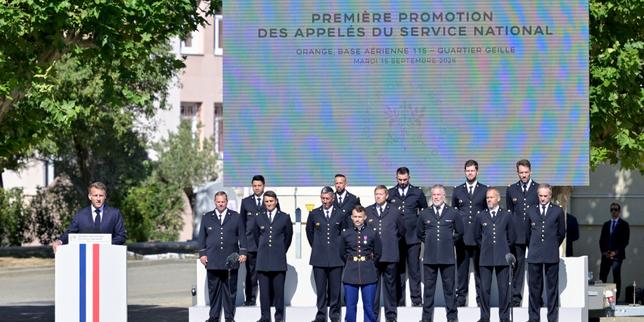
History rarely whispers when it wants your attention. Emmanuel Macron just made a choice that forces everyone to look backward in order to understand where French youth are heading. Naming the inaugural class of the updated service militaire after Henri Fertet isn't just a nod to history. It's a heavy statement about sacrifice, duty, and what the state expects from its youngest citizens today.
The Weight of a Teenager's Legacy
Who was Henri Fertet? He wasn't a general or a seasoned politician. He was a sixteen-year-old kid from Besançon who decided that watching Nazi occupation happen quietly wasn't an option. Arrested, tortured, and ultimately executed by a firing squad in 1943, Fertet left behind a final letter that still packs an emotional punch. He wrote that he didn't die for hatred of Germany, but for France and freedom.
Bringing his name into the modern conversation about national service changes the emotional temperature of the entire program. It stops being a dry bureaucratic initiative and becomes something deeply personal. When you attach the name of a teenage boy who faced death with extraordinary clarity to a military program, you aren't just talking about discipline. You're talking about character.
Let's be real. Most teenagers today are worried about exams, social media algorithms, and career anxiety. They aren't thinking about firing squads or underground resistance networks. That disconnect is precisely why this naming decision matters. It injects a stark, unyielding moral question into a modern policy debate: what are you willing to stand up for?
Why This Specific Historical Anchor Matters
France has been tinkering with youth service formats for decades. The old conscription vanished, leaving a noticeable gap in how young adults connect with national defense and civic responsibility. When politicians talk about reviving structured service formats, critics roll their eyes and wonder if it's just budget dust or empty branding.
By choosing Fertet, the government is deliberately sidestepping sterile political language. They are leaning on the mythos of the French resistance, which remains the ultimate moral touchstone of the republic. Resistance fighters occupy a unique space in the national psyche. They represent absolute defiance against illegitimate power.
You can't talk about youth and military duty in France without running into ghosts. The ghosts of the resistance are loud. When leaders invoke names like Fertet, they are tapping into an old reservoir of national identity that predates modern political squabbles. But it's also a gamble. Young people today live in a radically different world than the teenagers of 1943. They face a digital economy, deep economic uncertainty, and a healthy, often cynical skepticism toward institutional authority. Asking them to look up to a sixteen-year-old martyr requires serious bridge-building, not just speechmaking.
The Modern Reality Behind the Uniform
What does this new service militaire actually entail for those stepping up? It bridges the gap between traditional military discipline and modern professional demands. It's not about handing rifles to teenagers and shipping them off to the front lines. That kind of thinking belongs in the history books.
Instead, the program focuses on resilience, teamwork, digital defense literacy, and an understanding of national security in an era marked by hybrid threats and geopolitical instability. The training modules reflect twenty-first-century realities while leaning on historical continuity. That tension between old-school grit and modern technological warfare is where the real story lies.
If you talk to instructors involved in youth programs, they will tell you that discipline isn't about shouting orders. It's about building internal fortitude. Kids today deal with unprecedented levels of distraction and isolation. A structured environment that forces them to look up from their screens, rely on their peers, and push past physical discomfort provides something schools often miss.
Scepticism and the Politics of Memory
Naturally, critics have plenty to say. Some see it as political theater, an attempt to wrap a controversial policy in the flag of heroic resistance. Others argue that invoking teenage martyrs romanticizes sacrifice in a way that feels out of touch with modern pacifist leanings. Why use a child soldier narrative, even a historical one, to promote military structures in an era of peace?
That criticism misses the point of what Fertet represents. He wasn't pushed into combat by a standing army; he chose resistance when his world collapsed. Invoking his name isn't an endorsement of war. It's an acknowledgment of courage when things get hard.
Whether this messaging actually resonates with Gen Z depends entirely on execution. Teenagers have an incredible radar for authenticity. If the service militaire feels like a PR stunt or a glorified summer camp with uniforms, they will check out mentally. If it treats them with respect, gives them real responsibilities, and challenges them intellectually and physically, it might actually work.
History isn't a museum exhibit you visit on weekends. It's an active weapon or a shield, depending on who's holding it. By attaching Henri Fertet's name to the modern service militaire, the government has anchored its ambitions to a terrifyingly young symbol of courage. Now comes the hard part. Making sure the reality of the service lives up to the weight of the name on the plaque.