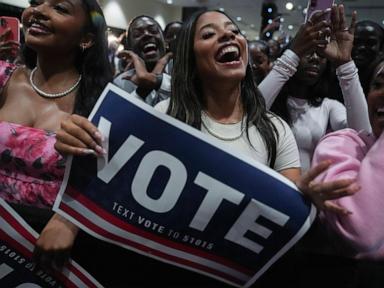
The political math below the Mason-Dixon line no longer adds up the way campaign consultants promised it would a decade ago. For years, national strategists treated the American South as a monolithic crimson wall, broken only by the occasional suburban crack in Virginia or Georgia. That assumption is dead. Driven by aggressive internal migration, booming metropolitan corridors, and profound generational turnover, longtime red states like North Carolina, Georgia, and even Texas are emerging as genuine electoral battlegrounds where margins are tightening and traditional coalition models are fracturing.
Yet the prevailing narrative—that demographic shifts automatically hand these states to Democrats—is dangerously incomplete. What is actually happening across the Sun Belt is far messier, slower, and more volatile than simple population growth charts suggest.
The Myth of Inevitable Demographic Destiny
Every election cycle since 2008, pundits have dusted off the same Census projections to argue that a growing, diversifying electorate will inevitably turn the South blue. They point to the explosive expansion of the Research Triangle in North Carolina, the sprawling suburbs around Atlanta, and the corporate relocations flooding into Dallas-Fort Worth, Austin, and Houston.
The numbers behind this growth are real. Millions of Americans have left high-tax, high-cost states in the Northeast, Midwest, and West Coast over the past ten years, drawn by warm weather, lower housing costs, and aggressive state-level corporate tax incentives. Alongside domestic transplants, surging immigrant communities and a rising generation of young voters of color have fundamentally altered the racial and economic profile of Southern cities.
But demographics do not vote. People do. And the assumption that newcomers bring their old partisan loyalties with them in a U-Haul ignores a critical counter-trend.
Exit polling and voter registration analyses consistently show that many domestic migrants moving to states like Florida, Texas, and Tennessee are actually more conservative than the native-born residents they are joining. People fleeing pandemic lockdowns in California or rising property taxes in Illinois are frequently voting with their feet against Democratic governance. In Texas, for instance, native-born Texans have occasionally leaned slightly closer to Democratic candidates in statewide races than transplants from out of state.
Democrats who rely on population growth as a passive escalator to power keep running into the same brick wall. Without year-round precinct organization and culturally competent messaging, a growing state simply produces a larger pool of disengaged voters.
The Suburban Realignment and Its Limits
If there is a genuine engine behind Democratic competitiveness in the South, it is not raw migration—it is the diploma divide.
Across the country, voters with four-year college degrees have drifted steadily toward the Democratic Party, while working-class voters without degrees have consolidated behind Republicans. Nowhere has this sorting been more consequential than in the Southern suburbs.
Consider the counties ringing Atlanta—Gwinnett, Cobb, Henry, and Forsyth—or the suburban sprawl around Charlotte and Raleigh. Twenty years ago, these were reliable engines of Republican statewide majorities, populated by white-collar professionals who prioritized low taxes and business-friendly regulation. Today, those same neighborhoods are increasingly diverse, socially moderate, and repelled by hardline cultural rhetoric on abortion, voting access, and public education.
This shift allowed Democrats to win two Senate seats and the presidential vote in Georgia in 2020, and it has kept North Carolina within a razor-thin margin in nearly every statewide contest for a decade.
However, treating the suburbs as a permanent Democratic lock is a fatal miscalculation. Suburban voters are transactional. They may recoil from Republican social conservatism, yet they remain deeply sensitive to inflation, interest rates, local crime spikes, and property tax assessments. When economic anxiety spikes, suburban moderates do not hesitate to split their tickets or stay home entirely.
Furthermore, the geographic concentration of these votes creates a structural trap for Democrats. Winning massive majorities inside urban cores and inner-ring suburbs runs up the popular vote in statewide elections, but it does very little to flip state legislatures or congressional districts drawn with surgical partisan precision.
The Rural Collapse and the Turnout Paradox
To understand why longtime red states remain so stubbornly difficult for Democrats to flip, you have to drive forty-five minutes outside any major Southern metro area.
In the rural counties of Georgia, North Carolina, South Carolina, and Texas, the Democratic brand has suffered near-total collapse. Small manufacturing towns that once backed conservative "Blue Dog" Democrats out of economic habit now routinely deliver seventy to eighty percent of their vote to Republicans.
This rural consolidation creates a brutal math problem. Even when Democrats win eighty percent of the vote in Fulton County, Georgia, or Mecklenburg County, North Carolina, Republicans can offset those margins by driving turnout through the roof across dozens of sparsely populated rural counties.
Winning a statewide race in the modern South requires Democrats to hit near-flawless turnout targets in urban centers while simultaneously holding their losses in rural areas to manageable levels. If Black turnout in Atlanta or Charlotte dips by even three or four percentage points compared to presidential cycle highs, the entire statewide coalition collapses.
Republicans face the inverse dilemma. Their path to victory depends on maximizing turnout among older, non-college-educated rural voters—a demographic that is shrinking as a share of the overall electorate every four years. To survive long-term, the GOP cannot rely solely on running up the score in the countryside; they have to win back slices of the suburban middle class and make sustained inroads with Hispanic and Black voters.
Where the True Tectonic Shifts Are Happening
Away from the national cable news spotlight, quiet structural changes are reshaping the political terrain in ways that could catch both parties off guard.
The Erosion of Monolithic Minority Voting Blocs
For decades, Democratic strategy in the South rested on a bedrock certainty: Black voters would turn out reliably and vote Democratic at ninety percent or higher, while Hispanic voters in states like Texas would follow a similar, if slightly looser, trajectory.
That certainty is fraying. While Black voters remain the single most loyal constituency in the Democratic coalition, younger Black men in particular have shown growing skepticism toward national Democratic messaging, expressing frustration over economic stagnation, housing affordability, and a perceived lack of tangible policy returns. Even a five-to-eight-point shift toward Republicans—or simply a decision to skip the ballot box—is enough to swing a close race in Georgia or North Carolina.
Meanwhile, in South Texas and the Rio Grande Valley, Republicans have made historic gains among working-class Hispanic voters. Driven by cultural conservatism, religious values, border security concerns, and deep ties to the oil and gas industry, counties that voted Democratic for over a century have swung violently to the right. Democrats can no longer treat Hispanic voters as an automatic demographic bonus; they have to compete for every vote on economic fundamentals.
The Unionization Push in Right-to-Work States
For half a century, Southern governors built an economic development model around Right-to-Work laws, low wages, minimal regulation, and fierce hostility toward organized labor. That model successfully lured domestic and foreign automakers, battery manufacturers, and tech giants away from the Rust Belt.
Now, that industrial boom is generating unexpected political blowback. Following high-profile organizing drives at electric vehicle and battery plants across Georgia, Tennessee, and Alabama, labor unions are pouring serious resources into the South for the first time in generations. Even where union elections fall short, the organizing infrastructure leaves behind networks of politically engaged working-class voters who are far more attuned to economic populism than national culture wars.
If organized labor manages to establish a permanent foothold in Southern manufacturing corridors, it could fundamentally alter the political allegiance of white and Black working-class voters who currently feel abandoned by both parties.
The Infrastructure of Permanent Campaigning
Perhaps the most underrated factor behind the South's emergence as a battleground is organizational discipline.
For years, national Democratic committees treated Southern states like ATMs—flying in to collect donor checks in Atlanta, Austin, and Charlotte, then spending that money in Pennsylvania, Michigan, and Wisconsin. Local state parties were starved of cash, data infrastructure, and year-round field staff.
That changed when grassroots organizers proved that sustained, multi-year voter registration and community engagement could unlock millions of previously dormant voters. Instead of parachuting in six weeks before Election Day, field operations began treating civic engagement as a twelve-month-a-year enterprise.
Republicans, accustomed to cruising to victory in red states without breaking a sweat, were caught flat-footed by this ground-game revolution. In several recent cycles, GOP state parties struggled with internal ideological purges, fundraising shortfalls, and an over-reliance on national media personalities rather than neighborhood-level precinct captains.
The Structural Barriers Nobody Wants to Talk About
Even as the electorate changes, the rules of the game remain heavily tilted toward the status quo. Any honest assessment of the Southern battleground has to reckon with the institutional guardrails protecting incumbent power.
Partisan gerrymandering remains the most potent weapon in Southern politics. Because Republicans controlled state legislatures during the post-2020 redistricting cycle, they drew congressional and state legislative maps engineered to withstand significant Democratic wave elections. In states like Texas, North Carolina, and Georgia, Democrats can win nearly half of the statewide popular vote and still find themselves locked out of a majority in the statehouse or the state's congressional delegation.
At the same time, tightened voting regulations—ranging from strict voter ID mandates and limits on mail-in ballot drop boxes to aggressive voter roll purges—create friction that disproportionately affects transient renters, students, and hourly shift workers. While these laws rarely stop determined voters outright, in elections decided by ten or twenty thousand votes, incremental friction can be decisive.
Money is the other great equalizer—and barrier. Running a competitive statewide campaign in Texas requires saturating multiple massive media markets simultaneously: Dallas-Fort Worth, Houston, San Antonio, Austin, and the Rio Grande Valley. Buying television and digital ad space at that scale burns through tens of millions of dollars in weeks. Without a credible path to victory, national donors frequently pull the plug early, starving Southern challengers of the air cover they need to define themselves before their opponents bury them in negative ads.
What Actually Decides the Next Decade of Southern Politics
The notion that the South is simply "turning blue" is a fairy tale told by consultants trying to raise money. Equally delusional is the belief that longtime red states are immune to the massive economic and social transformations reshaping their cities.
The reality is that the American South has entered an era of permanent, trench-warfare parity. Every major statewide race in Georgia and North Carolina—and an increasing number of contests in Texas—is now a margin-of-error dogfight.
Victory in this new terrain will not belong to the party with the cleverest social media slogans or the largest national fundraising hauls. It will belong to whichever coalition figures out how to speak plainly to working families crushed by rising housing costs, stagnant wages, and strained public infrastructure—without alienating the moderate suburbanites who hold the balance of power.
Until one party solves that riddle, the Southern battleground will remain exactly what it is today: expensive, unpredictable, and ruthless to anyone who takes a single vote for granted.