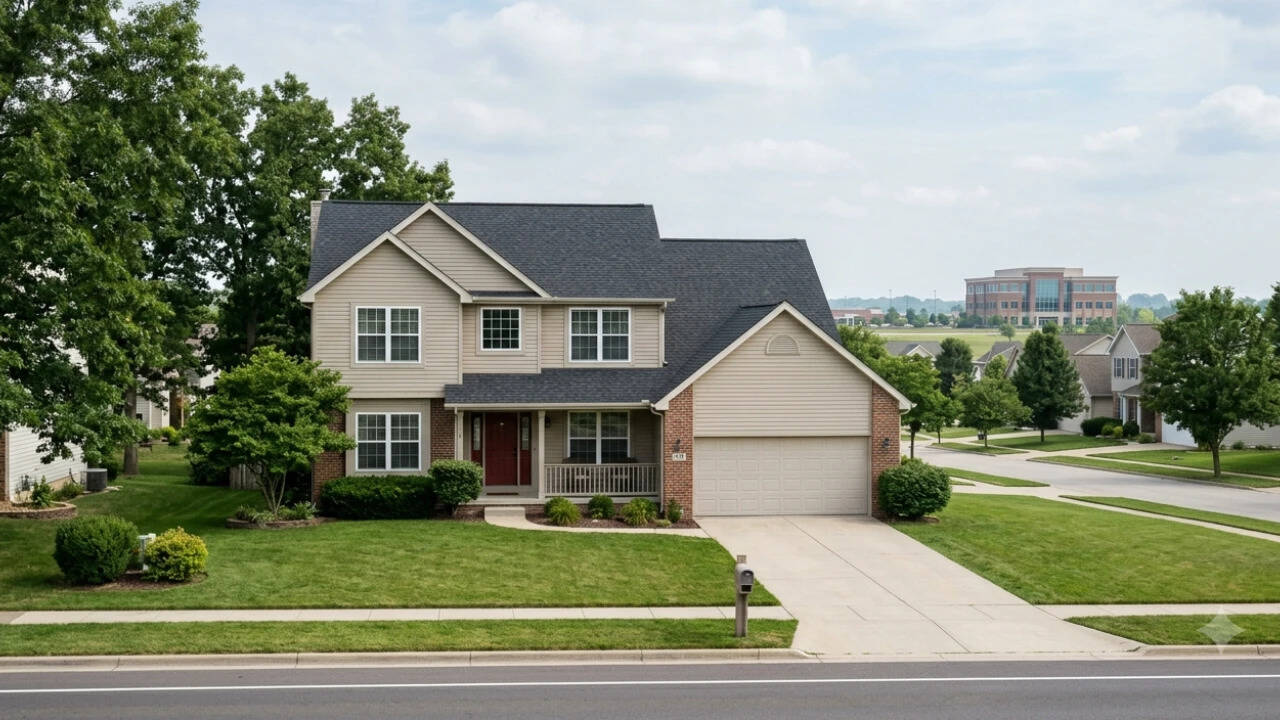
You can't sit on a foreclosure lawsuit for six years, show up to court without an excuse, and expect a New York judge to hand you the keys to someone's house. Yet major financial institutions keep trying.
That's the exact trap a New York bank just walked into, losing a high-stakes appeal because its legal team couldn't explain a massive six-year gap in prosecuting a foreclosure case. For anyone who has ever dealt with New York's brutal real estate litigation, this outcome isn't surprising at all. In fact, it's the predictable result of how strict New York's civil procedure rules have become over the past decade.
If you're a homeowner facing a stalled foreclosure, or a real estate investor trying to understand title clouds in New York, this ruling exposes the exact legal mechanisms that routinely wipe out bank claims. Let's look at why these delays happen, the specific New York laws that punish lenders for dragging their feet, and what happens to a property when a bank's appeal goes down in flames.
The Six-Year Mistake That Cost the Bank Everything
Foreclosure cases in New York are notoriously slow, often taking years to move through the court system due to mandatory settlement conferences and heavy dockets. There's a huge difference between court-imposed delays and a lender simply abandoning a file in a drawer.
When a bank initiates a foreclosure action, the clock doesn't stop ticking just because papers were filed. Under New York law, plaintiffs have an affirmative duty to prosecute their cases diligently. When a lender lets a case sit completely dormant for six years—failing to move for a default judgment, failing to file a note of issue, or ignoring court conferences—defendants have powerful statutory weapons to get the entire lawsuit thrown out.
In this particular appeal, the lower court dismissed the bank's foreclosure action after years of inactivity. The bank appealed, hoping the Appellate Division would show leniency and restore the case so it could finally auction off the property. Instead, the appellate judges looked at the six-year void in the timeline and asked a simple question. Why did this take so long?
The bank didn't have a good answer. Law office failure, lost paperwork, or transferring the loan between multiple mortgage servicers are the usual excuses lenders offer. New York appellate courts have heard them all, and they've largely stopped buying them. Without a reasonable, documented excuse for the delay—and proof of a meritorious claim—the appellate court affirmed the dismissal.
Game over for the bank's appeal.
How New York Law Punishes Dormant Foreclosures
To understand why a six-year delay is fatal to a New York foreclosure, you have to look at two specific statutes that defense attorneys use every single day. Most people outside the legal profession have never heard of them, yet they dictate the outcome of thousands of mortgage disputes across the state.
CPLR 3215(c) and the One-Year Default Rule
The biggest killer of stalled foreclosures is New York Civil Practice Law and Rules (CPLR) 3215(c). This rule states that if a plaintiff fails to take proceedings for the entry of judgment within one year after a defendant defaults, the court shall dismiss the complaint as abandoned.
Notice the word "shall." It isn't optional.
When a homeowner misses mortgage payments and doesn't file an answer to the foreclosure summons within 20 to 30 days, they are officially in default. At that moment, a one-year countdown begins. The bank must file a motion for an Order of Reference or a default judgment within those 12 months.
If the bank waits two years, four years, or six years to take that next step, CPLR 3215(c) kicks in. To survive dismissal, the lender must prove two things:
- A reasonable excuse for why it missed the one-year deadline.
- A potentially meritorious cause of action.
Missing the deadline by a few weeks might get excused if there were active settlement talks. Missing it by six years without a rock-solid justification is practically impossible to defend in the First or Second Departments of the Appellate Division.
CPLR 3216 and Want of Prosecution
Even if a homeowner did file an answer, a bank still can't let the case gather dust indefinitely. Under CPLR 3216, if a case sits idle for at least one year after issue is joined, the court or the defendant can serve a formal 90-day demand requiring the bank to resume prosecution and file a Note of Issue to put the case on the trial calendar.
If the bank ignores that 90-day window—or fails to show a justifiable excuse for the prior multi-year delay—the court can dismiss the complaint for want of prosecution. Between CPLR 3215(c) and CPLR 3216, New York law aggressively clears dead weight off the court dockets.
Why Banks Let Foreclosure Cases Sit for Years
It sounds crazy from the outside. Why would a multi-billion-dollar financial institution forget about an asset worth hundreds of thousands of dollars?
Having seen how mortgage servicing works behind the scenes, I can tell you it rarely comes down to a single person making a mistake. It's a systemic mess created by how mortgages are packaged, sold, and serviced.
First, loan servicing transfers create massive black holes in documentation. Your mortgage might be originated by one bank, securitized into a trust, serviced by a second company, and then transferred to a third "special servicer" once you fall behind on payments. Every time that loan changes hands, physical files sit in boxes, digital records fail to map properly, and outside foreclosure law firms get swapped out. While the new lawyers wait for the new servicer to sign an affidavit of merit, months turn into years.
Second, robo-signing scandals and regulatory freezes forced banks to pause thousands of active lawsuits. After the 2008 financial crisis and subsequent New York administrative orders requiring attorneys to personally verify the accuracy of foreclosure filings, banks realized their paperwork was defective. Rather than admit they couldn't prove standing—meaning they couldn't prove they actually owned the note when they filed the lawsuit—many lenders simply froze the cases. They left them open on the docket, hoping to quietly fix the paperwork later.
Later turned into six years. By the time they tried to restart the engine, the legal environment had shifted beneath their feet.
The Statute of Limitations Trap Under FAPA
Losing an appeal over a six-year delay doesn't just mean the bank has to pay a new filing fee and start over. In New York, a dismissal after six years often means the bank loses the right to foreclose on the property forever.
Here is why. Under New York law (CPLR 213(4)), the statute of limitations to foreclose on a mortgage is six years. That six-year clock starts running the exact day the lender "accelerates" the loan—which happens when the bank demands the entire remaining balance due, usually by filing the initial foreclosure complaint.
For years, banks had a convenient loophole. If a foreclosure lawsuit was dragging on and looked like it might get dismissed, the bank would voluntarily discontinue the case before the six years were up. By doing so, lenders argued they were "de-accelerating" the loan, resetting the six-year statute of limitations clock so they could sue the homeowner all over again.
That loophole is dead.
In late 2022, New York enacted the Foreclosure Abuse Prevention Act (FAPA). FAPA radically changed the rules of engagement in New York real estate law. Under FAPA, a lender can no longer unilaterally reset the statute of limitations by voluntarily discontinuing a foreclosure action. Furthermore, if a case is dismissed for neglect to prosecute—including dismissals under CPLR 3215(c) or CPLR 3216—the lender does not get the benefit of New York's six-month "savings statute" (CPLR 205-a) to refile a new lawsuit after the statute of limitations has expired.
Let's connect the dots on what this means for the bank that just lost its appeal over a six-year delay:
- The bank accelerated the loan at least six years ago when it first sued.
- The six-year statute of limitations has now completely expired.
- Because the case was dismissed due to the bank's own unexplained delay, FAPA blocks the bank from using the savings statute to file a fresh foreclosure action.
Unless the bank can somehow convince New York's highest court, the Court of Appeals, to overturn the ruling—an uphill battle with slim odds—the mortgage debt is effectively unenforceable through foreclosure. The homeowner can file a "quiet title" action under RPAPL 1501(4) to officially wipe the mortgage lien off the county land records.
Common Misconceptions About Stalled Foreclosures
Whenever news breaks about a bank losing a foreclosure appeal on a procedural technicality, armchair commentators rush to call it a "free house" loophole. That misses the reality of how property law actually functions.
Misconception 1: The bank automatically forgives the debt.
Even when a mortgage lien is wiped out by the statute of limitations, banks don't immediately send a congratulatory letter. Title companies won't insure a clean sale of the property until a judge signs a specific order discharging the mortgage of record. Until that quiet title judgment is entered, the cloud on the title remains.
Misconception 2: Any delay gets a case thrown out.
Not all six-year delays are equal. If a foreclosure is stalled because the homeowner filed for Chapter 13 bankruptcy, entered a trial loan modification, or spent four years litigating discovery motions, those delays are either legally stayed or entirely justifiable. Banks only lose appeals like this when the gap in activity is unexplained and caused by their own neglect.
Misconception 3: You can ignore court papers if the bank is slow.
Sitting back and doing nothing is the worst move a homeowner can make. Judges rarely dismiss a six-year-old case on their own initiative without someone bringing the delay to their attention. It takes an aggressive defense attorney filing a formal motion to dismiss under CPLR 3215(c) or opposing the bank's late motion for summary judgment to force the court's hand.
What Homeowners and Buyers Should Do Next
If you're dealing with a dormant mortgage or looking at distressed real estate in New York, timing and documentation are everything.
First, pull the complete case docket from the New York State Courts Electronic Filing (NYSCEF) system. Don't rely on letters from your loan servicer to know where your case stands. Look at the exact date the Summons and Complaint were filed, and check the timestamps on every motion filed afterward. If you spot a gap of more than 12 months between a default and a motion for an Order of Reference, or a multi-year stretch with zero filings, write those dates down immediately.
Second, never sign a loan modification or make a partial payment on a severely delinquent loan without having a New York foreclosure defense attorney review the timeline first. Under New York General Obligations Law, acknowledging the debt in writing or making a payment can sometimes restart the six-year statute of limitations clock, handing the bank a lifeline it would have otherwise lost in court.
Third, if you're buying a property out of a distressed situation or from a seller who claims their old mortgage was dismissed, demand a certified copy of the quiet title judgment before closing. A dismissed foreclosure complaint does not automatically remove a recorded mortgage from the county clerk's index. Make sure the lien is legally extinguished so you don't inherit someone else's appellate battle.