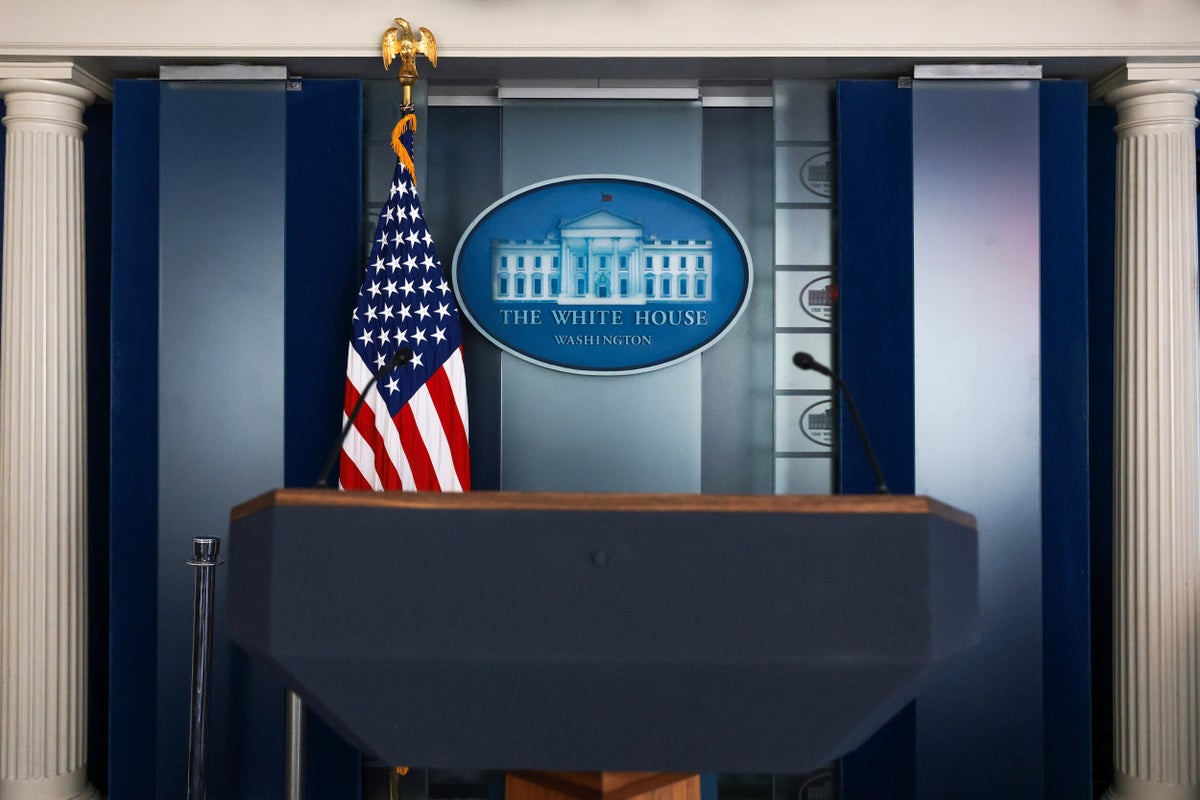
Forty days. That is how long the Brady Press Briefing Room has sat dark, echoing only the faint hum of cleaning crews and the anxiety of reporters starved for an official update. Following Karoline Leavitt's departure, the administration slammed the brakes on its daily televised sparring matches. Now, a new briefing is finally locked into the schedule.
Nobody actually knows who will step up to the podium.
That single question exposes the chaotic reality of West Wing communications right now. While political watchers track every whisper coming out of the executive mansion, the administration has played its cards close to the chest regarding who will inherit one of the most punishing jobs in Washington. Speculation swirls around a rotating cast of deputies, communications veterans, and dark-horse contenders, but the silence from senior staff tells its own story.
The Longest Silence in Recent Memory
A forty-day blackout on daily briefings is not an accident. It is a calculated retreat. When Leavitt left her post, she handed over a media landscape fraught with tension, particularly as questions mounted over foreign policy flashpoints, economic pressures, and an aggressive legislative calendar. Instead of instantly slotting in a permanent successor to absorb the incoming fire, leadership pulled the plug on the daily ritual entirely.
This extended hiatus served a distinct purpose. It starved the daily press corps of their primary target, forcing journalists to chase decentralized leaks rather than cornering a single official under blazing studio lights. But you can only hide behind closed doors for so long. The pressure to resume formal face time with reporters became impossible to ignore, forcing the administration's hand to schedule this week's showdown.
Why the Identity of the Speaker Changes Everything
The media circus surrounding the upcoming briefing focuses entirely on the empty chair. Will it be a seasoned insider who knows how to deflect a hostile question with a smile, or an untested loyalist ready to lean into the administration's most combative tendencies?
The choice of speaker dictates the entire tone of the executive branch's relationship with the press corps. A rotating lineup of briefers suggests a fractured department still searching for a permanent voice. A single, surprise appointment signals an immediate effort to establish authority and impose discipline.
Veterans of past administrations know the brutal math of this job. Leavitt herself famously noted before leaving that the televised briefings represent only a tiny fraction of the actual workload, while reminding successors that the president ultimately acts as his own best spokesperson. When your boss routinely dominates the news cycle via social media and impromptu tarmac gaggles, the press secretary often feels less like an information gatekeeper and more like a human shield.
What to Watch For When the Doors Open
When the cameras finally roll and the door opens to a packed briefing room, look past the opening statements. Pay attention to how the new face at the podium handles the inevitable barrage of questions concerning the administration's internal vacancies and policy pivots.
The real test is not whether the speaker can survive the first twenty minutes without losing their cool. It is whether they can restore credibility to a room that has grown deeply cynical during a six-week news blackout. Whoever takes the mic is walking straight into a crossfire, and the honeymoon period will last precisely as long as it takes to ask the first hostile question.