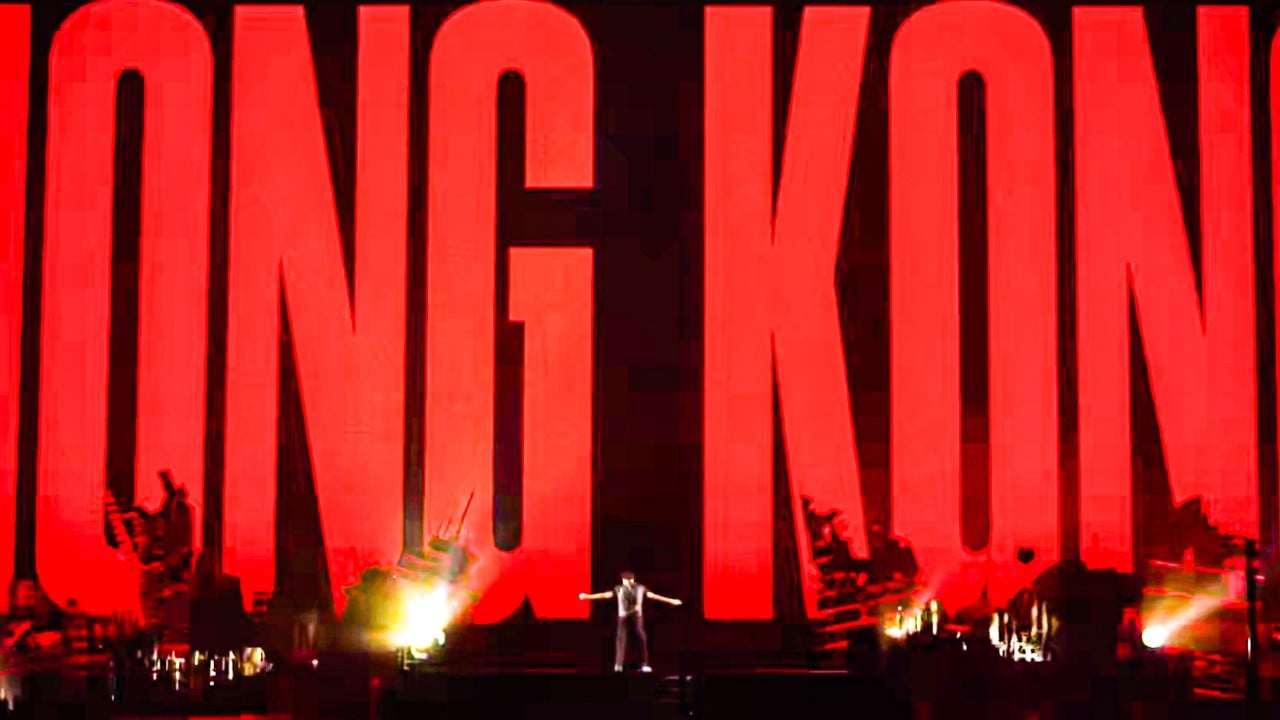
The air inside AsiaWorld-Arena was already thick with sweat, humidity, and the low-frequency rumble of heavy bass when the lights cut to black.
Tens of thousands of voices screamed into the dark. They had come to see the biggest pop star on the planet. They expected the cinematic cynicism of Abel Tesfaye—the red jacket, the bruised nose, the synth-drenched tales of late-night excess in Los Angeles and Las Vegas.
They expected The Weeknd.
What they did not expect was a phantom.
Midway through his set, as the stadium lights shifted into a bruised, midnight violet, a sample began to float above the crowd. It wasn't the signature 1980s dark-wave synth that made After Hours a global juggernaut. It was something delicate, ethereal, and unmistakably native to the damp, neon-lit alleys of 1990s Hong Kong.
A collective gasp rippled through the arena before the beat even dropped.
The sample belonged to Faye Wong.
To an outsider, it was a smooth, well-executed transition in a stadium setlist. To the people standing on that concrete floor in Chek Lap Kok, it was a cultural lightning bolt. Tesfaye had taken "Dreamlover"—the iconic 1994 track by the high priestess of Cantopop—and woven it directly into his own sonic tapestry.
It was a tribute. It was a love letter. But more than anything, it was proof that music, at its absolute apex, is less about geography and more about shared ghosts.
The Diva Who Taught a City How to Breathe
To understand why a few bars of a Faye Wong sample caused grown adults to burst into tears in the middle of a arena concert, you have to understand who Faye Wong is to Hong Kong.
In the mid-1990s, Hong Kong was a city running out of time. The 1997 handover to China hung over every dinner table, every office tower, and every alleyway like a slow-moving storm front. The mood was a surreal mix of feverish capitalism and existential dread. People lived fast because no one knew what tomorrow looked like.
Then came Faye.
She didn’t sing like the polished, belt-it-out Cantopop stars who came before her. She was cool. Indifferent. Experimental. She wore oversized sweaters, cropped hair, and sang with a breathy, soprano floating technique heavily influenced by Western alternative bands like The Cocteau Twins and The Cranberries.
When she released "Dreamlover" in 1994—a track heavily sampled from The Cranberries' "Dreams"—she didn't just top the charts. She defined an era. She gave a anxious, hyper-dense metropolis a soundtrack for its solitude. If you walked through the Central district at 2 AM in 1995, her voice spilled out of late-night convenience stores, taxi radios, and cramped apartments above wet markets.
She made detachment feel like a superpower.
Fast forward three decades. The city has changed. The generation that grew up listening to "Dreamlover" on cassette tapes and Sony Walkmans now has mortgage payments, graying hair, and teenage children of their own.
Enter a kid from Toronto.
Two Loners on Opposite Sides of the World
Abel Tesfaye grew up thousands of miles away from Victoria Harbour, raised in the multicultural, cold cityscape of Scarborough, Ontario. Yet, spiritually, his early music inhabited the exact same nocturnal architecture as Faye Wong’s classic catalog.
Both artists built empires on the feeling of being completely alone in a room full of people.
When Tesfaye broke onto the scene with his 2011 mixtapes, his sound was defined by murky samples, slowed-down vocal loops, and an oppressive, beautiful melancholy. He took the glitz of modern R&B and dragged it into the dark.
So when Tesfaye stood on stage in Hong Kong and triggered that Faye Wong sample, it didn't feel like a cynical local pander. It didn't feel like a foreign artist reading a Wikipedia page about local culture five minutes before walking out of his dressing room.
It felt like recognition.
The high-pitched, crystal-clear vocal loop drifted over the heavy, distorted sub-bass of Tesfaye’s rhythm section. It was a dialogue across genres, languages, and decades. For three minutes, the arena transformed. The gap between 1994 and the present day closed up tight.
The Currency of Belonging
Live music after the global pandemic has become an increasingly transactional business. Ticket prices are astronomical. Merch lines stretch for miles. Stadium shows are often automated, hyper-sanitized spectacles where artists press play on a track, deliver the exact same rehearsed banter they gave in Tokyo three nights prior, and catch a private jet to the next timezone.
Audiences can feel that detachment. They know when they are merely a line item on a tour ledger.
What happened in Hong Kong was the exact opposite of automated touring. It was a moment of radical specificity.
By pulling a sample from the very bedrock of Hong Kong’s pop-culture history, Tesfaye did something rare for an international superstar of his scale: he yielded the spotlight to the city itself. He acknowledged that the stadium he was standing in had a history long before his stage crew rolled in the light rigs, and that it would continue long after the trucks were packed away.
You could see it in the crowd's reaction.
People were not just filming the stage with their phones; they were turning their cameras around to film each other, singing along to Cantonese lyrics spliced seamlessly into global pop hooks. Phones shook in hand. Strangers bumped shoulders, grinning in disbelief.
It was a stark reminder of what live performance is supposed to do. It isn't just about hearing your favorite song played loudly through a high-end sound system. It's about validation. It's about standing in a dark room with fifteen thousand other souls and realizing that your hyper-local, deeply personal memories are understood by a stranger who grew up on the other side of the planet.
A Echo That Doesn't Fade
When the final notes of the Faye Wong sample dissolved back into the dark synth-wave pulse of Tesfaye's set, the noise inside AsiaWorld-Arena reached a deafening peak.
The concert went on. The pyrotechnics flared. The giant LED screens flashed their apocalyptic iconography. Tesfaye ran through his massive roster of number-one hits to roaring acclaim.
But something fundamental had shifted in the room.
Long after the house lights came up, illuminating the floor covered in plastic cups and confetti, the crowd drifted out toward the airport express train in a state of quiet euphoria. They hadn't just seen a mega-star play his hits. They had witnessed a rare collision of nostalgia and modernity—a moment where a global icon paid homage to a local legend, and in doing so, made a massive arena feel as small and intimate as a late-night bedroom listening session.
Faye Wong sang about dreams in 1994 to a city on the edge of a new era. Decades later, her voice echoed through the exact same valley, carried on the shoulders of a global superstar, proving that while cities change and skylines shift, the songs that heal us never really leave.
The house lights stayed off just a second longer than usual before the crowd began to pour out into the humid night, still singing the chorus under their breath.