The coffee was still warm on the corner table of a small taverna in Plaka when the air turned solid.
It did not arrive as a sound. It arrived as a pressure, a sudden, brutal fist that squeezed the oxygen out of the narrow, labyrinthine streets hugging the northern slope of the Acropolis. Then came the roar—a deep, metallic groan that rattled the ancient marble foundations of a city that has stood for millennia, only to remind its modern inhabitants that the ground beneath them is never truly still.
Windows shattered in unison, a rain of diamond-sharp shards cascading onto pavement that seconds earlier had hummed with the quiet chatter of late-night pedestrians. Car alarms shrieked. Then, silence rushed back in, heavy and acrid, thick with the unmistakable scent of pulverized concrete and scorched electrical wiring.
High above, silhouetted against a pale moon, the Parthenon stood untouched, indifferent to the chaos below. But down on the narrow arteries of Athens, a building had ceased to exist.
The Anatomy of an Explosion
When a blast rips through a densely populated historic district, the physical damage is only the first layer of a much deeper trauma. According to emergency response data and preliminary fire service reports following the incident, the explosion leveled a structure situated alarmingly close to the historic core of the Greek capital, sending shockwaves reverberating through neighborhoods where residential apartments sit shoulder-to-shoulder with ancient ruins.
Gas leaks. Faulty infrastructure. The terrifying unpredictability of urban density.
We build our lives out of brick, mortar, and modern conveniences, forgetting how thin the margin truly is between routine safety and catastrophic failure. Consider what happens in a split second when a pocket of trapped gas meets a rogue spark in an aging neighborhood. The walls do not merely collapse; they detonate outward, turning living rooms into shrapnel zones and streets into canyons of debris.
Panagiotis, a lifelong Athenian whose family has run a tiny bakery three blocks from the blast site for forty years, stood on the pavement in his flour-dusted apron, staring blankly at the rising plume of gray smoke.
"You hear things on the news every day," he whispered, his hands trembling as he gripped a rolled-up newspaper. "Wars far away. Disasters in other countries. You think your streets are permanent because the stones have been here for two thousand five hundred years. But stone is old. We are fragile."
Living in the Shadow of History
Athens is a city locked in a perpetual dialogue between its immortal past and its frantic, modern present. Every time a metro tunnel is dug or a utility line is repaired, engineers uncover centuries of amphorae, statues, and foundations. But this modern fragility—the dense web of gas lines, electrical grids, and aging multi-story concrete apartment blocks known as polykatoikies—often clashes violently with the ancient topography.
The blast near the Acropolis was not an earthquake. It was entirely man-made, born of the invisible hazards we pack tightly beneath our floors and behind our walls.
Statistics tell us that urban gas infrastructure in older European capitals requires relentless monitoring. Yet, human error and material degradation operate on a timeline of their own. When a residential building implodes in a densely built zone, the physics are unforgiving. Blast waves bounce off neighboring stone facades, creating localized amplifiers of destruction that tear through windows blocks away.
For the families evacuated into the cool Athenian night, wrapped in emergency foil blankets and staring at the flashing red and blue lights of police cruisers, the grand history of the city vanished. History did not matter. Only the count of the injured did. Only the missing neighbor did. Only the terrifying realization that the floor can drop out from under ordinary life in the blink of an eye.
The Morning After the Sirens
Dawn in Athens is usually heralded by the piercing chatter of swallows and the sharp aroma of freshly brewed Greek coffee drifting from kafenio tables.
This morning, the dawn arrived over a jagged wound in the cityscape.
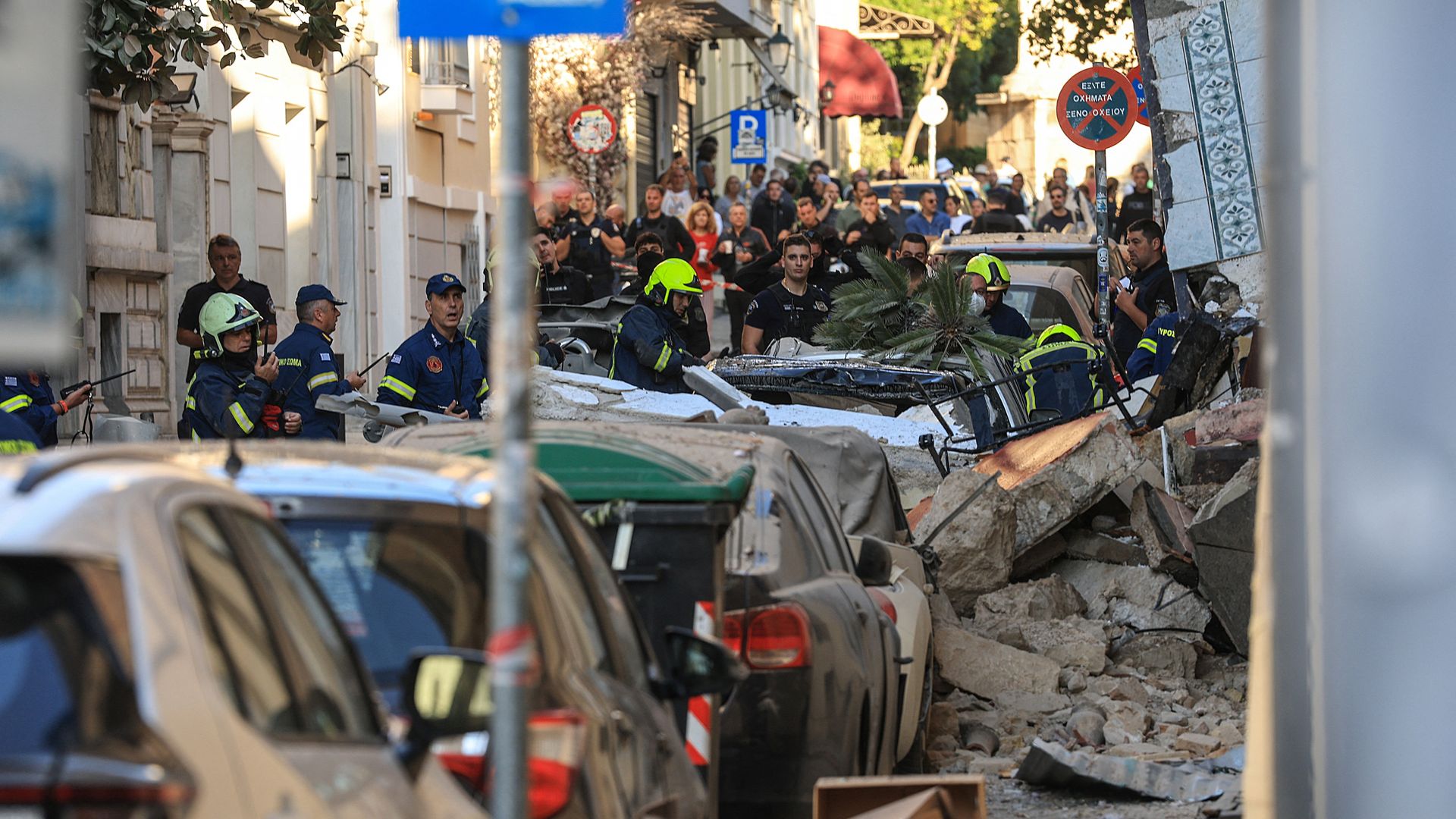
Rescue workers, helmeted and grim, sifted through the gray rubble where a home had stood twelve hours prior. Sniffers dogs picked their way across twisted rebar and shattered masonry. The authorities cordoned off the perimeter, diverting tourists away from the smoking ruins and toward the immaculate marble slopes of the citadel above.
It is a jarring juxtaposition. On one hill, human genius carved out the Parthenon as an eternal testament to order, symmetry, and reason. Down below, human vulnerability was laid bare by a sudden, violent disruption of the mundane.
We crave permanence. We drape ourselves in the comforting myth that our modern cities are immune to the sudden disruptions that plagued our ancestors. Yet, as the smoke clears over the Attic sky and the painstaking work of reconstruction begins, the truth remains.
The city endures not because its buildings are indestructible, but because the people who walk its cracked pavements return to their doorways every single morning, sweep up the glass, and refuse to let the dark silence win.