The sound of a window pane rattling in its frame is usually a sign of a passing truck or a stiff breeze. In the border towns of northern Israel and the ancient, sun-drenched hills of southern Lebanon, that rattle has taken on a different frequency. It is the vibration of the sky tearing open.
When the iron domes and the burning rockets meet in the stratosphere, the result is a jagged, unnatural lightning that illuminates the olive groves far below. This isn't just a military exchange. It is the sound of a decade-long shadow war finally stepping into the light, dragging the rest of the world toward a precipice it has spent years trying to avoid.
The Geography of a Frayed Nerve
Imagine a family in Kiryat Shmona. They have lived with the specter of "the north" for generations, but this is different. The bags are packed by the door. Not for a vacation. For a permanent departure from a home that has become a target. Across the invisible line, in the Lebanese village of Khiam, another family sits in a basement, listening to the high-pitched whistle of drones that never seem to sleep.
These people are the involuntary map-markers of a widening conflict. While diplomats in Geneva or New York talk about "regional escalations," these families talk about the price of eggs and whether the basement walls are reinforced enough to withstand a direct hit. The facts tell us that Israel launched a massive wave of airstrikes following Hezbollah’s drone and rocket barrages. The narrative, however, tells us that the threshold for "all-out war" is being rewritten every hour.
The exchange of fire between the Israeli Defense Forces (IDF) and Hezbollah is no longer a localized border dispute. It is the kinetic manifestation of a much larger, much colder calculation involving Tehran. To understand why the fire is spreading, we have to look past the smoke and toward the puppet strings stretching back to Iran.
The Invisible Architect
For years, the Middle East has operated under a fragile logic of deterrence. Iran, acting through its "Axis of Resistance," maintained a ring of fire around Israel. Hezbollah, the crown jewel of this strategy, wasn't just a militia; it was a standing army with a missile stockpile that could make some European nations blush.
Then came the shift.
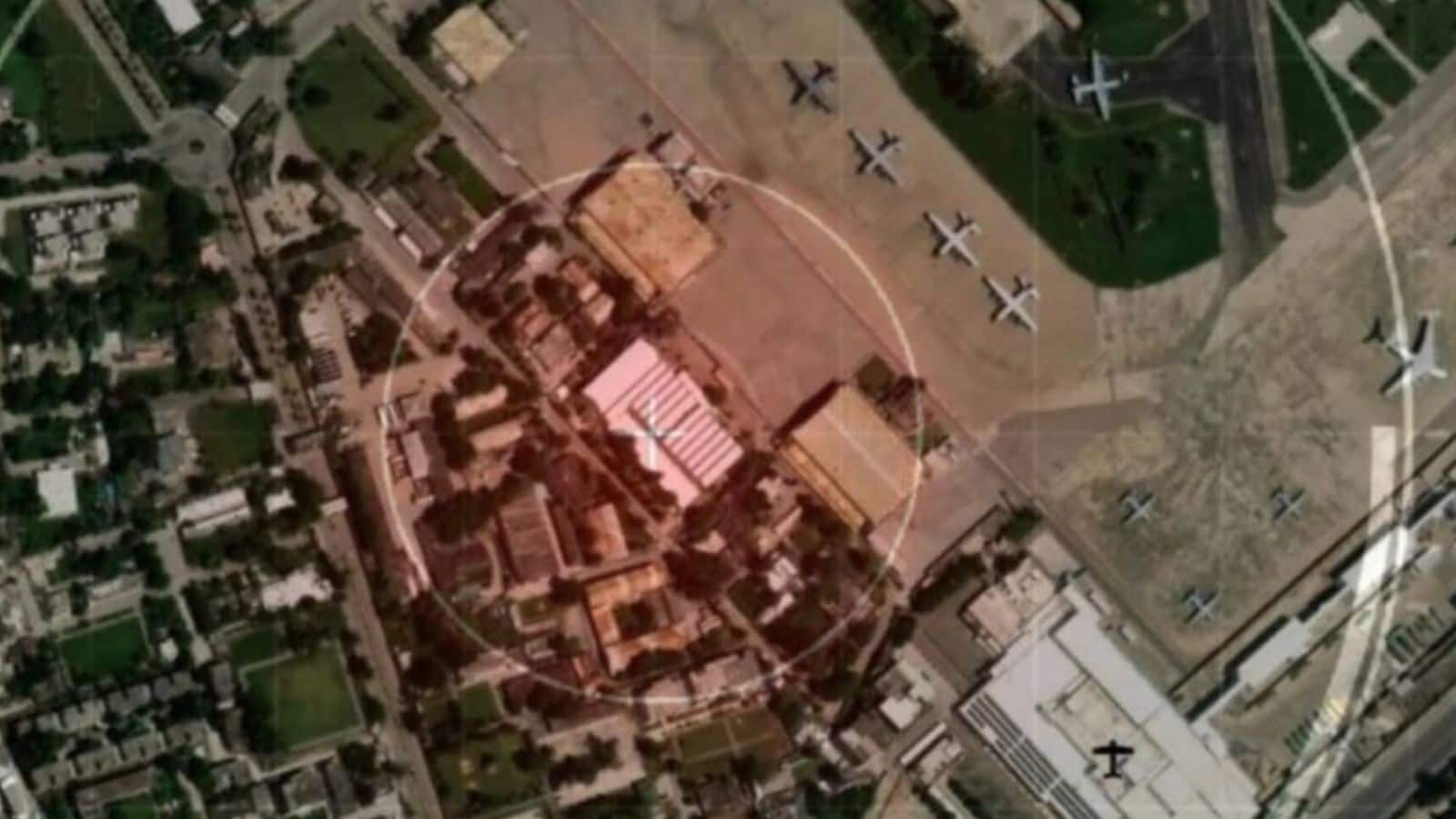
The strategy changed from containment to active attrition. When the first rockets crossed the border following the events in Gaza, it was a signal. The message was clear: the conflict would no longer be contained within a single geography. By striking deep into Lebanese territory to dismantle Hezbollah launch sites, Israel is effectively telling Iran that the "ring of fire" is no longer a one-way street.
The risk of a miscalculation is astronomical.
Consider a hypothetical scenario—though one grounded in the stark reality of modern ballistics. A single intercepted missile has its trajectory altered. Instead of hitting a military outpost, it falls into a crowded civilian center in Beirut or Haifa. In that split second, the political will to "avoid escalation" vanishes. It is replaced by the primal, political necessity of retribution. We are currently living in a world of those split seconds.
The Economics of Ruin
War is often discussed in terms of bravery and betrayal, but its truest language is one of exhaustion. Lebanon is a country already gasping for air. Its economy has been in a freefall for years, its currency little more than colorful paper. Now, the roar of Israeli jets adds a layer of existential dread to the daily struggle for survival.
On the other side, the economic engine of northern Israel has ground to a halt. Vineyards are untended. Tech hubs are empty. The cost of a "widening conflict" isn't just measured in the price of a Hellfire missile or an Iron Dome interceptor—which, for context, costs roughly $50,000 per launch. The real cost is the systematic hollowing out of two societies that share a border but live in different centuries of grief.
Logically, no one wants this.
Israel does not want a two-front war that drains its reserves and isolates it further on the global stage. Hezbollah does not want to see Lebanon leveled a second time, knowing the domestic fury that would follow. Iran does not want to lose its most valuable proxy in a fight that could eventually lead to its own doorstep. And yet, the machinery of war has a momentum that ignores the brakes of logic.
The Gravity of the Unknown
The conflict is widening because the old rules are dead. For decades, there was a "tit-for-tat" rhythm. You hit a truck; we hit a radar station. You fire a mortar; we fire a shell. It was a violent, predictable dance.
Now, the music has stopped.
The strikes are getting deeper. The targets are becoming more vital. Israel’s recent operations have targeted high-level commanders and sophisticated weaponry hidden in civilian infrastructure, while Hezbollah has pushed its reach toward Israeli industrial centers. This isn't a border skirmish anymore. It is a dress rehearsal for a regional catastrophe.
But why should a reader thousands of miles away care about a hill in Lebanon or a kibbutz in Galilee?
Because the world is a closed loop. The tension in the Levant dictates the price of oil in Houston. It influences the maritime security of the Red Sea. It forces superpowers to choose sides, diverting resources and attention from other global crises. Most importantly, it serves as a reminder of how quickly the "civilized" order can be stripped away by the ancient mechanics of tribalism and survival.
The Human Toll of Strategy
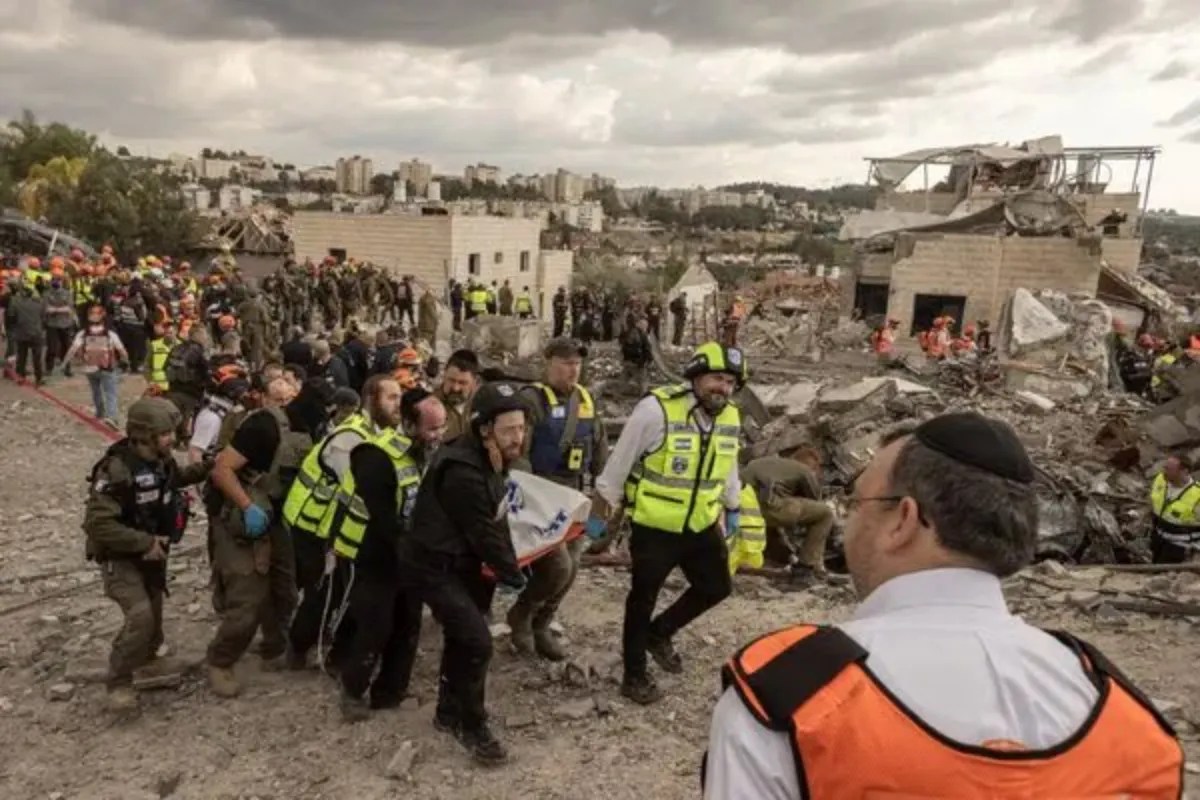
I remember talking to a man who had lived through the 2006 war. He didn't talk about the politics of the Lebanese government or the mandates of the UN. He talked about the sound of his daughter’s voice when the sonic booms broke the silence of the afternoon. He talked about the way the dust smelled—a mix of pulverized concrete and old memories.
That dust is rising again.
We see the headlines: "Israel widening Iran conflict." It sounds like a chess move. A grand, strategic play on a mahogany table. But the table is made of dirt and the pieces are made of flesh.
The "widening" refers to the expansion of targets, the increase in casualties, and the terrifying realization that there are fewer and fewer people left in the room who can say "stop" and be heard. The diplomatic channels are clogged with ultimatums. The "red lines" have been crossed so many times they’ve been rubbed into the carpet.
The Silence After the Blast
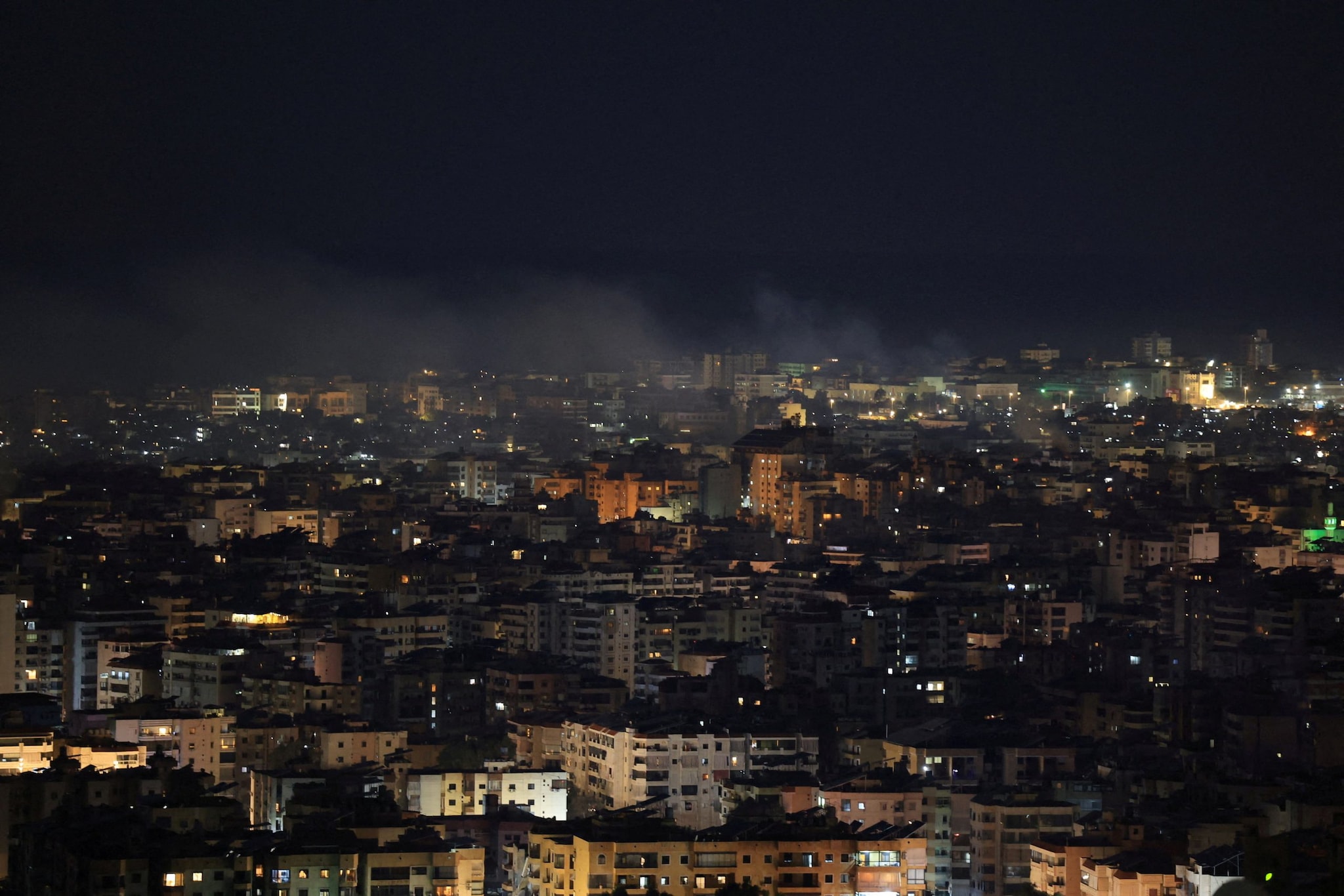
There is a specific kind of silence that follows an explosion. It is heavy, ringing, and thick with the wait for the next one. That is the silence currently hanging over the Middle East.
We are watching a tragedy in three acts, and we are currently midway through the second. The first was the spark. The second is this—the expansion, the "widening," the testing of limits. The third act is the one everyone is trying to write a different ending for, yet everyone seems to be following the same grim script.
The facts remain: rockets were fired, jets were scrambled, and the maps were redrawn in red ink. But the truth is found in the eyes of the people who no longer look at the stars, but at the horizon, waiting to see if the next light they see is the dawn or the fire.
The olive trees in the valley don't care about the border. They have deep roots and long memories. They have seen empires rise and fall, and they have been scorched by the fires of a dozen "necessary" wars. As the smoke clears from the latest round of strikes, the trees remain, standing as silent witnesses to a cycle of violence that seems to have forgotten how to end.
The world watches the headlines, but the earth feels the impact. Each crater is a scar on a landscape that has already suffered too much. The sky may be filled with steel, but the ground belongs to the ghosts of those who thought the last war would be the final one.