The sea does not hurry. It does not argue. It simply arrives, heavy and persistent, carrying the weight of a thousand miles of open water upon its back.
On that autumn evening along the Southern California coastline, the air tasted of salt and electric panic. Long before the first wave breached the seawall in Ventura, the signs were written in the sky and hidden in the mathematics of the moon. For most residents, the ocean is a postcard backdrop—a blue margin to a busy life, framed by windshields on the Pacific Coast Highway and shimmering in the golden hour light. But nature has a long memory. Sometimes, she reminds us who owns the dirt we built upon.
Consider Elena, a fictional coastal resident whose lived experience mirrors thousands that night. She had lived in her modest home overlooking the Santa Barbara channel for twelve years. She knew the rhythm of the tides, or so she thought. She knew when the grebes gathered, when the kelp beds drifted close to shore, and when the winter swells would send surfers scrambling toward the cliffs. But she had never seen water move with this kind of premeditated malice.
The storm did not come alone. Weather is rarely a solo act when the Pacific decides to flex.
First came Tropical Storm Rachel, spinning far out in the southern latitudes, churning moisture and momentum northward like an engine revving in the dark. Storms like Rachel carry a signature warmth, an atmospheric breath that feeds upon itself. But Rachel was only the first player in a dangerous triad.
Far beneath the surface, riding the invisible contours of the thermocline, a Kelvin wave was quietly marching eastward. Picture a slow-moving mountain of warm water pulsing across the ocean basin, invisible to satellites yet potent enough to elevate sea levels before it even breaks the shore. This subterranean pulse whispered ahead of the storm, bloating the tides far beyond their normal astronomical limits.
And then, above it all, the moon pulled.
It was the alignment of the astronomical high tide—the king tides that arrive when gravitational geometry forces the oceans to stretch upward. When the king tide met the subcutaneous heat of the Kelvin wave, and both collided with the storm surge kicked up by Rachel, the ocean did not just rise. It overflowed its boundaries. It reclaimed what it had once claimed centuries ago.
Water is remarkably patient until it becomes violent.
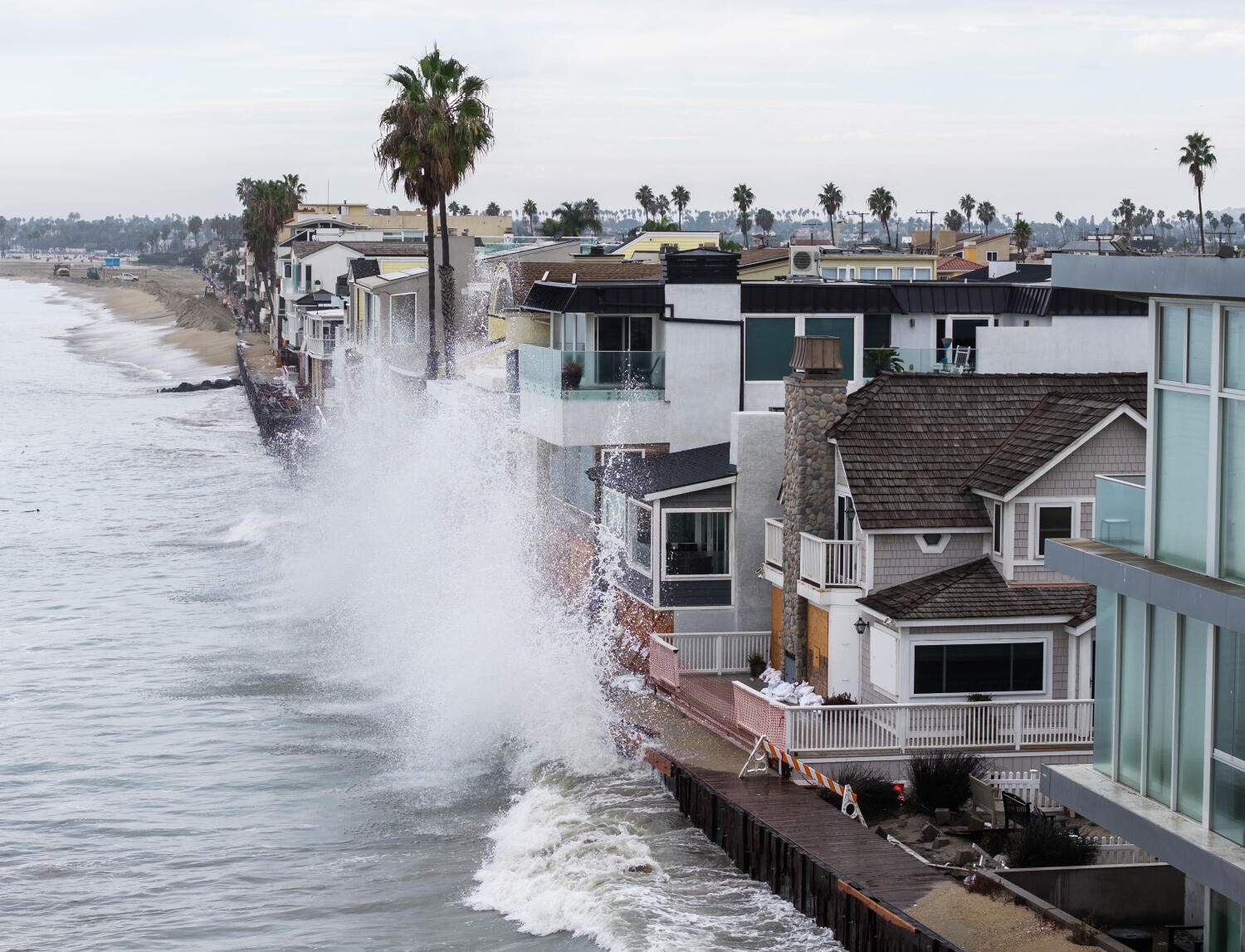
By midnight, the waves were no longer crashing; they were battering. In places like Ventura and Newport Beach, historical infrastructure designed for a tamer era met its match. Logs the size of utility poles—driftwood gathered from distant river mouths days before—turned into battering rams. They rode the crests of foam, launched by ten-foot breakers directly into boardwalks, pilings, and parked cars.
I remember standing behind the yellow police tape in an earlier storm years ago, smelling the thick, rotting kelp crushed to powder, hearing the sickening thump-crunch of a wooden pier splintering against the surge. The noise is what stays with you. It is not the roar of a jet engine, though people often use that cliché. It is a deep, concussive thrum, like a giant's heartbeat shaking the floorboards of the earth. It is the sound of physics ignoring human property lines.
The science behind this triple threat is as fascinating as it is terrifying. Meteorologists call it compound coastal flooding. When multiple hazards stack on top of each other, the resulting damage is not additive; it is multiplicative. A high tide alone is an inconvenience. A storm surge alone is a flood warning. A Kelvin wave alone is a blip on an oceanographer's monitor. Stack all three simultaneously, and you create an aquatic ambush.
Think of it like traffic on a narrow mountain pass. One stalled truck causes a delay. Add a sudden blinding fog, and traffic slows to a crawl. Now throw in an unexpected mudslide blocking the single escape route. That is what happened to the Southern California coast. The ocean was blocked from receding by the swollen tide, pushed higher by the thermal anomaly underneath, and shoved shoreward by the atmospheric winds above. The water simply had nowhere else to go except up, over, and through.
In Ventura, the scene resembled a disaster film stripped of its special effects. Cars half-submerged in saltwater floated like discarded toys in parking lots. Pier pilings groaned under pressures they were never engineered to withstand. Restaurant owners waded through knee-deep brine, salvaging what they could before the next set rolled in.
Yet, amid the chaos, there was an eerie beauty to the violence. The foam glowed phosphorescent under the amber streetlights, churning into lace before smashing into concrete. Nature does not bear malice; she merely balances her books. We have spent a century paving the watershed, straightening rivers, armoring shores with rigid sea walls, and pretending that the ocean is a tamed beast behind a glass wall.
The ocean disagreed.
We often talk about climate resilience as if it were a spreadsheet problem—a matter of raising a seawall by three feet or pumping sand onto an eroding beach. But true resilience begins with humility. It begins with acknowledging that our maps are temporary drafts written in pencil on a shifting canvas.
When the sun finally broke through the bruised clouds the next morning, the devastation was laid bare. Debris littered the coastal promenades. Salt crust dried white on windshields miles inland. But more than that, a quiet realization settled over the communities that watched the water recede.
The triple threat of Rachel, the Kelvin wave, and the high tides was not an anomaly to be forgotten once the insurance adjusters left. It was a preview. A glimpse into a future where the margins between land and sea are increasingly blurred, demanding that we rethink not just how we build, but where we stand in relation to the wild, restless heart of the planet.
The tide went out, eventually. It always does. But as the wet sand glistened under the morning light, the ocean left its message carved deep into the shoreline, waiting for the next alignment of stars and storms.