The Digital Avalanche
A phone buzzes in a dimly lit bedroom in Seoul. Simultaneously, thousands of miles away in Ohio, a notification flashes across a cracked screen. Then another. Then tens of millions more.
Numbers on a dashboard usually feel abstract. They sit on spreadsheets, trapped in cold rows of data, calculated by algorithms that do not care about human heartbeats. But when a single video shatters the internet, racking up three hundred million views in its first twenty-four hours, the metric ceases to be a mere statistic. It turns into a cultural tremor.
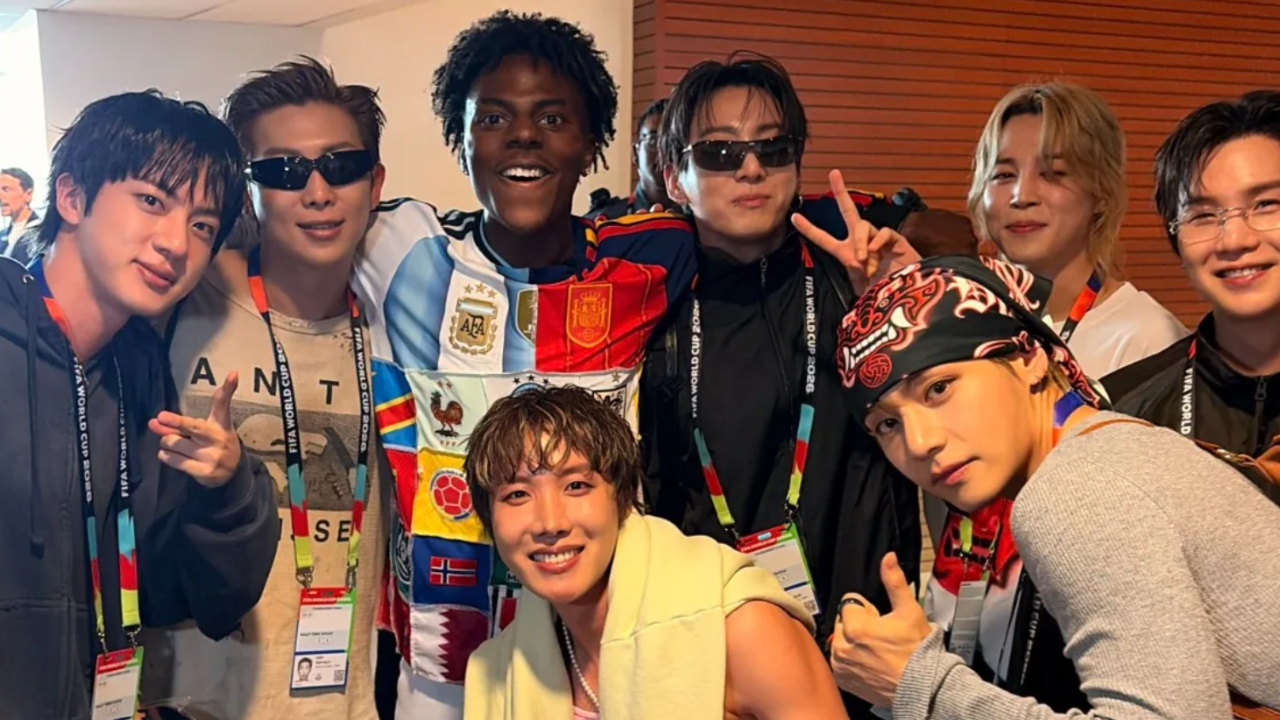
That record-breaking surge did not happen in a vacuum. It was the explosive collision of two completely different internet phenomena: Darren Watkins Jr., known to the world as IShowSpeed, and the global pop titan BTS.
When Speed posted a short Instagram Reel capturing a raw, unscripted moment alongside members of BTS, no one expected a subdued reaction. Yet, the velocity with which the clip traveled across global networks bypassed every previous benchmark on the platform. It did not creep up the charts; it detonated.
Two Halves of a New Cultural Currency
To understand why this twenty-four-hour spike occurred, you have to look at the two forces that built it.
On one side stands IShowSpeed. He represents the chaotic, unedited energy of modern streaming culture. His rise from a teenager shouting into a webcam in his bedroom to an international superstar was not orchestrated by traditional Hollywood public relations teams. It was built on raw volatility, hyper-energetic outbursts, and an unfiltered willingness to put himself into surreal situations across the globe. He is unpredictable. That unpredictability keeps millions of young viewers glued to their screens, terrified they might miss a moment of unscripted madness.
On the other side stands BTS. The South Korean group built a global empire not just through sharp choreography and infectious hooks, but through an unprecedented emotional bond with their fan base, the ARMY. Their power is structured, massive, and deeply loyal. When BTS moves, millions move with them in tight, coordinated harmony.
Put those two forces together in a fifteen-second video clip, and the result is digital lightning.
The math was simple, even if the scale was mind-boggling. Speed brought the hyper-active twitch-stream audience that thrives on viral chaos. BTS brought the global fandom machine capable of mobilizing continent-spanning engagement within seconds.
What Three Hundred Million Views Actually Means
Consider the sheer physical scale of that number.
Three hundred million people is roughly the entire population of the United States. It is more than double the audience of the Super Bowl. If every person who watched that clip in its first day stood shoulder-to-shoulder, they would circle the Earth several times over.
Yet, this massive crowd did not gather in a stadium or a city square. They gathered in the palms of their hands, staring into small glass rectangles during bus rides, study breaks, work hours, and late-night insomnia sessions.
Metaphorically speaking, the internet acts like a dry forest during a hot summer. Most content is a damp match that flickers and dies out immediately. A rare few posts are sparks. But a collaboration like this was a lightning bolt hitting a field of pure kinetic energy.
The previous records on Instagram Reels were held by carefully polished production houses, major sports leagues, and global pop icons operating within standard promotional cycles. Speed and BTS broke those records by doing the exact opposite of a polished corporate commercial. They offered authenticity. Or, at the very least, the illusion of it.
Viewers were not watching a high-budget music video with million-dollar lighting rigs and scripted lines. They were watching two global juggernauts sharing a quick, absurd, human interaction. The brevity of the format invited re-watches. People loop the clip to catch a quick expression in the background, a subtle laugh, or a reaction they missed the first time.
One loop turns into five. Five loops turn into fifty million re-plays across a single timezone. Multiply that across every continent, and the counter spins out of control.
The Shift in How We Watch the World
For decades, fame was managed by gatekeepers. Execs in suits decided who got the prime-time television slots, who made the radio playlists, and whose face made the cover of magazines.
That model is dead.
Today, authority has shifted to direct, visceral connection. A creator who started in a home bedroom can command more attention in a single day than traditional television networks pull during their biggest broadcast events of the year.
This record is not just a triumph for Speed or a testament to the enduring dominance of BTS. It serves as proof of a new media reality. Audiences no longer want to be talked at by polished figures behind a screen. They want to feel like they are standing in the room, witnessing an organic moment unfold in real time.
When the dust settles on this specific record, another creator will eventually come along with another viral moment. The numbers will inevitably be pushed higher as global internet access grows and platform algorithms become even more efficient at delivering dopamine.
But for one twenty-four-hour window, the digital world synchronized. Millions of strangers, separated by languages, time zones, and cultures, all tapped their screens to watch the exact same fifteen seconds of unfiltered internet history.