When the Norwegian Nobel Committee awarded the 2026 Nobel Peace Prize to Navanethem "Navi" Pillay, it did not merely hand out a lifetime achievement medal. It fired a warning shot across the bow of global superpowers.
For decades, the international rules-based order has operated under a fragile fiction: that powerful states can flout global law while weaker nations face accountability. By honoring Pillay—a South African jurist whose career spans the International Criminal Tribunal for Rwanda, the International Criminal Court, and the United Nations—the committee chose a legal warrior who spent her life tearing down that exact double standard. This choice is an indictment of the current geopolitical climate, where international courts face unprecedented political hostility, direct sanctions, and systemic attempts at dismantling.
Pillay's trajectory is the antithesis of ivory-tower jurisprudence. Born in Durban, South Africa, in 1941, she grew up under the suffocating architecture of apartheid. In 1967, she became the first non-white woman to open her own law practice in Natal, using her courtroom presence to defend anti-apartheid activists, challenge oppressive detentions, and expose police brutality. She did not study the law as an abstract philosophy; she wielded it as a crowbar against a regime that deemed her a second-class citizen.
That foundational defiance shaped her later ascent through global tribunals. When she was appointed to the International Criminal Tribunal for Rwanda (ICTR) in 1995 by Nelson Mandela, the institution was floundering under administrative chaos and skepticism. Pillay pushed through structural paralysis to deliver landmark rulings. Most notably, her bench at the ICTR legally established that systematic rape and sexual violence during conflicts were not mere spoils of war, but acts of genocide and crimes against humanity. That single legal pivot redefined international humanitarian law, ensuring that the weaponization of sexual violence could no longer be dismissed as a regrettable byproduct of combat.
The Architecture of Accountability Under Siege
To understand why Pillay's 2026 Nobel win is deeply provocative, one must look at the mechanics of the institutions she helped build. The post-Cold War consensus assumed that global courts would gradually bind even the most powerful nations. Instead, those courts have become flashpoints of diplomatic warfare.
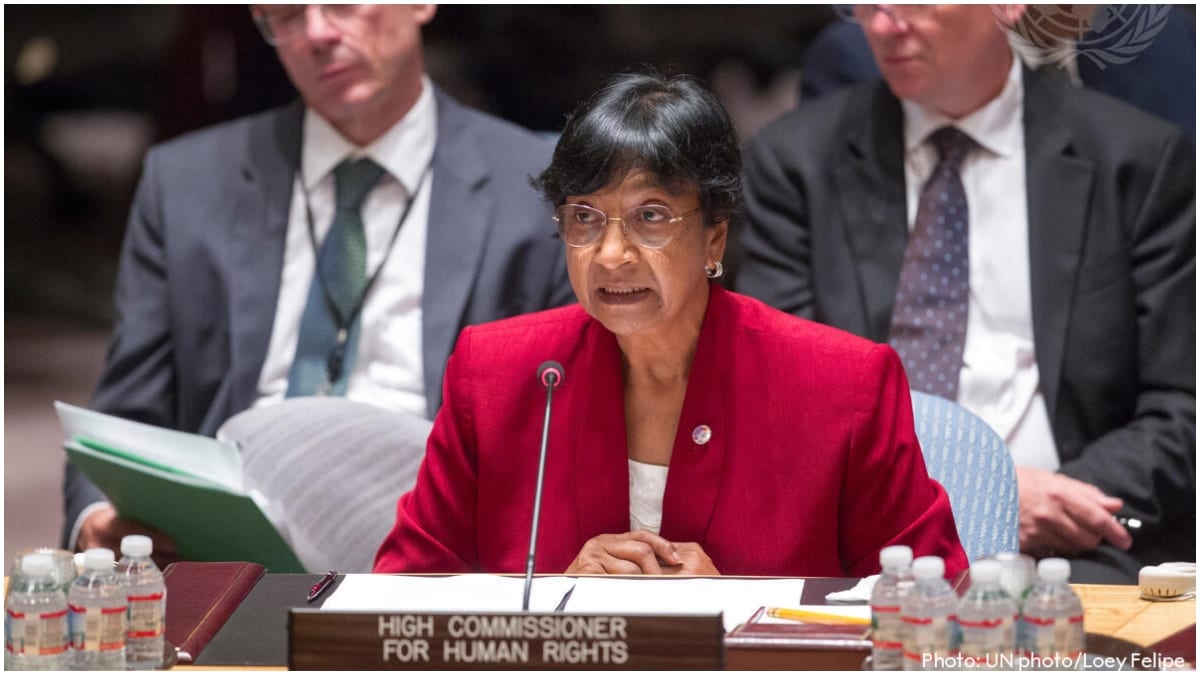
When Pillay served as UN High Commissioner for Human Rights between 2008 and 2014, she routinely drew the ire of Washington, Beijing, and Moscow by refusing to tailor human rights reports to diplomatic conveniences. She criticized civilian casualties in asymmetric warfare, condemned systemic state repression, and insisted that international law applies equally to western democracies and authoritarian regimes alike.
Her subsequent work chairing investigative bodies, including inquiries into the occupied Palestinian territories, thrust her directly into the crosshairs of contemporary geopolitical crises. Her investigative conclusions triggered fierce condemnations from targeted governments and their allies, resulting in a retaliatory environment where international judges face asset freezes, travel bans, and intense campaigns aimed at delegitimizing their mandates.
By recognizing Pillay at this exact historical junction, the Nobel Committee is pushing back against a rising tide of legal nihilism. The underlying message is stark: international justice is not an optional accessory to diplomacy that can be discarded when it becomes inconvenient. It is the only alternative to a world governed exclusively by raw military might.
Why the Powerful Fear the Gavel
Superpowers historically tolerate international courts only so long as those courts target small-scale dictators or failed states outside major spheres of influence. The moment an international tribunal trains its lens on major powers or their strategic allies, the rhetoric shifts dramatically. Courts are suddenly accused of bias, overreach, and political motivation.
Pillay's entire career has been a direct challenge to this selective application of justice. Her rulings and administrative leadership established that impunity cannot be bought with geopolitical leverage or military deterrence. When a state actor commits war crimes, the paperwork matters. The documentation matters. The arrest warrant matters—even if execution takes decades.
Consider how historical atrocities are mitigated or denied by modern perpetrators. Without the paper trails generated by tribunals like the ones Pillay presided over, historical revisionism runs rampant. Judicial records create a permanent, legally binding baseline of truth. They transform anonymous mass suffering into documented criminal acts, providing victims with an official acknowledgment that counters state-sponsored denial.
Yet, this system remains terrifyingly fragile. The International Criminal Court has no police force. It relies entirely on the voluntary cooperation of sovereign states. When major non-member states actively work to undermine its jurisdiction or penalize its officers, the court's structural vulnerabilities are exposed. Pillay's recognition is an explicit acknowledgment of the personal courage required by jurists who operate within these compromised parameters.
The Cost of Uncompromising Integrity
The timing of the honor, announced while Pillay was participating in legal conferences at Nuremberg's historic Courtroom 600, carries heavy symbolic weight. Nuremberg was born out of the victorious imposing law on the defeated. Modern international criminal justice attempts something far more difficult: holding every nation, victor or vanquished, to the same standard.
That endeavor comes with steep professional and personal costs. Jurists who walk this path face relentless scrutiny, intimidation, and isolation from the diplomatic establishment. They are routinely told to moderate their findings to preserve political stability. Pillay's career demonstrates a systematic refusal to trade justice for diplomatic expediency.
Her life's work exposes the fundamental delusion of realpolitik: the belief that sacrificing human rights for short-term security yields actual peace. History shows the exact opposite. Unpunished atrocities sow the seeds for future conflicts. Impunity breeds escalation.
The 2026 Nobel Peace Prize is not a comfortable celebration of harmonious ideals. It is a sharp, unyielding reminder that peace without justice is merely a temporary pause between automated cycles of violence. Navi Pillay spent her life building the machinery of accountability. Her recognition forces the global community to answer whether it possesses the collective courage to keep that machinery running, or whether it will stand by while the strong dismantle the only defenses the vulnerable have left.