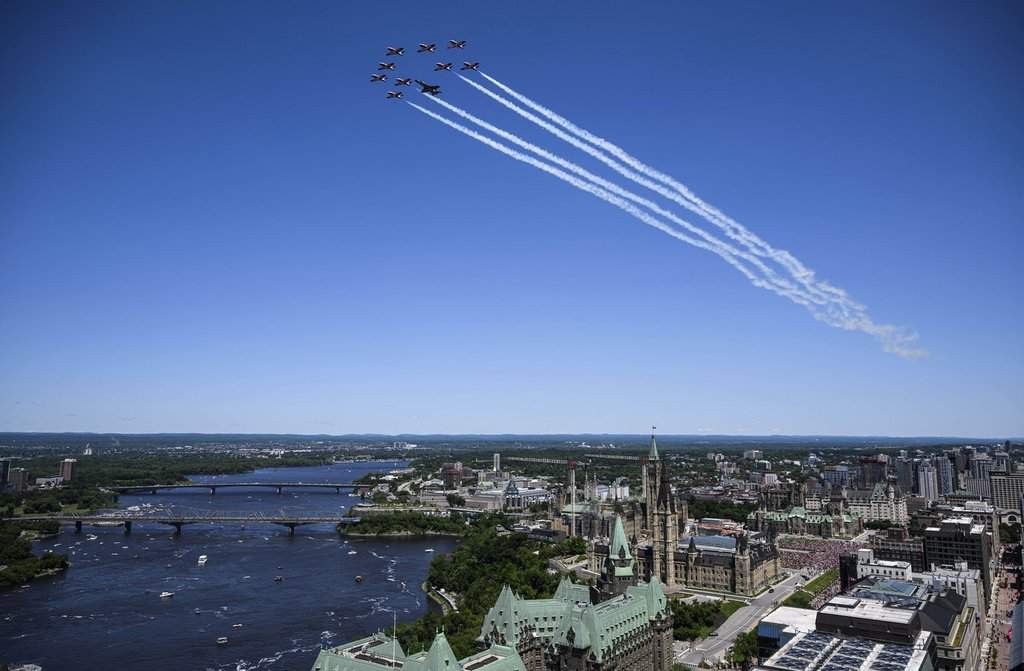
On July 4th, fighter jets roar across the Canada-U.S. border. The press releases write themselves. They call it a symbol of an unbreakable bond, a testament to NORAD, and a beautiful tribute to shared values.
It is none of those things.
The joint flypast is defense theater. It is a loud, expensive public relations stunt designed to distract from a uncomfortable truth: the military relationship between Canada and the United States is dangerously lopsided, structurally outmoded, and fundamentally broken. While politicians look to the skies and marvel at the spectacle of shared sovereignty, the reality on the ground is a story of chronic underfunding, resentment, and a growing capability gap that a few synchronized flight paths cannot fix.
We are watching a hollow ritual masquerading as geopolitical strategy.
The Lazy Consensus of Shared Skies
The mainstream media loves the flypast narrative. The standard reporting frames these events as a seamless integration of two modern militaries safeguarding the continent. They tell you that because Canadian CF-18s can fly in formation with American F-15s or F-35s, the defense partnership is healthy.
This is a dangerous delusion.
The consensus relies on a flaw in logic: confusing interoperability with capability. Yes, Canadian and American pilots can communicate on the same frequencies. Yes, they can fly the same patterns. But matching paint schemes and synchronized takeoffs do not equal a functioning defense pact.
The hard truth is that Canada has spent decades outsourcing its national security to the American taxpayer. This flypast is not a celebration of equals; it is a polite reminder of Canada’s dependency. When you strip away the ceremonial smoke and mirrors, you find a Royal Canadian Air Force (RCAF) that is overworked, under-equipped, and struggling to maintain its aging fleet while the U.S. looks on with mounting frustration.
The Procurement Disaster Grounding the Alliance
Let's look at the numbers behind the theater. While the U.S. Air Force operates on a budget that exceeds the entire GDP of many nations, Canada has historically treated defense spending as an optional luxury.
+-----------------------------------------------------------------------+
|  The Defense Spending Disconnect (NATO 2% GDP Target vs. Reality)     |
+-----------------------------------------------------------------------+
| United States: Consistently ~3.4% of GDP allocated to defense.         |
| Canada: Hovering around 1.3% to 1.4% of GDP, with vague promises to   |
| reach targets by the 2030s.                                           |
+-----------------------------------------------------------------------+
The gap manifests in the very aircraft used in these celebrations. Canada’s current frontline fighter, the CF-18, is a modernized variant of a platform that first flew in the late 1970s. While Ottawa finally signed a deal to acquire F-35 fighter jets, the delivery timeline means Canada is playing a decades-long game of catch-up.
I have watched defense procurement programs drag on through multiple political administrations, bogged down by bureaucratic inertia and a desire to turn military spending into a domestic jobs program. When you prioritize regional economic benefits over raw combat capability, you get a compromised military.
By the time Canada's full fleet of F-35s is operational, the threat environment will have evolved entirely. The U.S. is already pivoting toward Next Generation Air Dominance (NGAD) and collaborative combat aircraft (drones). Canada is buying yesterday's future at tomorrow's prices, yet we are supposed to cheer when they manage to fly a few legacy jets over a border town.
Dismantling the Premise of Continental Defense
Go look at the standard "People Also Ask" questions surrounding NORAD.
- How does Canada contribute to North American defense?
- Is the U.S.-Canada military alliance equal?
The establishment answer is always a polite yes, pointing to geographic surveillance networks and joint command structures in Colorado Springs. But that answer is obsolete.
The threat to North America is no longer just Russian bombers flying over the Arctic—the specific threat NORAD was built to counter in 1957. Today’s threats are hypersonic glide vehicles, low-altitude cruise missiles, cyber warfare, and orbital disruptions.
"NORAD is a framework designed for a Cold War that ended 35 years ago. Trying to fix it with upgraded radar and a fresh coat of paint on old jets is like bringing a musket to a drone fight."
Canada's northern surveillance network, the North Warning System, is a relic. It lacks the capability to detect modern, low-observability threats. The United States knows this. Washington is quietly building its own layered defense systems because it can no longer rely on Ottawa to secure its northern flank. The joint flypast is a polite fiction designed to save diplomatic face, pretending the old arrangement still works.
The Cost of the Illusion
There is an ongoing cost to this performative alignment. By pretending everything is fine, both nations avoid the brutal conversations required to fix the structural issues.
- For Canada: The flypast acts as a political shield. It allows the government to point to a photo-op and claim they are fulfilling their international obligations, deflecting criticism from NATO allies who are tired of Canada's freeloading.
- For the United States: It fosters a false sense of security. It allows American planners to check a box marked "continental unity" while ignoring the gaping vulnerabilities in the Arctic theater that Canada is legally responsible for but practically incapable of defending.
If you want a real partnership, you don't paint flags on airplanes and fly them over crowds. You invest in deep tech, quantum computing encryption, autonomous underwater vehicles for Arctic monitoring, and rapid procurement pipelines. You stop treating defense as a public relations campaign.
Stop Applauding the Flypast
The next time you hear the roar of engines overhead on the Fourth of July, do not mistake it for strategic strength.
It is a monument to complacency. It is the sound of two governments agreeing to pretend that a crumbling 70-year-old security framework is still viable in an era of peer-competitor conflict.
True allies do not validate each other's bad habits. They challenge them. Until Canada treats national defense as a sovereign necessity rather than an American-subsidized hobby, these joint flypasts are nothing more than high-altitude theater for an audience that refuses to face reality.
Look down, look at the budget sheets, look at the readiness rates, and realize that the alliance is running on fumes.