Bruises bloom in slow motion. That is the first thing anyone who has ever taken a hard blow to the ribs or the shoulder learns—not in the flash of impact, which is all adrenaline and white noise, but three hours later when the room goes quiet and every breath feels like dragging sandpaper across an open nerve.
In the West Bank, a journalist does not just carry a press vest, a camera, or a recorder. She carries a target that many people pretend is invisible.
Consider a hypothetical scene—one built directly from the documented reality of reporting in the occupied West Bank, where reporters covering clashes, land disputes, and settler violence routinely face intimidation, obstruction, and physical assault. Picture Layla, a hypothetical correspondent working out of Ramallah, standing along a dusty ridge outside a Palestinian village after word spreads that masked assailants have descended on olive groves and homes. She has her phone out, filming what is happening before the story is reduced to a line in a briefing. A rock clips her collarbone. A heavy stick catches her forearm as she shields her lens. Within minutes, the camera is cracked or seized, her ribs ache with a dull, punishing throb, and the people who struck her melt back into the hills, leaving her on the dirt trying to catch enough air to speak into her voice recorder.
I have stood on enough volatile edges of stories—watching ink and glass and shouting crowds collide—to know what happens to a person's nervous system when violence arrives up close. Your hands shake even after your voice steadies. You check your coat for torn fabric. You replay the last ten seconds over and over, wondering if a single step to the left would have kept your shoulder out of the swing. Fear does not arrive like a neat paragraph in a dispatch. It arrives as salt sweat stinging your eyes, gravel grinding under your sneaker, and the sudden, sickening realization that your presence—meant to bear witness—has made you a problem someone wants to erase.
When a journalist is beaten in the West Bank, the headline usually reads like a ledger entry. A reporter attacked. An envoy speaks out. A call for accountability.
Cold. Clean. Distant.
Yet behind that tidy phrasing sits a fracture that reaches far beyond one bruised body on a West Bank road. When the United States ambassador calls on Israel to prosecute the settlers involved in such an attack, that diplomatic appeal lands inside a powder keg of law, politics, power, and survival. A call for prosecution sounds simple on paper. In practice, it tests whether words backed by diplomatic weight can pierce a wall of impunity that Palestinians, press freedom groups, and human rights monitors have long argued stands too high and too thick.
What a Beating Actually Erases
Violence against a reporter is never just an assault on an individual. It is an attempt to edit reality before the public ever sees the first draft.
Think of a newsroom as a relay race. The reporter on the ground takes the baton in the heat and chaos, runs the hardest stretch, and passes it to editors, producers, and readers miles away. When assailants beat a journalist and smash or grab her equipment, they are trying to trip the runner before the handoff. Even if she survives with nothing worse than deep contusions and a cracked phone, the message sent to every other reporter nearby is unmistakable: step too close, record too clearly, and you pay for it with your body.
Chilling. That is the exact word press advocates use, and it fits like cold iron.
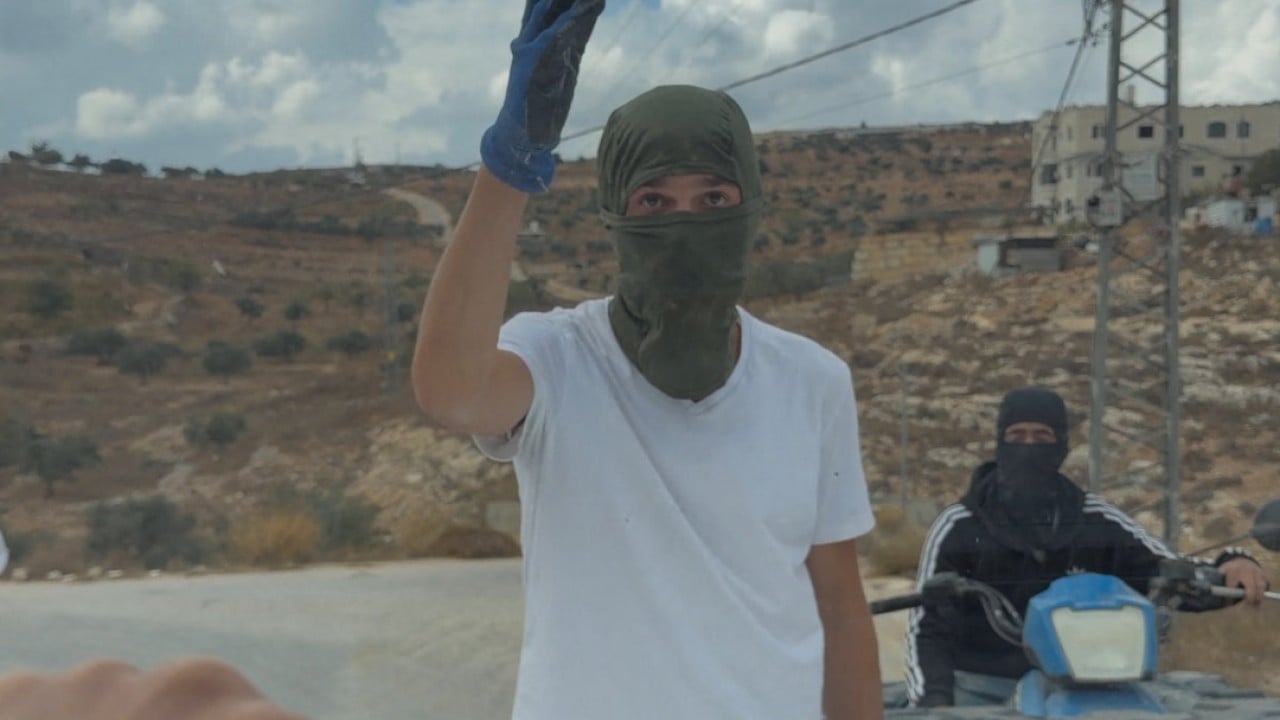
In the West Bank, reporting on settler attacks carries a distinct, jagged edge. Unlike a formal military checkpoint where uniformed soldiers follow—or are expected to follow—a chain of command, attacks by extremist settlers often unfold in gray zones where authority feels fragmented, contested, or absent. Villagers describe masked men throwing stones, torching vehicles or trees, and assaulting residents and reporters alike. Sometimes Israeli forces arrive late. Sometimes they intervene. Too often, Palestinians and rights organizations say, perpetrators walk away without arrest or meaningful consequence.
Now imagine a metaphor to make the stakes easier to grasp—purely a metaphor, not a literal comparison of moral equivalence. Suppose a city has a fire alarm system wired into a central station, and whenever smoke rises in one specific neighborhood, someone cuts the copper line leading out of that block. The fires still burn. The heat still rises. Yet the rest of the city stays blind until the flames jump across the avenue.
A beaten journalist is what happens when someone tries to cut the copper line.
And here is where honesty requires admitting something uncomfortable. Following news from the West Bank can leave even attentive readers feeling numb or bewildered. There are too many names of towns that sound unfamiliar, too many overlapping jurisdictions—Area A, Area B, Area C—too many statements that sound almost identical from one week to the next. If you have ever scrolled past a story like this because your brain felt saturated by conflict, you are not broken. The sheer density of chronic crisis makes people turn away just to protect their own peace of mind.
That numbness is dangerous, though. It lets accountability rot in the dark.
Why a Diplomatic Call Matters—and Why It Hurts
When a U.S. ambassador publicly urges Israel to prosecute settlers implicated in beating a journalist, diplomacy steps out of its usual whisper and speaks in plain sight.
Diplomats rarely use the word prosecution by accident. In international politics, language is calibrated like watchmaker gears. Calling for "calm" or "restraint" spreads responsibility evenly across the room, often flattening the difference between someone throwing a punch and someone taking it. Calling specifically for prosecution names a duty: investigate, identify the perpetrators, bring charges, and let the law answer.
For the United States, the stakes are tangled and heavy. Washington has long stood as Israel's closest strategic ally while simultaneously professing support for press freedom, the rule of law, and a viable future for Palestinians in the West Bank. When an American envoy presses Israel to prosecute violent settlers, it signals friction beneath the surface of an alliance that many observers view through a strategic lens. It tells Israel's leadership that unchecked settler violence—especially against journalists—creates diplomatic drag and moral exposure that Washington says it will not simply wave away.
Yet the reaction on the ground is rarely simple relief.
To many Palestinians in the West Bank, a call for prosecution feels like a familiar refrain that has too often ended in silence. They have heard condemnations before. They have watched investigations drag on, stall, or close with few convictions relative to the scale of reported incidents. From their vantage point, asking a system they already distrust to police itself can look less like justice and more like a polite ritual.
Meanwhile, supporters of Israel's government or settlement movement often view external pressure—even from Washington—as one-sided interference that ignores security threats faced by Israelis or treats isolated extremists as a brush to tar an entire community.
Stuck right in the middle of those clashing narratives is the journalist nursing a swollen jaw or a bruised back.
No one heals on a talking point.
The Machinery Behind Accountability
To understand why a call for prosecution is such a high-wire act, it helps to look at how justice actually moves—or stalls—in the West Bank.
Law is not a magic spell; it is a chain of human decisions. Someone has to gather evidence while the ink and blood are still fresh. Witnesses have to be willing to speak without fearing retaliation the next morning. Investigators have to match faces, vehicles, and timelines. Prosecutors have to decide whether the evidence holds up in court. Judges have to rule.
When any link in that chain is weak, the whole mechanism clanks and stops.
In the West Bank, overlapping legal frameworks complicate every step. Israeli civilians—including settlers—fall under Israeli civilian criminal law, while Palestinians in the West Bank live under a mix of Palestinian Authority administration in certain areas and Israeli military law, with security control heavily concentrated in Israeli hands. That patchwork creates friction on the ground and makes consistent enforcement notoriously difficult.
Add fear to that friction, and cases evaporate. A villager who saw attackers strike a reporter may hesitate to testify if he believes the same people will return to his orchard at dusk. A journalist who needs to keep working in the area may weigh the hours spent in interviews and legal filings against the urgency of the next assignment.
History shows what happens when violence against reporters goes unpunished anywhere in the world. Impunity is contagious. When attackers learn that hitting a camera operator carries no real cost, the next attack happens a little faster, with a little less hesitation, in front of a slightly bigger crowd. Conversely, when a state actually arrests, charges, and convicts people who assault journalists—regardless of politics or background—the air shifts. A boundary is drawn.
Prosecution does not erase the bruise on a reporter's ribs. It does not turn back the clock on a terrifying ten minutes by a stone wall. What it can do—if carried through honestly—is prove that the law still has teeth when someone tries to silence a witness.
Looking Closely at the Invisible Stakes
Most readers will never stand on a dusty West Bank hillside dodging stones. Most will never have a phone wrenched from their fingers while trying to document a raid or an assault.
So why should this tug at your conscience at the end of a long day?
Because press freedom is like clean air in a crowded room. You barely notice it while it is there, until someone starts sucking all the oxygen out of your corner. Every time a journalist is beaten for doing her job—whether in the West Bank, Eastern Europe, Latin America, or anywhere else—the window through which the rest of us see the world gets a little narrower and a little dirtier.
When the window narrows, rumors replace facts. Outrage replaces understanding. Leaders speak to their own echo chambers while ordinary people—Palestinians trying to farm or raise children, Israelis navigating security and political polarization, reporters trying to tell the truth—pay the price of escalation.
A U.S. ambassador calling for prosecution is one move on a vast, crowded board. It cannot fix decades of conflict on its own. It cannot heal a torn ligament or soothe a rattled mind overnight. Still, demanding accountability in public is better than looking away in silence. It keeps the standard visible even when practice falls short.
Think back to Layla, our hypothetical reporter sitting on the ground after the blows stop. Her chest hurts when she breathes in deep. Her hand trembles as she checks whether her recording saved. Around her, the wind moves through dry grass and olive leaves, carrying the low murmur of voices up the slope.
She does not need a grand speech right then. She needs to know that what happened to her mattered enough to be named—and that those who swung the blows will not simply be handed another tomorrow without a reckoning.
A single bruise fades to yellow, then green, then skin again, yet the memory of the blow stays etched in the bone.