Every time Moscow signs a routine force-structure decree, Western headlines hyperventilate over raw headcount. They treat a bureaucratic signature like an overnight blitzkrieg. They are looking at the wrong ledger.
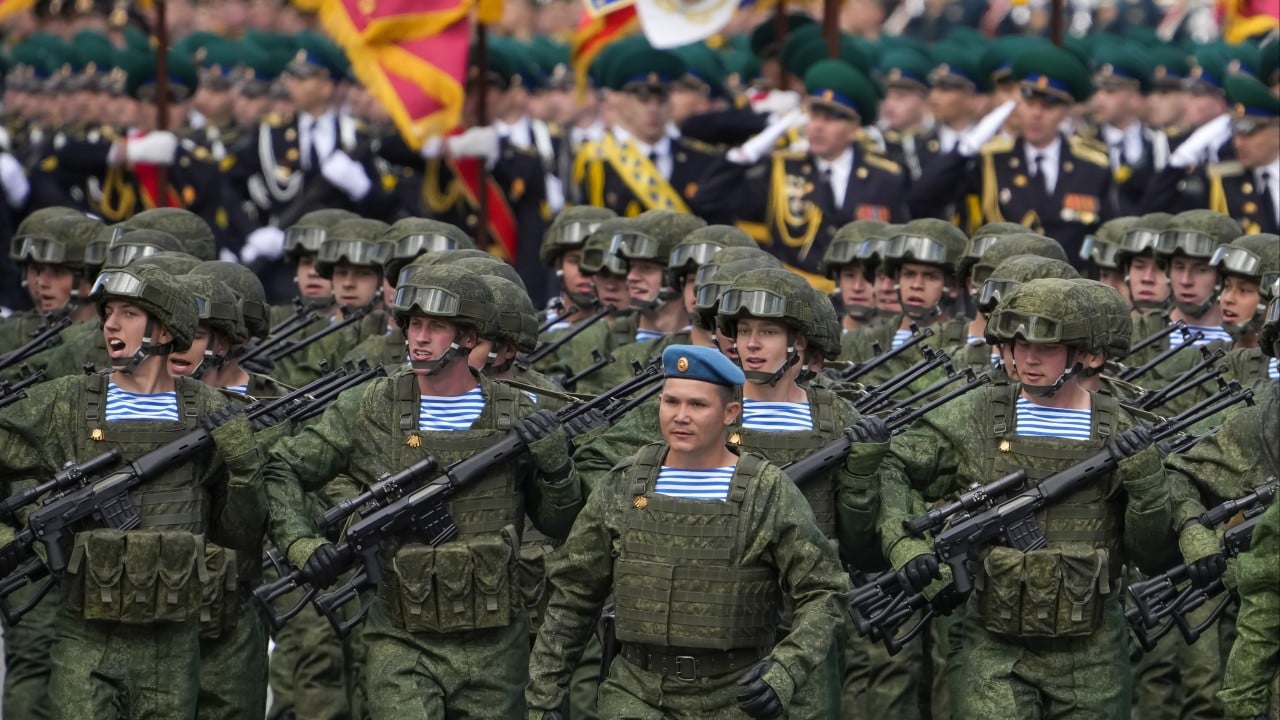
When news broke of Russian President Vladimir Putin signing a decree to expand the Russian Armed Forces by 15,500 personnel, mainstream outlets immediately defaulted to their favorite lazy consensus: Russia is endlessly scaling up a massive, unstoppable juggernaut. According to standard defense reporting, this incremental bump proves Moscow is gearing up for a wider, imminent escalation across Eastern Europe.
Military analysts, defense economists, and intelligence officials who actually read Russian legal decrees see something entirely different. A decree increasing authorized troop strength does not magically materialize 15,500 combat-ready infantrymen out of thin air. In modern warfare, a paper authorization is mostly an accounting adjustment, a political signal, and a bureaucratic patch for deep structural friction.
If you want to understand what is actually happening inside the Russian military machine, stop counting boots on paper and start looking at defense budgets, demographic ceilings, and administrative reclassification.
The Bureaucratic Illusion of Authorized Strength
To understand why a 15,500-troop bump is routinely misread, you have to understand the difference between authorized strength (shtatnaya chislennost) and actual combat power.
In the Russian Ministry of Defense, presidential decrees set the legal ceiling for how many military and civilian personnel the state is permitted to pay, house, and equip. According to defense analysts at the Institute for the Study of War (ISW) and the Royal United Services Institute (RUSI), Russia has issued multiple similar decrees since 2022—each time raising the official cap by tens of thousands.
Here is the catch that surface-level journalism misses:
- Paper authorizations lag reality. Often, the Kremlin signs a decree to legally formalize personnel who have already been recruited, contracted, or absorbed from irregular formations. It is retroactive bookkeeping, not a sudden surge.
- Civilian bloat is baked into the number. Russian force-structure decrees routinely bundle active-duty soldiers with civilian administrative staff, logistics clerks, and defense ministry bureaucrats. Adding 15,500 personnel does not mean 15,500 assault troops heading to the front lines.
- Authorization is not recruitment. Setting a higher speed limit does not make an engine go faster. Russia faces acute labor shortages across its domestic economy, with unemployment hovering near historic lows and defense factories competing directly against the military for the exact same pool of working-age men.
I have watched defense journalists and geopolitical commentators fall into this exact trap for over a decade. Every single time a Kremlin decree hits the official legal portal, pundits treat an administrative ceiling as an immediate operational deployment. They confuse a budget line item with an armored division.
What Western Coverage Gets Right—And Where It Falls Short
To be fair to mainstream defense reporters, there is a legitimate strategic reason why any upward revision in Russian force size triggers alarm bells. According to NATO intelligence assessments and statements from European defense ministries, Moscow is actively attempting to reconstitute its ground forces for long-term confrontation with the West.
Proponents of the "rapid expansion" thesis point to several undeniable realities:
- Sustained Attrition Tolerance: Russia has demonstrated a willingness to absorb staggering personnel losses while continuously feeding replacements into active combat zones through lucrative sign-on bonuses.
- Long-Term Force Restructuring: The Russian Ministry of Defense has formally re-established the Moscow and Leningrad Military Districts, signaling a permanent military posture aimed directly at Finland, the Baltic states, and Poland.
- Industrial Mobilization: Russia has shifted its economy onto a war footing, devoting roughly a third of its national budget to defense and security.
Those facts are real. Ignoring them would be reckless.
However, framing a 15,500-person adjustment as a dramatic inflection point distorts the actual mechanics of Russian military power. A 15,500-person increase represents roughly one percent of the Russian military's total authorized force structure. In modern high-intensity warfare, where daily casualty rates regularly reach into the hundreds or low thousands, 15,500 troops is barely two weeks of operational attrition—or roughly three under-strength brigades.
The Real Bottleneck Is Not Manpower
If raw headcount isn't the decisive metric, what is? Logistics, junior leadership, and industrial replacement rates.
Imagine a scenario where a logistics company announces it has raised its hiring cap by 15,500 drivers, while its truck factories are running at maximum capacity, its mechanics are leaving for higher-paying jobs, and its existing fleet is wearing out faster than parts can be machined. Nobody on Wall Street would call that company an unstoppable juggernaut. They would call it structurally overextended.
Military power operates under the exact same physical constraints. According to open-source intelligence analysts tracking equipment storage bases via satellite imagery—such as researchers at the International Institute for Strategic Studies (IISS)—Russia has spent the last several years burning through Soviet-era stockpiles of tanks, infantry fighting vehicles, and artillery barrels.
- Equipment vs. Personnel: You can recruit a soldier in three weeks with a cash bonus. You cannot forge a high-grade artillery barrel or manufacture precision optical sights in three weeks.
- The Officer Deficit: Modern combined-arms warfare requires experienced lieutenants, captains, and non-commissioned officers (NCOs). Russia’s pre-war professional officer corps suffered heavy losses early on, and fast-tracked officer training cannot replace years of tactical intuition.
- Economic Cannibalization: Every worker pulled into the military or a munitions plant is a worker removed from the civilian tax base. Russian Central Bank Governor Elvira Nabiullina has repeatedly warned that labor shortages and overheating industrial capacity are driving severe inflationary pressure across the Russian economy.
Why the Kremlin Issues Incremental Decrees
If 15,500 troops does not alter the strategic balance on the battlefield, why did Putin sign the decree at all?
First, bureaucratic absorption. Moscow has spent the last two years systematically bringing private military companies, volunteer militias, and regional battalions under direct Ministry of Defense control. Every time an irregular unit is folded into the regular army, the official headcount ceiling must be adjusted upward to accommodate their salaries, pensions, and medical benefits.
Second, psychological signaling. The Kremlin understands how Western media ecosystems function. A headline reading "Putin Expands Russian Army" generates immediate anxiety in European capitals, fuels domestic political debates over defense spending in Washington, and projects an image of inexhaustible Russian strength—all for the cost of a single sheet of paper.
Third, support and maintenance overhead. Modern warfare requires an enormous "tail" for every "tooth." Operating drones, electronic warfare suites, air defense batteries, and repair depots in rear areas demands thousands of technicians, operators, and support personnel who never storm a trench.
The Nuance Everyone Needs to Admit
Even a contrarian view has blind spots if pushed too far. Dismissing Russian force expansion entirely because the numbers look small on a spreadsheet is just as dangerous as panicking over every decree.
Quantity has a quality all its own. Even poorly trained, lightly equipped troops hold territory, dig fortifications, absorb enemy ammunition, and force opponents to expend valuable precision weapons. Over a multi-year timeline, incremental increases of 15,000 or 20,000 personnel compound—especially if Western political resolve fractures or ammunition production lags behind Russian output.
Furthermore, a military does not need to be sleek, modern, or efficient to be lethal. Russia has adapted its tactical doctrine to match the troops it actually has: relying on massed artillery, glide bombs, drone reconnaissance, and small-unit attrition rather than complex armored maneuvers.
Stop Reading Headlines Like Box Scores
If you want to accurately assess military developments without getting whipsawed by sensationalist headlines, apply three filters to every defense news story:
- Separate "Authorized" from "Fielded." Whenever a government announces a troop increase, ask whether those personnel are newly recruited combat soldiers, reclassified support staff, or an unfulfilled recruitment target.
- Track Heavy Equipment, Not Just Headcount. Infantry without armored mobility, air defense, and artillery barrels cannot conduct strategic offensives. Watch factory output and depot depletion rates, not press releases.
- Follow the Macroeconomy. War is an industrial and financial endurance test. Interest rates, inflation, labor participation, and sovereign wealth fund liquidity tell you far more about a state's military trajectory than a presidential decree ever will.
A signature on a Moscow decree does not create an army. It merely changes the ceiling on a spreadsheet—and until analysts start measuring steel, shells, and labor shortages instead of paper headcounts, they will keep misreading the war right in front of them.