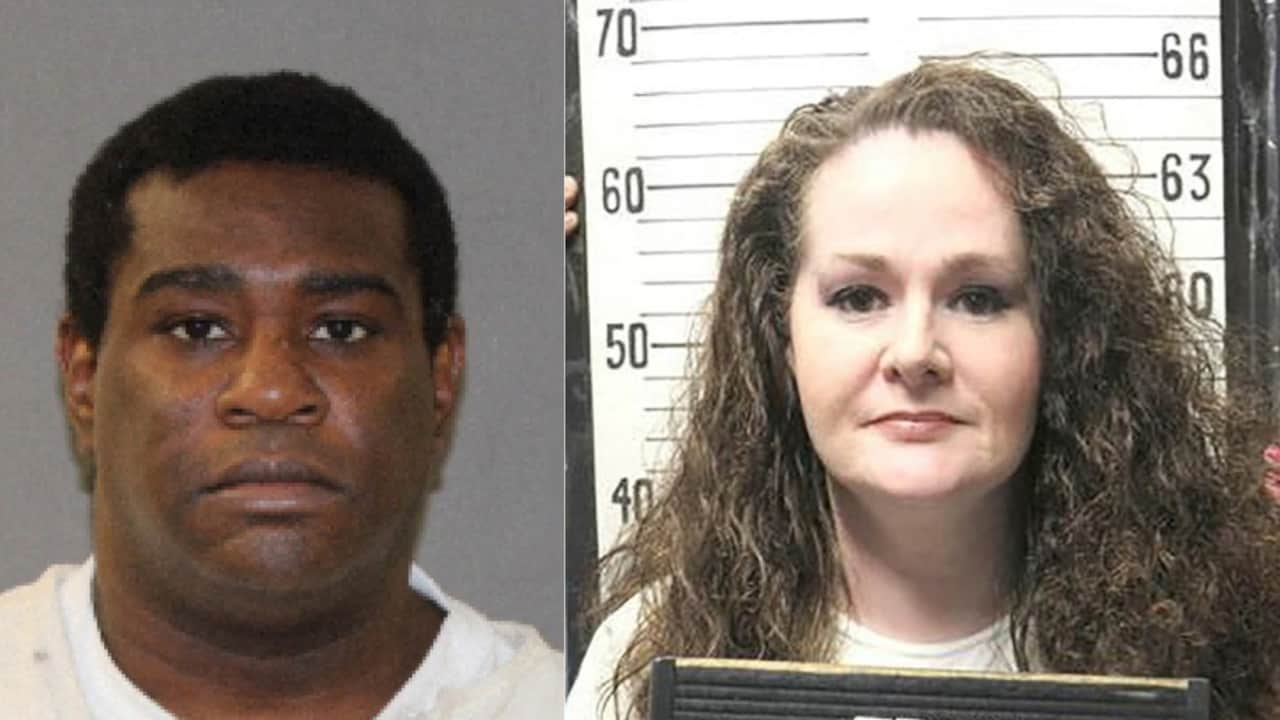
Headlines love a good race. When the media juxtaposes a failed execution or a miraculous stay against a lethal injection carried out somewhere else down the line, outrage factories spin into overdrive. The public gets fed a steady diet of procedural freak-outs, treating the machinery of capital punishment like a terribly managed municipal transit system where some trains crash and others run right on schedule.
Everyone focuses on the stopwatch. Did the state move too fast? Did the protocol glitch? Was the cocktail administered cleanly enough to satisfy our squeamish modern sensibilities about state-sponsored death?
It is a monumental waste of intellectual energy.
Fixating on execution schedules and procedural variances in high-profile death penalty cases completely blinds us to the structural mechanics of the legal abyss. Christa Pike surviving decades on death row while other inmates see their warrants signed with abrupt finality is not a bug in the system. It is the system working exactly as designed—chaotic, arbitrary, and entirely disconnected from any coherent philosophy of justice.
The Myth of the Uniform Scale
We love pretending that capital punishment operates on a sliding scale of pure merit. The lazy consensus in most legal commentary suggests that if we just streamline the appeals process, standardize the lethal drugs across state lines, or equalize the timeline, the system will somehow achieve moral legitimacy.
That is absolute nonsense.
I have spent years watching legal teams throw millions of dollars at procedural technicalities while the core rot of the institution remains untouched. The difference between a decades-long stay of execution and an immediate warrant has almost nothing to do with objective indicators of guilt or the severity of the crime. It is an artifact of geography, the political ambitions of local district attorneys, the random luck of draw-of-the-straw appellate panels, and the sheer volume of pro bono legal resources a condemned individual can scrape together.
When media outlets contrast rapid-fire executions with cases that drag on for thirty years, they validate a dangerous illusion. They imply that the thirty-year wait is a sign of careful deliberation, while the rapid execution is an anomaly of bloodlust. Both extremes are symptoms of a rotting legal framework trying to justify itself through paperwork.
Why Speed and Slowness Both Fail
Let us examine the two opposing failures that commentators love to pit against each other.
On one side, you have the protracted wait. Decades of confinement in conditions that psychologists recognize as a form of specialized psychological torture. The state keeps people breathing for thirty years, racking up millions in taxpayer-funded incarceration costs, only to execute an aging individual who barely resembles the person who committed the crime. Critics point to this as cruel and unusual punishment. They are right.
On the other side, you have the rapid execution. The state fast-tracks a warrant, pushing through administrative hurdles to make a political point or satisfy a bloodthirsty constituency. Critics scream about the risk of executing an innocent person before new DNA evidence surfaces. They are right too.
Here is the contrarian truth that neither side wants to admit: both processes produce the exact same moral hazard, just through different doors. Whether the state kills someone six months after conviction or forty years later, the executioner's needle does not correct the underlying rot of a legal system driven by racial disparities, inadequate public defense funding, and political grandstanding.
Pretending that we can reform the timeline to make state killing ethical is like arguing over whether to use a rusty knife or a sterile scalpel for an amputation that should never happen in the first place.
The Real Variable Nobody Discusses
If you want to understand why one prisoner survives while another dies on schedule, stop looking at the Supreme Court dockets and start looking at trial-level budgets.
Capital punishment is fundamentally a poverty tax. The disparity in execution timelines is downstream of the disparity in legal representation during the initial trial phase. A defendant represented by an overworked, underfunded public defender with a budget of three hundred dollars for expert witnesses is on an express train to a death warrant, regardless of procedural safeguards down the road. Meanwhile, a defendant with a team of aggressive, well-funded appellate attorneys can exploit every procedural loophole known to jurisprudence, dragging out the timeline for decades.
The media treats these divergent outcomes as a debate over the morality of execution dates. In reality, it is a ledger of economic inequality masquerading as jurisprudence.
We are arguing about the aesthetics of death while ignoring the plumbing of injustice underneath. Until we stop treating the speed of an execution as a moral barometer, we will keep spinning our wheels in the mud of our own making.
Drop the stopwatch. Look at the balance sheet.


